
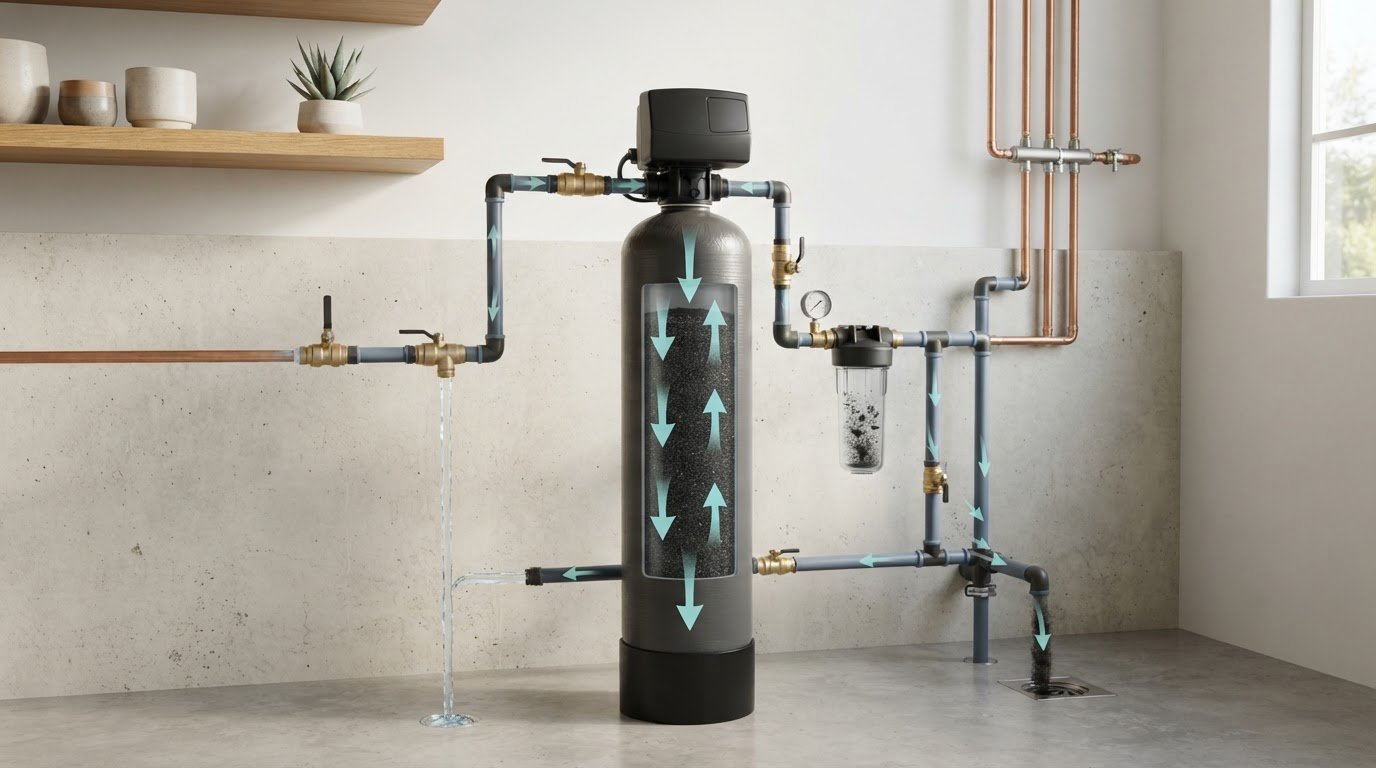
A filter at one tap can’t treat water throughout your home. Whole-house carbon filtration treats water where the municipal or well supply enters, so it passes through activated carbon before reaching household taps and appliances. In a backwashing system, water periodically flows in reverse through the filter bed to rinse it and help the media operate properly.
When comparing whole-house systems, look beyond the filter itself. Backwashing affects how a system operates, while water quality and household use help determine which setup is appropriate.
This guide explains how point-of-entry carbon filtration works, what backwashing does, and what to consider when choosing a system for your household. You’ll learn how the treatment process works and what role a carbon filter can play in your home’s water setup.
A whole-house carbon filter treats water where it enters your home, using granular activated carbon (GAC) or a carbon-block element. Choose certification by matching the contaminant-reduction claim to the filter’s NSF/ANSI listing; the applicable standard depends on the claim and system configuration.
U.S. municipalities began using chlorine to disinfect drinking water in the early 1900s. Activated carbon adsorbs a broad range of impurities as water passes through it, helping reduce chlorine before water reaches household taps. Catalytic carbon is used to target chloramines, a different disinfectant. If chloramine is your concern, look for a specific reduction claim rather than assuming every carbon filter treats it.
Chlorine can affect water’s taste and smell, so reducing it may improve water at taps throughout the home. Hydrogen sulfide can create a sulfur-like odor, but reduction depends on the filter media and the system’s stated treatment capability. Compare specific odor or contaminant claims with your water concerns; a general reference to carbon filtration does not establish hydrogen sulfide performance.
Granular activated carbon (GAC) uses loose carbon granules inside a filter tank, while a carbon-block filter holds carbon in a formed block. Both use carbon to adsorb impurities, but their media formats and system designs differ. For whole-home treatment, consider how the filter connects to your plumbing and whether its stated claims match your water needs. A backwashing carbon filter can also be installed before a water softener to reduce chlorine.
NSF/ANSI certification should match the specific reduction claim you need, such as chlorine taste and odor or another named contaminant. Check the product listing for the standard, the claim, and the tested system configuration. Certification for one reduction does not establish performance for chloramines or hydrogen sulfide. Match the listing to your water concern before choosing a filter.
A backwashing carbon filter uses a control valve to reverse water flow through its media bed. This rinse helps clear collected particles, while the carbon continues treating water during normal operation.
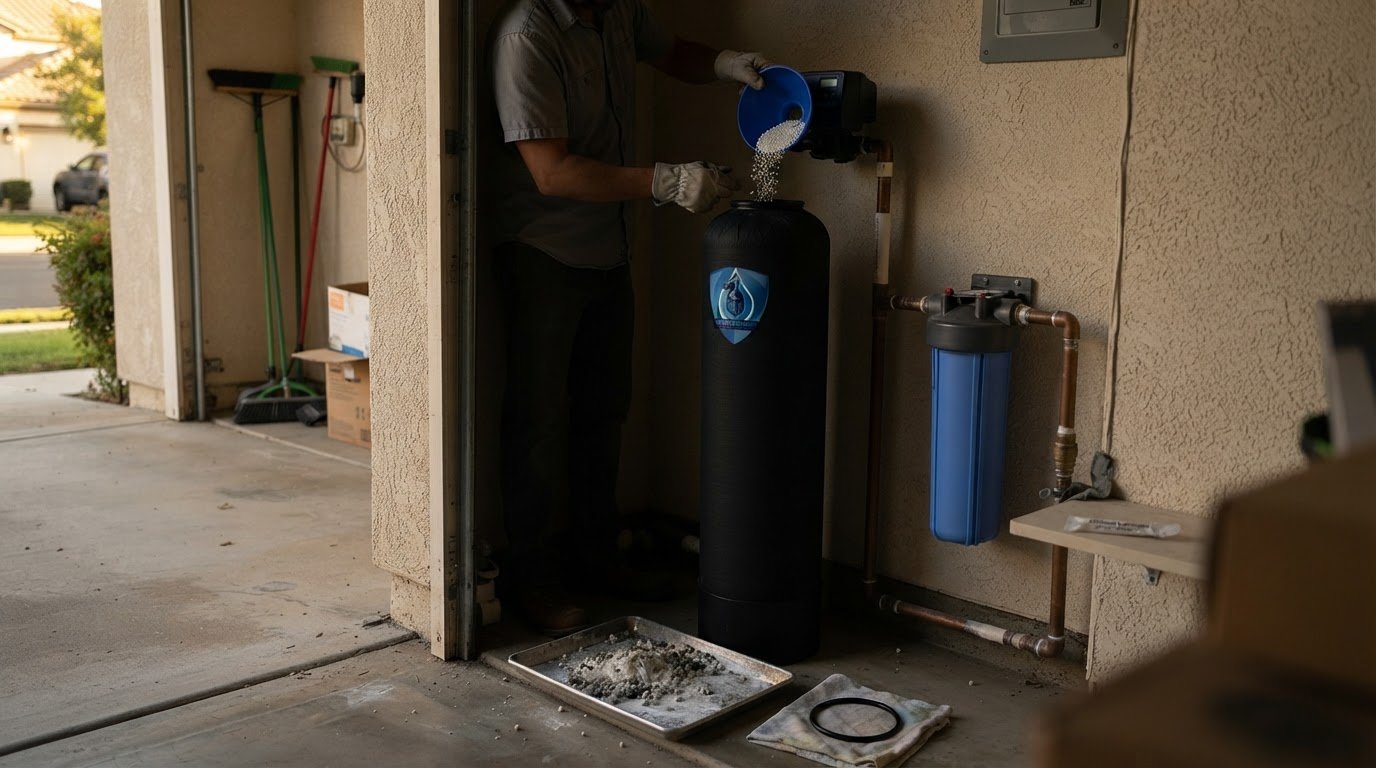
Whole-house backwashing models typically hold carbon media in a tank and use a control valve to manage rinse cycles. During backwashing, water moves upward through the bed, loosening trapped material and carrying it to a drain. Compare the filter’s treatment claims, media capacity, flow needs, and backwash setup. The rinse cleans the bed; it does not renew spent carbon.
A whole-house filter treats water where the supply enters, serving multiple taps and appliances. A point-of-use filter treats water at one fixture, while a pitcher filters water poured into it. Choose based on where you need treatment: throughout the home, at a specific tap, or for drinking water stored in a pitcher. Each option serves a different purpose.
Cartridge filters hold carbon in a replaceable cartridge; backwashing systems rinse media in a tank. Cartridges need replacement when their treatment capacity is used, while backwashing systems need functional valves, a drain connection, and eventual media replacement. The right choice depends on household flow, treatment goals, and maintenance preferences, not just the filter label.
A carbon filter may be included when a whole-house water softener is installed or added to an existing treatment system. Placing carbon before the softener can reduce chlorine ahead of the softening stage. For example, a 1.5-cubic-foot backwashing carbon filter is described for chlorine removal before a softener. A private well may call for a different treatment plan; explore carbon filter options as one part of that decision.
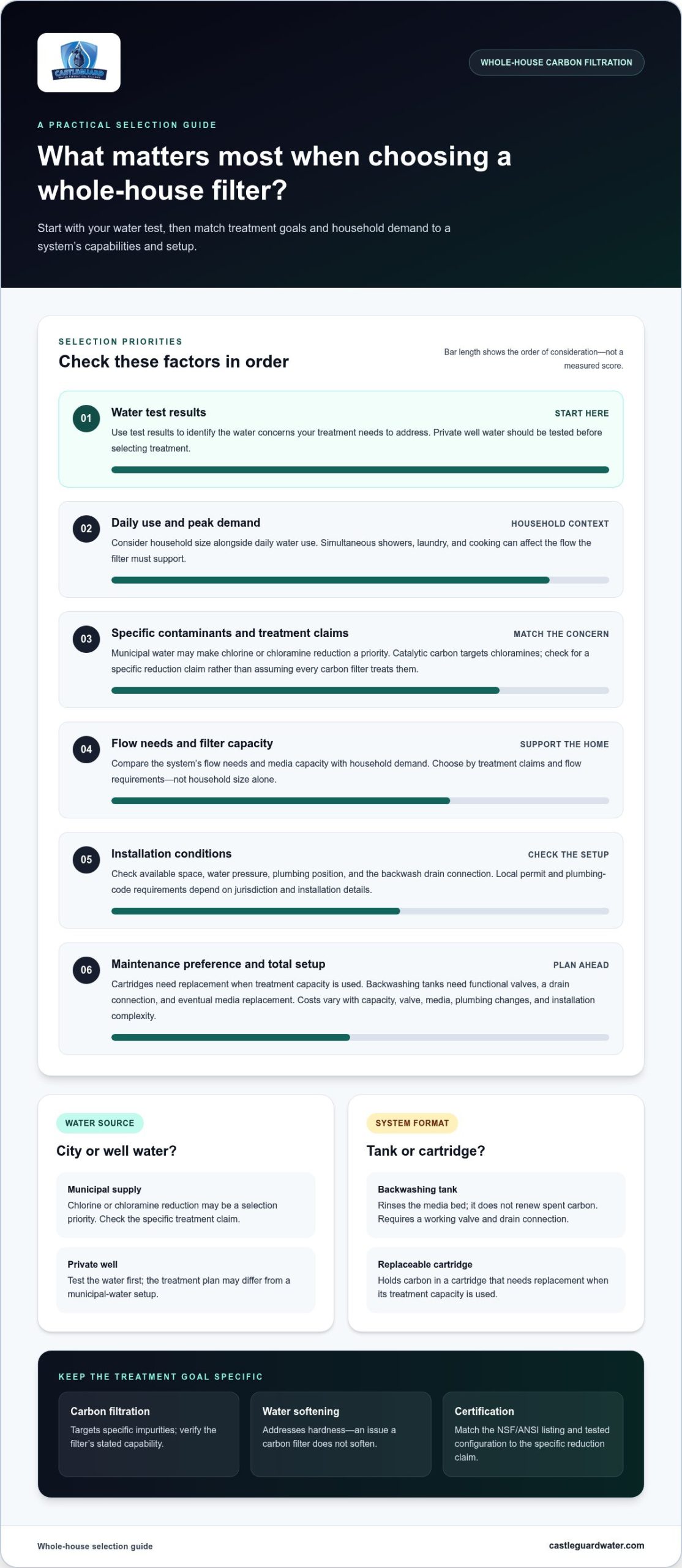
Start with a water test to help decide which treatment products suit your household. Compare the results with daily water use, peak demand, and the specific contaminants you want to address. Household size offers useful context, but simultaneous showers, laundry, and cooking also affect the flow a filter must support.
In the United States, local permit and plumbing-code requirements depend on the jurisdiction and installation details. The filter’s position in the plumbing, drain connection, and any changes to existing pipes can affect which rules apply. Adding a filter to an existing treatment setup may involve different work from a new point-of-entry installation.
There isn’t one fixed purchase-and-install cost for every U.S. home. Tank capacity, control valve, carbon media, plumbing changes, and installation complexity shape the total. Compare systems by treatment claims and flow needs, not household size alone; those specifications influence equipment choice and installation scope.
Water pressure and available space matter before installing a tank system. Check where the unit can sit, how its backwash drain will connect, and whether the home’s plumbing can accommodate the setup. Maintenance also varies: cartridges need replacement, while tank systems require backwashing and eventual media replacement. Factor those ongoing tasks into your decision.
City and well water call for different selection criteria. Municipal treatment may make chlorine or chloramine reduction a priority, while private well water should be tested before choosing treatment. A carbon filter targets specific impurities, but it doesn’t soften hard water. If hardness contributes to water-heater scale, a softener addresses that separate issue.
A point-of-entry filtration system treats water as it enters a home from a municipal or well supply. Installed before the plumbing branches, it can send treated water to multiple taps and appliances. That whole-home coverage is the key difference from a filter at one sink. The system’s treatment claims should match the water issue you want to address.
Activated carbon can adsorb a range of impurities as water passes through it. Results depend on the carbon media and the contaminant involved, so a general label does not establish reduction of every substance. Match the product’s stated claims to your water source and treatment goal. For example, a household concerned about chlorine taste may need different media performance from one addressing another impurity.
Location affects both installation and everyday use. A point-of-entry unit connects near the supply line, before water is distributed around the home. Available space, pipe arrangement, and maintenance access all matter. A bypass can help isolate the filtration system during servicing, while a backwashing tank also needs a suitable drain connection. Plan around your actual plumbing layout.
Cartridge and tank systems have different maintenance needs. Replacing an activated carbon cartridge annually is fairly typical in many homes, though actual service needs depend on water quality and use. A tank system needs its operating components maintained and its media replaced when exhausted. Record cartridge changes or service to help keep maintenance on schedule.
Point-of-entry carbon treatment is not a universal answer for every water concern. It targets impurities the selected carbon media can treat; separate issues may call for separate treatment stages. A water test can help connect a household’s source and concerns to the right filtration approach. For an overview of options, explore whole-home water treatment choices and consider how they fit your supply and plumbing.
CastleGuard’s City System is an option for households reviewing treatment for city-supplied water. The right setup depends on your water concerns and the role carbon filtration should play in your home’s broader treatment plan. For private well supplies, CastleGuard offers Well Water Systems. Ultraviolet Systems and Drinking Systems address other household treatment needs.
Use your water test results and priorities to guide your decision, such as reducing chlorine-related taste and odor throughout the home or treating drinking water at a specific point. This helps you focus on an approach suited to your supply rather than choosing equipment by label alone. Contact CastleGuard to discuss the City System and your water needs.
Next, connect your household’s water priorities with a treatment approach you can maintain over time. Choosing whole house carbon filtration is not only about equipment; it also means identifying which concerns matter most in daily routines, from cooking to bathing.
CastleGuard’s City System is designed for households considering treatment for city-supplied water, while Well Water Systems serve homes using private wells. Ultraviolet Systems are another option in CastleGuard’s water-treatment range. Each serves a distinct role, so start with your water source and the outcome you want your home system to support.
Bring those priorities into a conversation about the options that fit your home. Contact CastleGuard about carbon filtration and take a considered next step toward a water-treatment setup that works for your household.
A carbon filter can reduce chlorine and, with catalytic carbon, target chloramines; it can also reduce some taste and odor issues. Performance depends on the media and the specific treatment claim. It isn’t a universal solution for every contaminant, and whole house carbon filtration shouldn’t be assumed to soften water or disinfect it. Use water test results to identify needs that call for separate treatment.
Water flows through activated carbon media, where certain impurities are adsorbed onto the carbon’s surface. Contact between water and media supports the treatment process, so flow rate and system design matter. In a backwashing tank, a valve periodically reverses water flow to rinse the bed. Backwashing removes accumulated particles, but it doesn’t restore exhausted carbon’s treatment capacity.
A whole-house carbon filter treats water entering the plumbing, while a point-of-use filter treats water at one fixture. Reverse osmosis is a different treatment approach often used for a dedicated drinking-water tap. Consider where you want treated water: throughout the home, at one sink, or for drinking. A household can combine point-of-entry and drinking-water treatment to address different needs.
Estimate peak flow by considering fixtures likely to run together, such as a shower and washing machine, then compare that demand with the system’s rated flow. CastleGuard’s carbon models are rated from 10 GPM to 25 GPM. Household size alone doesn’t determine the right rating. In Southern California, Nevada, Arizona, Texas, and Florida, start with the home’s actual plumbing demand and water source.
Replacement timing depends on media type, water quality, and the volume treated. CastleGuard’s carbon media guidance is about 5-7 years or 1,000,000 gallons; that interval is specific to its systems, not a rule for every filter. Replacement cost varies with the system and media kit. Budget by identifying the correct replacement media and considering household use, rather than relying on a universal price.
Start with a water test to identify treatment needs, then keep the results with your system records. Track cartridge changes, backwash operation, and any changes in water taste or odor. Annual cartridge replacement is fairly typical in many homes, while tank systems follow media-specific maintenance needs. For homes in Southern California, Nevada, Arizona, Texas, or Florida using well water, testing helps guide treatment choices because source conditions can vary across seasons.