Hard water can leave hair dry, brittle, or weighed down, but it doesn’t cause hair loss. In Las Vegas, water is classified as very hard, and calcium and magnesium can leave residue on hair and skin. That buildup can make washing feel less effective and may contribute to dryness or irritation.
If your hair feels dull or your skin feels tight after a shower, it’s reasonable to wonder whether your water is contributing. This guide explains how hard water may affect hair, skin, soap, and shampoo, and how it differs from soft water.
You’ll also learn practical hard water solutions for hair and skin in Nevada, including personal-care changes that may help and when treating water at home may be worth considering. The goal is to understand what’s happening and choose a sensible next step for your household.
Hard water can affect hair and skin because calcium and magnesium leave mineral residue behind. On hair, this buildup can form a film that limits moisture penetration, leaving strands dry, brittle, or weighed down. It can also collect on the scalp and make natural oils less able to reach its surface. Hard water doesn’t cause hair loss, but residue may affect how hair looks and feels. For acne-prone skin, irritation, lost protective oils, and pore-clogging buildup can worsen existing concerns.
Soap and personal-care products can add to the residue. Hard-water minerals react with soap and detergents, forming a stubborn film on skin, tubs, tiles, and glass shower doors. Product buildup on hair is different: clarifying shampoo can help remove styling-product residue, but it doesn’t address minerals in household water. Knowing the difference helps you choose a more useful next step.
For an affordable at-home approach, use a chelating shampoo monthly to remove mineral buildup from hair. Use clarifying shampoo occasionally for styling-product buildup, not as a hard-water treatment. A vinegar rinse is another option: mix one part apple cider vinegar with about five parts water, leave it on for about five minutes, then rinse thoroughly.
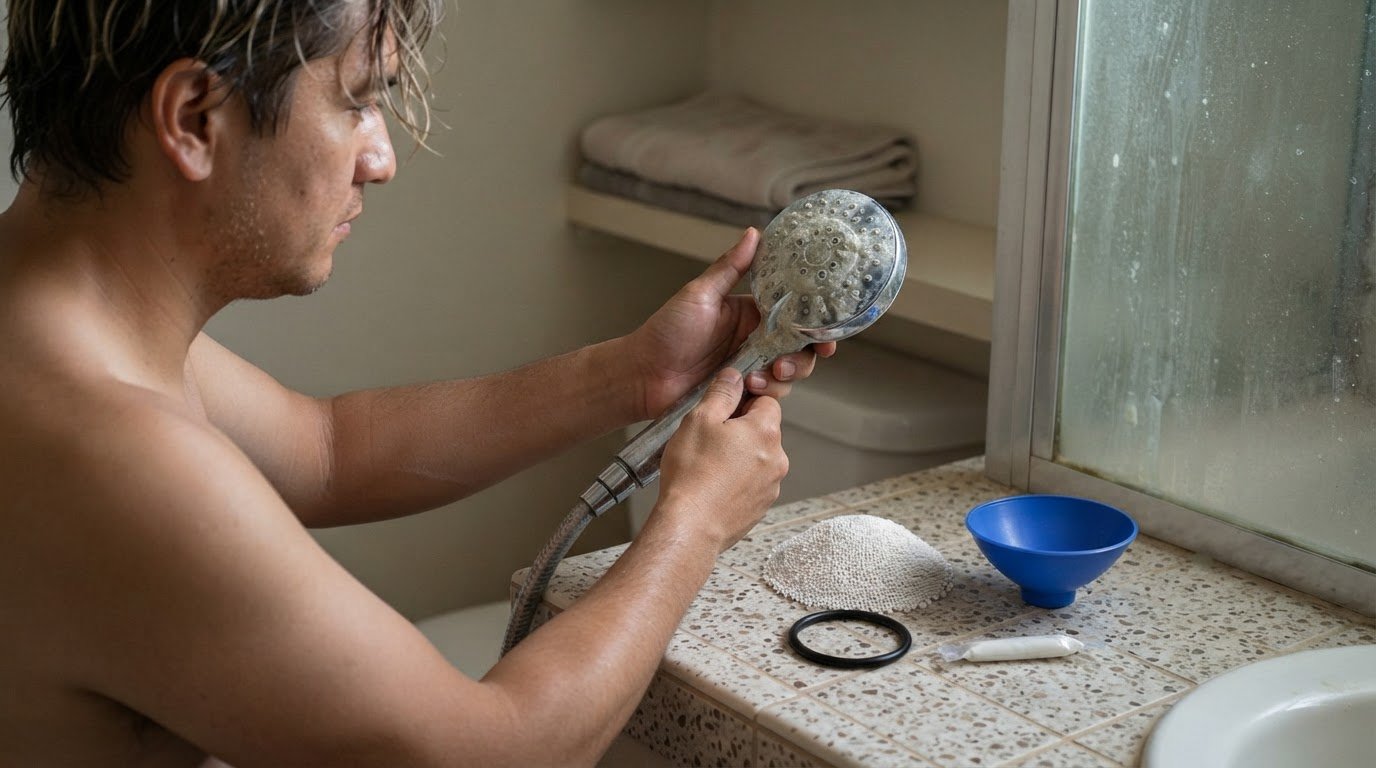
Look for chalky marks around a faucet, showerhead, or sink. These hard-water stains are mineral scale, and quick returns after cleaning can point to ongoing buildup. Minerals can also accumulate inside plumbing. As deposits narrow the passage, water flow may drop and pressure may feel lower at a shower or faucet. A removed showerhead can be soaked in white vinegar for 12 hours to address surface scale, but that step won’t treat minerals throughout the plumbing.
When changes to your hair and skin appear alongside recurring scale or reduced water pressure, consider the whole-home water supply. If your home uses a well, a Well Water System is one water-treatment option to consider.
Hard water minerals, especially calcium and magnesium, interfere with soap’s cleaning action. Instead of producing a rich lather, soap can react with the minerals and leave residue that is harder to rinse away. In a shower, that film may remain on skin even after you’ve washed. Shampoo and conditioner can also leave hair feeling coated, so adding more product may not remove the underlying mineral residue.
That leftover film can affect comfort. Soap that doesn’t rinse cleanly may contribute to dry, irritated skin, while mineral and product buildup can leave skin feeling congested. For people with acne-prone skin, irritation may aggravate existing breakouts. Notice whether tightness or residue appears after washing with different soaps or shampoos. That pattern can help distinguish a product issue from water-related buildup.
Hard water affects household cleaning, too. In a dishwasher, minerals can interfere with detergent rinsing, leaving glasses streaked or cloudy. Washing machines may clean less effectively, while mineral scale inside water heaters can reduce efficiency. These effects can also shorten the service life of appliances. A cloudy glass or recurring scale around a faucet is a practical sign to consider alongside how soap behaves.
Changing shampoo or conditioner may improve how your hair feels, but personal-care products don’t remove minerals from the water supply. A clarifying shampoo can address styling-product buildup, while a chelating shampoo is intended to remove mineral deposits from hair. For a home using well water, a Well Water System is a relevant water-treatment option. If you’re considering household conditioning, explore Salt-Free Conditioner Kits as one available option.
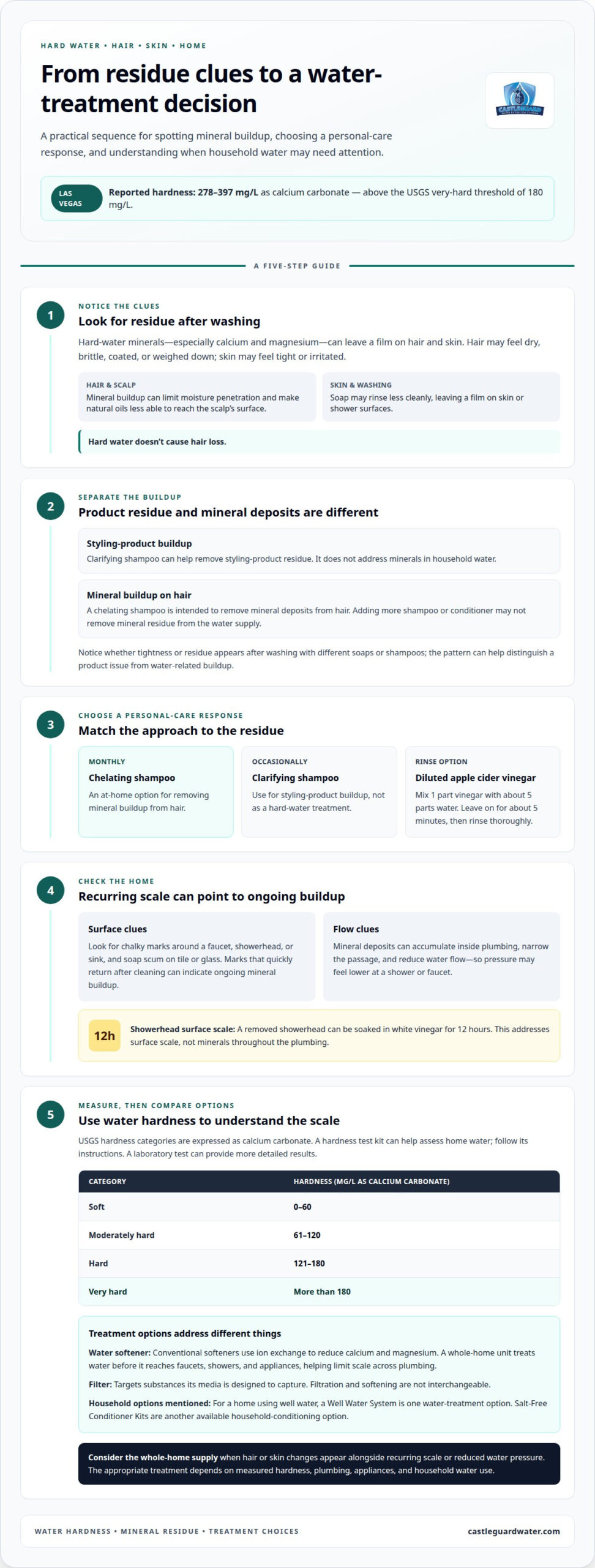
Hardness measures dissolved calcium and magnesium, often expressed as an equivalent amount of calcium carbonate. According to the U.S. Geological Survey, 0 to 60 mg/L (milligrams per liter) as calcium carbonate is soft; 61 to 120 mg/L is moderately hard; 121 to 180 mg/L as calcium carbonate is hard; and more than 180 mg/L as calcium carbonate is very hard. These categories help explain why mineral scale and soap scum differ from home to home.
Las Vegas water has reported hardness of 278-397 mg/L, which falls above the very-hard threshold. Soft water contains fewer hardness minerals, so it generally leaves less mineral residue. A water softener can address hardness throughout the plumbing system, while a filter targets the substances its media is designed to capture. Filtration and softening aren’t interchangeable.
Conventional water softeners use ion exchange to reduce calcium and magnesium. A whole-home unit treats water before it reaches faucets, showers, and appliances, helping limit scale across the plumbing. This is a broader approach than cleaning soap scum from one shower or faucet. The right treatment depends on measured water hardness and household needs.
Hardness alone doesn’t determine whether a salt-based softener is permitted or restricted in your area. Installation cost depends on the equipment, home layout, plumbing changes, and scope of installation. To test home water, use a hardness test kit according to its instructions; a laboratory test can provide more detailed results.
For bathing, softened water can reduce mineral residue, but the treatment method matters. For drinking, consider the system’s intended use and follow its instructions; a drinking-water treatment system may be considered separately. Choose based on measured hardness, plumbing, appliances, and how your household uses water.
Calcium and magnesium change how traditional soap behaves during washing. Instead of creating abundant lather, soap can combine with these minerals and leave a film on skin and shower surfaces. That residue is soap scum: the dull coating you may see on tile, glass, or a bath. More soap can create more residue without solving the mineral issue. For hard water solutions for hair and skin Nevada residents can use, start by noticing where residue appears.
Hard water can also make soap harder to rinse away. If your skin feels tight after a shower, try using less soap and rinsing thoroughly. A soap-free cleanser is another option to try, especially if bar soap leaves a noticeable film. Choose a gentle product that suits your skin, and avoid scrubbing harder, which may increase irritation without removing mineral residue.
With hard water, shampoo and conditioner may feel difficult to rinse cleanly. Mineral residue can coat strands, while frequent washing may leave hair feeling dry. Chelating shampoo is designed to remove mineral deposits; use it according to its label. Styling products can also build up, so distinguish that coating from hard-water residue. Chlorine is a separate water concern, not one of the minerals that define hardness.
Kitchen cleanup offers another useful example. Hard-water minerals can make dishwasher detergent less effective at rinsing, leaving glasses streaked or cloudy. A cloudy glass does not prove the dishwasher is faulty; mineral residue may be involved. To reduce surface deposits, clean affected fixtures with an appropriate descaling method and rinse them thoroughly. These steps address visible buildup, but they don’t change the water entering the home. Nevada households considering hard water solutions for hair and skin can explore household water treatment options as a broader next step.
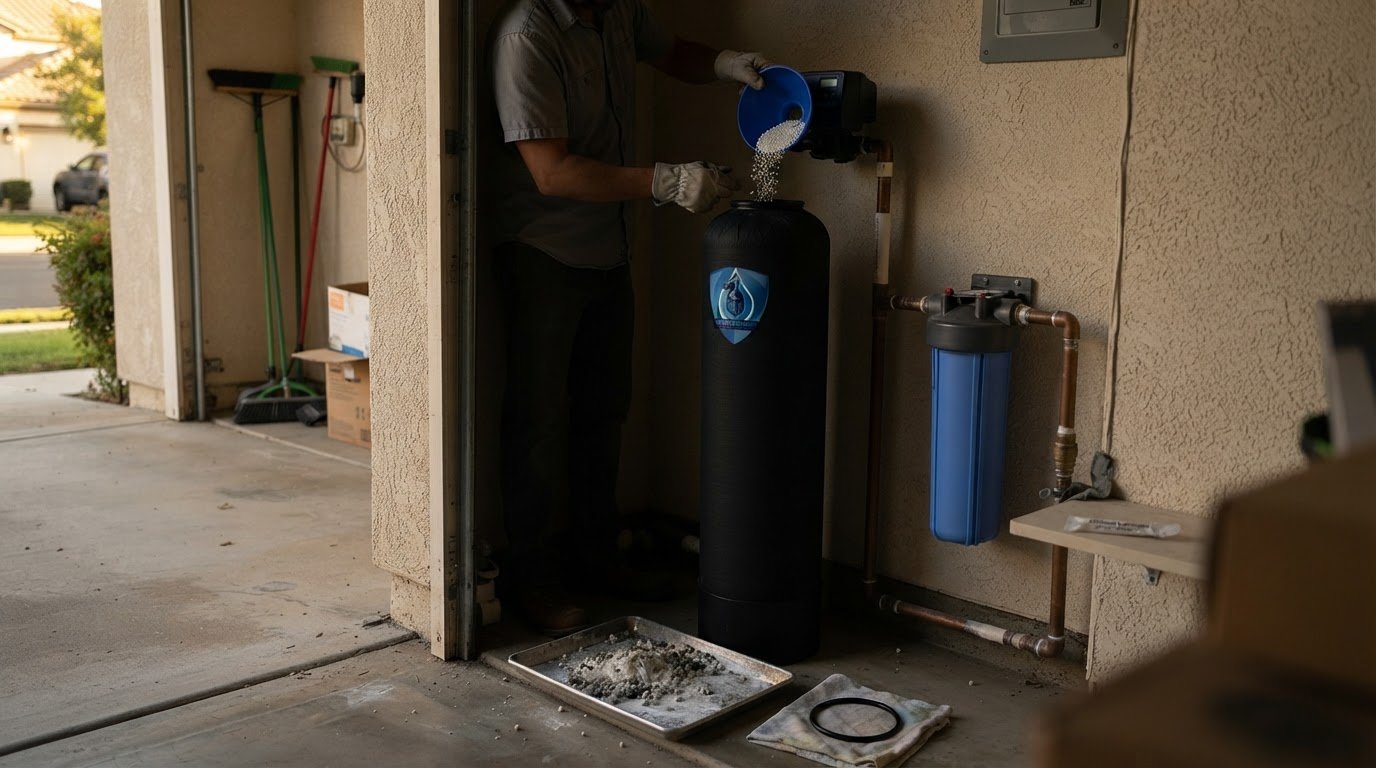
CastleGuard’s Well Water Systems are an option for homes supplied by a private well where mineral buildup keeps returning. A system can address water concerns at the household level, rather than relying only on shampoo changes or cleaning scale from individual fixtures. The right approach depends on the water issue you want to address.
For homes connected to municipal water, CastleGuard also offers a City System. Ultraviolet Systems and Drinking Systems address other water-treatment needs, so the solution can match the concern. If hard-water residue appears alongside other changes in your well water, consider whether a whole-home system suits your household.
Contact CastleGuard to discuss your home’s water concerns and possible next steps.
Choosing hard water solutions for hair and skin in Nevada starts with a practical question: what would you most like to change? You might prioritize how your hair feels after washing, how your skin responds, or the effort spent cleaning water marks. Naming that priority makes it easier to focus on a suitable next step instead of changing several things at once.
Consider who uses the water and where the concern appears. Household needs may differ depending on the water source, daily routines, and preferred treatment approach. Keeping those priorities clear can make it easier to choose a water solution that fits.
For guidance on the next step for your home, contact CastleGuard for water help. A thoughtful plan can make caring for your household feel more manageable.
Hard water can leave hair feeling dry, brittle, or weighed down, but it doesn’t cause hair loss. Notice whether the change is strongest after showering or persists between washes. If strands snap during brushing, handle wet hair gently and avoid harsh treatments while considering possible mineral residue. Persistent scalp or hair concerns may have causes beyond water hardness.
Hard water may aggravate acne-prone or dry skin through irritation and residue, but it isn’t the sole cause of acne. To spot a possible connection, note when tightness or irritation appears and whether it follows showers. Keep the rest of your skincare routine steady while observing the pattern, so you can identify what may be contributing.
Hard water contains more calcium and magnesium, while soft water contains fewer hardness minerals. The U.S. Geological Survey classifies 0 to 60 mg/L as calcium carbonate as soft, 61 to 120 mg/L as moderately hard, 121 to 180 mg/L as hard, and more than 180 mg/L as very hard. In everyday use, the difference can show up in cleaning and mineral residue.
Yes. A measured level helps distinguish mild hardness from very hard water and can guide treatment choices. Las Vegas water is reported at 278-397 mg/L, above the U.S. Geological Survey’s very-hard threshold of more than 180 mg/L as calcium carbonate. A home test can help establish whether your own supply matches that range, since conditions may differ by source.
Calcium and magnesium can react with soap, reducing lather and leaving residue that takes more rinsing to remove. Shampoo may also feel harder to rinse cleanly, and leftover film can make hair seem coated. If the issue occurs with several products rather than one new formula, water hardness may be contributing.
Mineral residue can leave hair rough or heavy and may contribute to dry, irritated skin. Hair that feels coated after washing and skin that feels tight after bathing, for example, may point to a shared water-related factor. Effects vary by person and routine; noting when they appear can help you decide what to adjust next.