
The right iron filter may not be the first treatment tank in line. Iron-related water problems typically begin when iron exceeds 0.3 ppm, and when well water also has hardness, the iron filter should go before the softener. Choosing an iron filter for well water in Arizona starts with testing, because the water’s specific contaminants determine the right treatment setup.
Rust-colored stains, metallic tastes, or trouble with household fixtures can make well water feel like a mystery. Test your water at least annually to find out what it contains before choosing a system, rather than relying on symptoms alone.
This guide explains what to test for, how filtration works, and which contaminants different systems can address. You’ll also learn how an iron filter and a softener work together, why their order matters, and what to consider when planning whole-home treatment, so you can make an informed choice for your household.
Iron often enters Arizona well water as groundwater moves through iron-bearing geology. Iron-related problems typically begin above 0.3 parts per million (ppm). The Water Quality Association notes that iron can create a metallic taste, though other substances can cause one. A taste alone, therefore, can’t identify the contaminant. Test results help distinguish iron from other water-quality concerns.
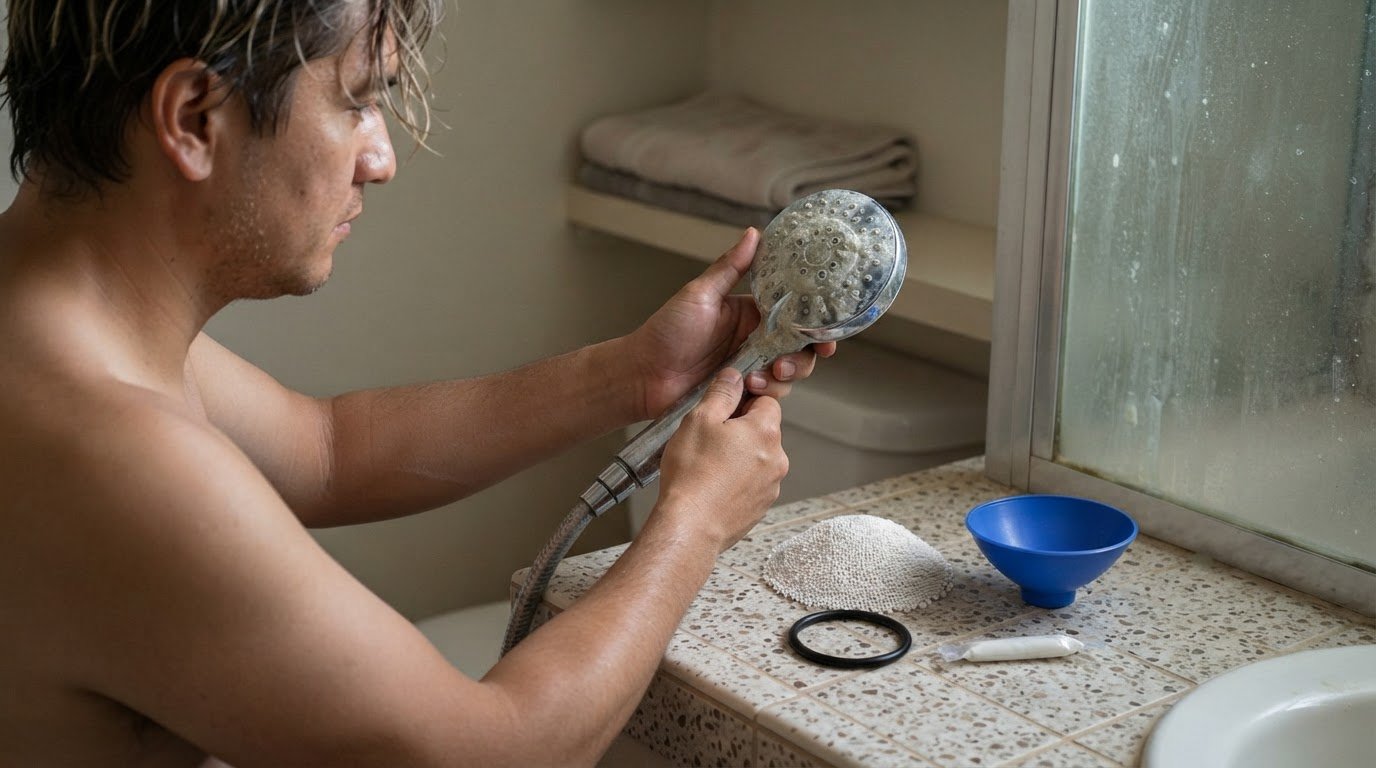
Iron can also leave reddish-brown stains on laundry, sinks, and fixtures. The Minnesota Department of Health says iron can turn tea, coffee, or potatoes black and clog dishwashers and wells. These effects can disrupt household routines even when the water looks clear at the tap. Dissolved iron may become visible after exposure to air, leaving particles that settle or stain surfaces.
Manganese may cause dark stains, while hydrogen sulfide is often linked to a rotten-egg odor. These contaminants require treatment suited to the water’s chemistry. Some systems oxidize dissolved iron or manganese into particles, then filter them out. Hydrogen sulfide treatment may also involve oxidation and filtration. Sediment filters capture suspended particles, but don’t address every dissolved contaminant.
A well-water filtration system can be configured to address iron, sediment, sulfur, bacteria, manganese, and other groundwater contaminants. The appropriate media and treatment stages depend on test results, including whether iron is dissolved or present as particles. For example, a home with iron stains and visible sediment may need both iron treatment and particle filtration. A sulfur odor may call for an additional treatment stage. Choosing an iron filter for well water in Arizona should start with identifying the contaminants, not assuming one filter handles every problem. Match the system to the results, then consider how it will protect laundry, plumbing, and appliances throughout the home.
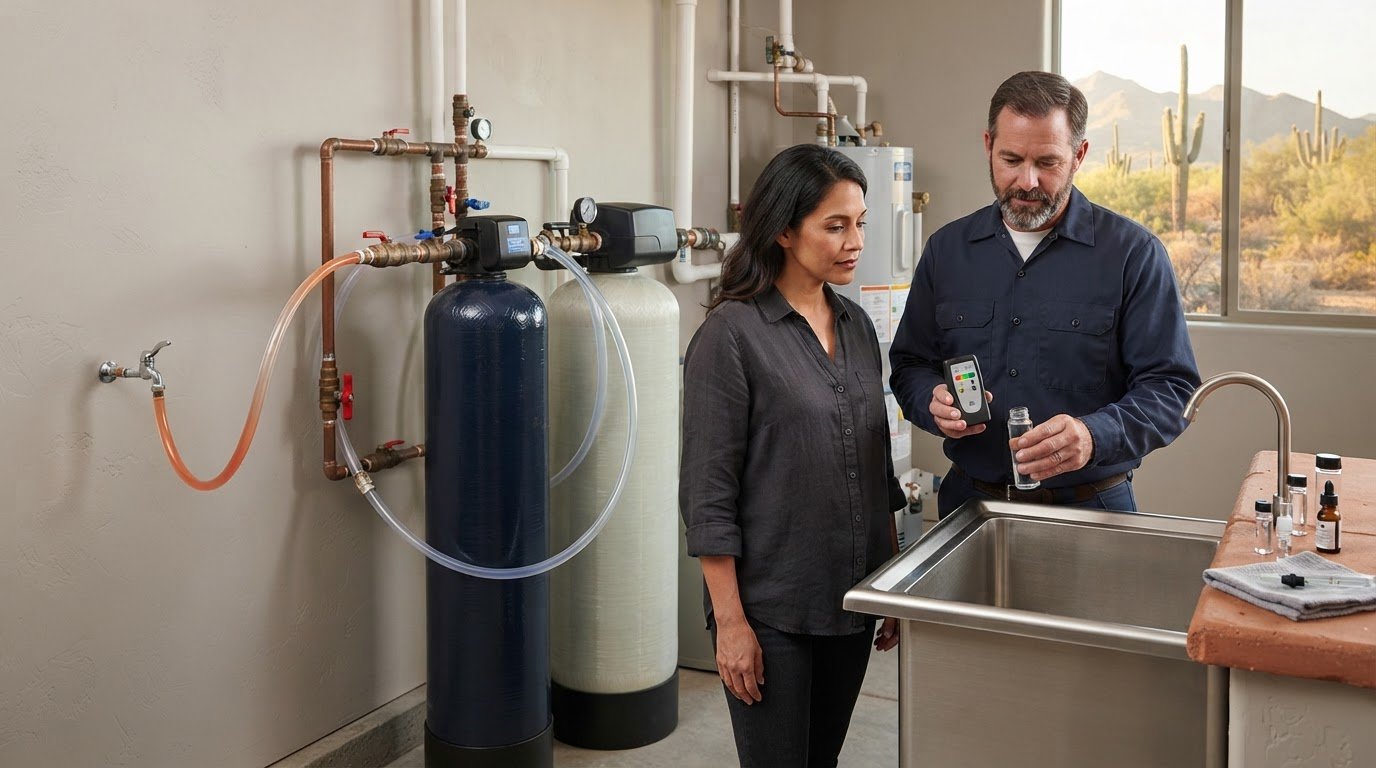
Arizona private-well owners shouldn’t assume the state requires iron treatment. Test results show whether an iron filter is appropriate. Test well water at least annually, and test again if its quality changes, such as when a metallic taste, stains, or sediment appear. Testing turns household clues into useful information for choosing treatment.
Ask for results that identify iron and other contaminants relevant to your well, including manganese, hydrogen sulfide, sediment, and bacteria. Hardness results are also useful when deciding whether to include a softener. A metallic taste can point to iron, but taste alone can’t establish its concentration or rule out other causes. Compare test results with visible signs, such as orange laundry marks or dark deposits around a faucet.
Test results help clarify treatment needs. A sediment filter captures suspended particles, while an iron filter is selected to treat iron in the water. Oxidizing filtration can convert dissolved iron or manganese into particles before filtering them out. Hydrogen sulfide may need treatment that addresses its odor alongside other water characteristics. Don’t assume any single filter type removes every contaminant.
System selection also depends on whether iron is dissolved or particulate, the amount of water used, and the well’s flow. These details affect treatment media and how filtration fits with other equipment. If results show several concerns, match each treatment stage to a specific finding rather than selecting by stain color alone. A well water system is a relevant option to explore when test results point to whole-home filtration needs.
Whole-house filtration treats water where it enters the home, while point-of-use systems treat selected taps. The right design depends on test results and whether concerns affect every tap or drinking water alone.
A whole-house system treats well water before it reaches showers, laundry, and appliances. Treatment media for iron, sediment, or sulfur odor should be selected for the contaminants found in the well. A system may combine stages: sediment filtration captures particles, while other media address dissolved substances or odor. Match equipment to test results and household flow needs, not just one symptom.
Oxidation changes dissolved iron or manganese into particles that filtration can capture. Depending on the water chemistry, treatment may use an oxidizing agent or catalytic media, followed by a filter bed. Hydrogen sulfide, which is associated with sulfur odor, may also require oxidation and filtration. Contaminant levels and water conditions guide the method. An iron filter isn’t automatically a treatment for every substance in well water.
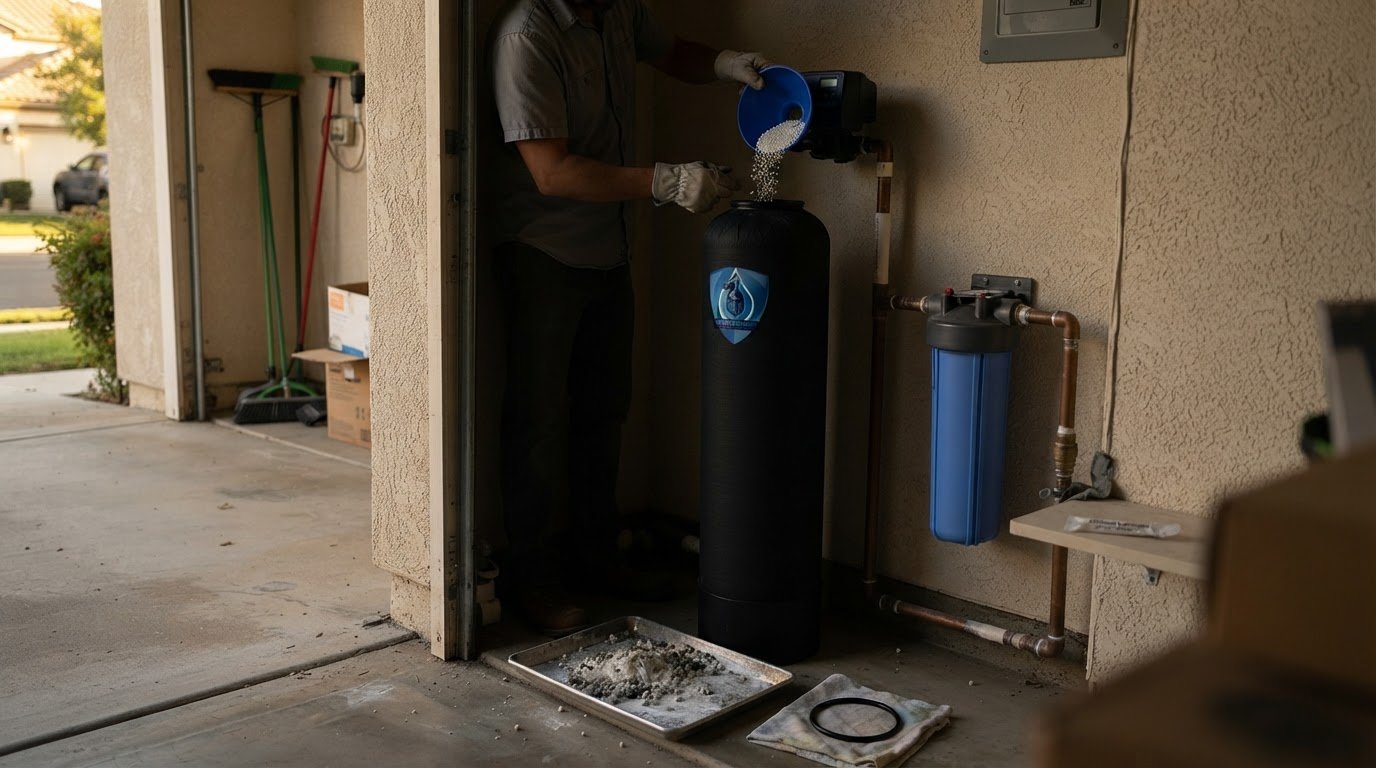
Backwashing flushes captured particles from some media systems, helping restore filtration capacity. The referenced filter’s regeneration process is scheduled for 2am. Most well water filters need replacement every 6 to 12 months, depending on water quality and usage; catalytic carbon in hydrogen peroxide systems typically lasts roughly 4 to 5 years.
An iron filter’s ability to address other contaminants depends on the system and water conditions. Don’t assume an iron filter removes either; those contaminants need treatment designed for them. Well-water filtration systems can address bacteria, iron, sediment, sulfur, and manganese when configured for the test results.
Point-of-use filtration treats water at a specific faucet and may suit a drinking-water concern. Whole-house filtration is a broader option when iron or odor affects water throughout the home. System cost depends on treatment stages, media, and water conditions, so one price can’t describe every setup. Reverse osmosis can become plugged if feed water contains too much iron, making whole-house treatment the more suitable primary approach for iron-specific problems.
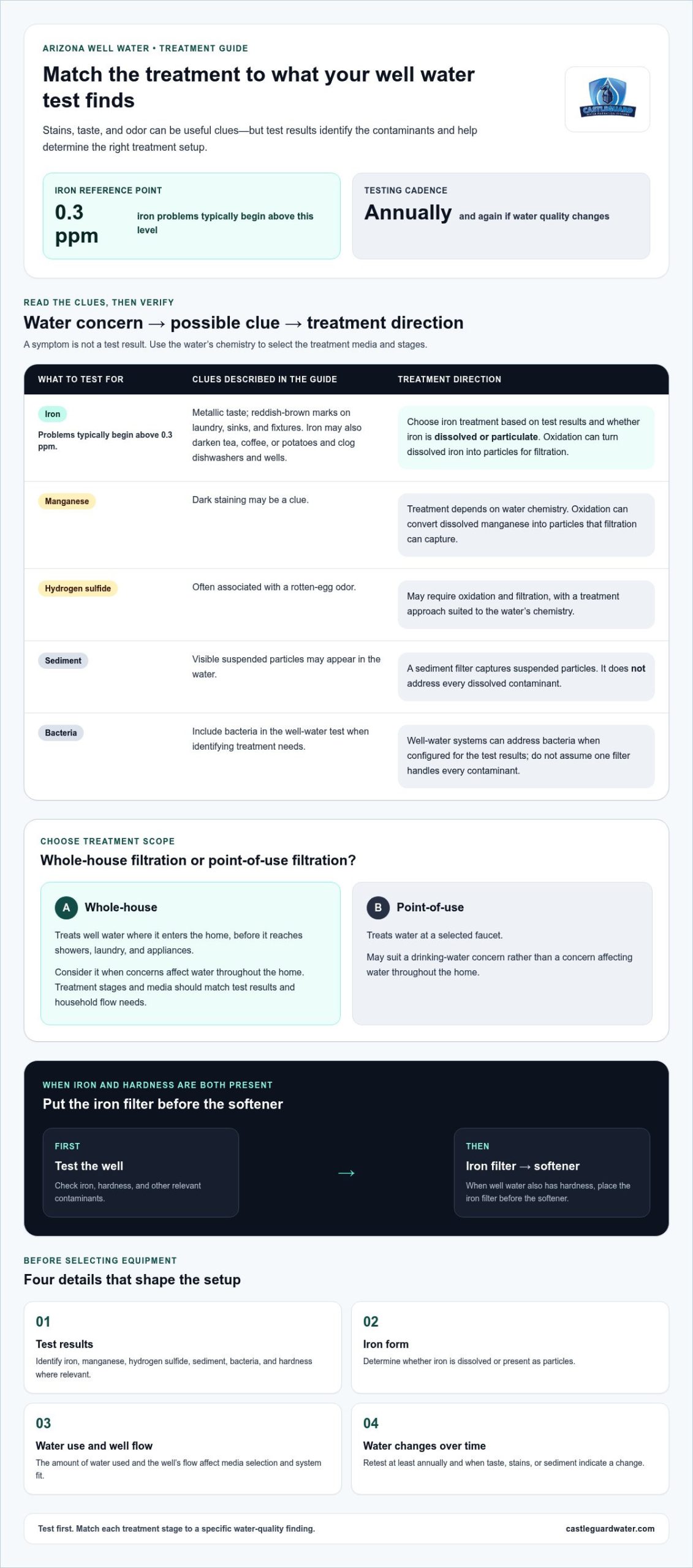
If well water contains both iron and hardness, place the iron filter before the water softener. This lets the iron treatment address iron before the water reaches the softener. The softener then focuses on hardness by reducing calcium and magnesium. Filtration and softening solve different problems, so one unit shouldn’t be treated as a substitute for the other.
Sequence matters because water treatment equipment has distinct jobs. An iron filter targets iron, while a softener exchanges hardness minerals to reduce scale on fixtures and appliances. The Centers for Disease Control and Prevention notes that softeners can be designed to remove iron and manganese, but that capability depends on system design. The Minnesota Department of Health says softeners may be useful for treating ferrous iron concentrations between 2 and 5 milligrams per liter.
Use test results to determine whether both treatments belong in your setup. If tests show iron and hard water, the general sequence is:
This order also clarifies what each stage should do. For example, a household with iron stains and hard-water scale needs more than a softener alone. Conversely, if testing identifies hardness without an iron concern, an iron filter may not be necessary. Water flow, chemistry, and treatment capacity all matter when selecting equipment. Don’t choose a sequence based only on orange stains or scale; let test results guide the design.
For a setup that addresses well-water concerns alongside softening needs, explore Well Water Systems and consider how treatment stages fit together in your home.
CastleGuard’s City System is an option to explore for a city-water home; private-well owners can consider its Well Water Systems. Start with your well test results, then match the treatment approach to the contaminants identified and the order of filtration and softening your home needs. If results point to bacteria, Ultraviolet Systems may also be relevant; Drinking Systems are another option for treating water at the drinking tap. These offerings give you a practical starting point for connecting water concerns with an appropriate system category, without treating every home’s needs as the same. For help exploring CastleGuard’s water system options, visit castleguardwater.com.
Use your test results as a practical starting point for choosing treatment that fits your household, rather than adding equipment without a clear purpose. If you’re considering an iron filter for well water in Arizona, keep your results handy and note which concerns matter most, such as staining, odor, or drinking water. This gives you a focused basis for comparing system options and priorities.
CastleGuard offers Well Water Systems for homes using well water, along with a City System for homes on city water. Ultraviolet Systems are also available. The right option depends on your water source and treatment goals, so start with the need you’ve identified instead of assuming one setup suits every home.
Contact CastleGuard about well water to explore a system path for your household. A clear next step can make water treatment decisions feel more manageable and help you move forward with confidence.
For an iron filter for well water in Arizona, choose the treatment type based on test results and household flow needs. Oxidizing systems turn dissolved iron into particles for filtration, while sediment cartridges capture suspended material. A cartridge alone may not address dissolved iron or sulfur odor. For example, a home with both iron and sediment may need separate treatment stages rather than one general-purpose filter.
Iron-related water problems typically begin above 0.3 parts per million (ppm). The Water Quality Association notes that iron can cause a metallic taste, though other substances can also cause one. The Minnesota Department of Health says iron may discolor tea, coffee, or potatoes and clog dishwashers and wells. This water-quality benchmark doesn’t establish whether other contaminants pose health concerns, so assess those separately.
Oxidation converts dissolved iron into particles that a filter can capture. Cartridge filters are useful for suspended particles, but shouldn’t be assumed to remove dissolved iron or treat sulfur odor. According to the Centers for Disease Control and Prevention, a water softener can be designed to remove iron and manganese. Its primary role is reducing hardness minerals, so treatment choice depends on the specific water chemistry.
Choose a system that can treat your well’s effective pump flow while meeting household demand. A useful starting step is measuring pump output with a 5 gallon bucket, then considering how many fixtures may run together. For example, simultaneous showers and laundry require more flow than a single tap. Filter capacity and treatment media also need to match test results, not just home size.
There isn’t one useful price for every Arizona well-water system. Total cost depends on filtration stages, treatment media, flow capacity, plumbing changes, and ongoing replacement or upkeep. A system for iron alone differs from one treating iron, sediment, and odor. Compare the equipment and maintenance included in each setup, and separate system costs from installation expenses.
Groundwater in Arizona can pick up naturally occurring iron as it moves through local geology, so nearby wells may still have different water chemistry. Test results help determine whether iron is dissolved or particulate and whether manganese, sulfur odor, hardness, or sediment also needs attention. For example, a setup for dissolved iron may need different treatment stages from one designed to handle visible particles.