Cleaning removes visible scale, but it does not remove the minerals that make it return. Limescale is a chalky deposit made mostly of calcium carbonate, formed from minerals such as calcium and magnesium in hard water. Limescale buildup prevention in Southern California starts with addressing recurring mineral deposits, not just wiping away residue.
If you’re tired of cleaning faucets and shower glass only to see spots return, the cause is simple: fresh water keeps bringing minerals into your home. In Southern California’s dry climate, water left on surfaces can evaporate quickly, leaving minerals behind. Over time, deposits may also collect inside plumbing and water-using appliances.
This guide explains what limescale is made of, why it returns after cleaning, and how it can affect pipes and appliances. You’ll also learn how dry conditions contribute to visible buildup and which practical prevention methods can help protect your home.
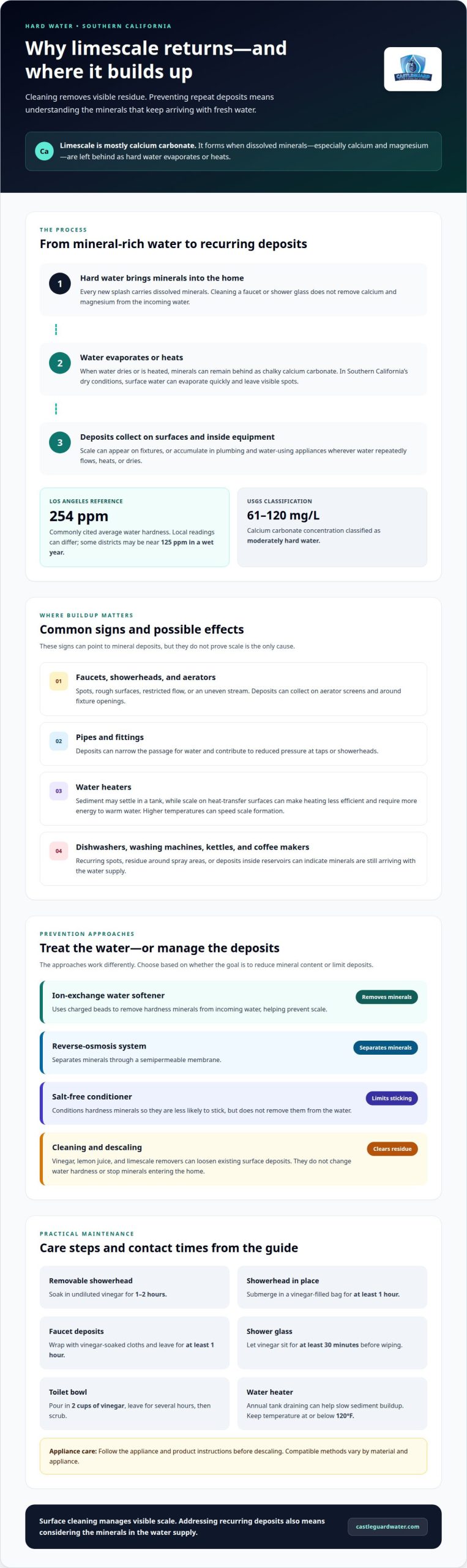
Hard water contains dissolved minerals, especially calcium and magnesium. When water evaporates or heats, these minerals can leave chalky calcium carbonate deposits. Los Angeles water has a commonly cited average hardness of about 254 ppm. Local readings can differ: some districts may be near 125 ppm in a wet year. Changing supply sources and conditions can shift the mineral profile reaching a home. According to the U.S. Geological Survey, water containing 61 to 120 mg/L of calcium carbonate is considered moderately hard.
Scale can collect inside pipes, narrow their openings, and contribute to lower water pressure. At faucets and showerheads, deposits can restrict flow and leave rough, spotted surfaces. In water heaters, minerals can settle on tank bottoms or coat heat-transfer surfaces. This layer makes heat transfer less efficient, so the heater may need more energy to warm water. Dishwashers, washing machines, coffee makers, and kettles can also develop scale where water repeatedly heats or dries. Over time, buildup may interfere with normal operation.
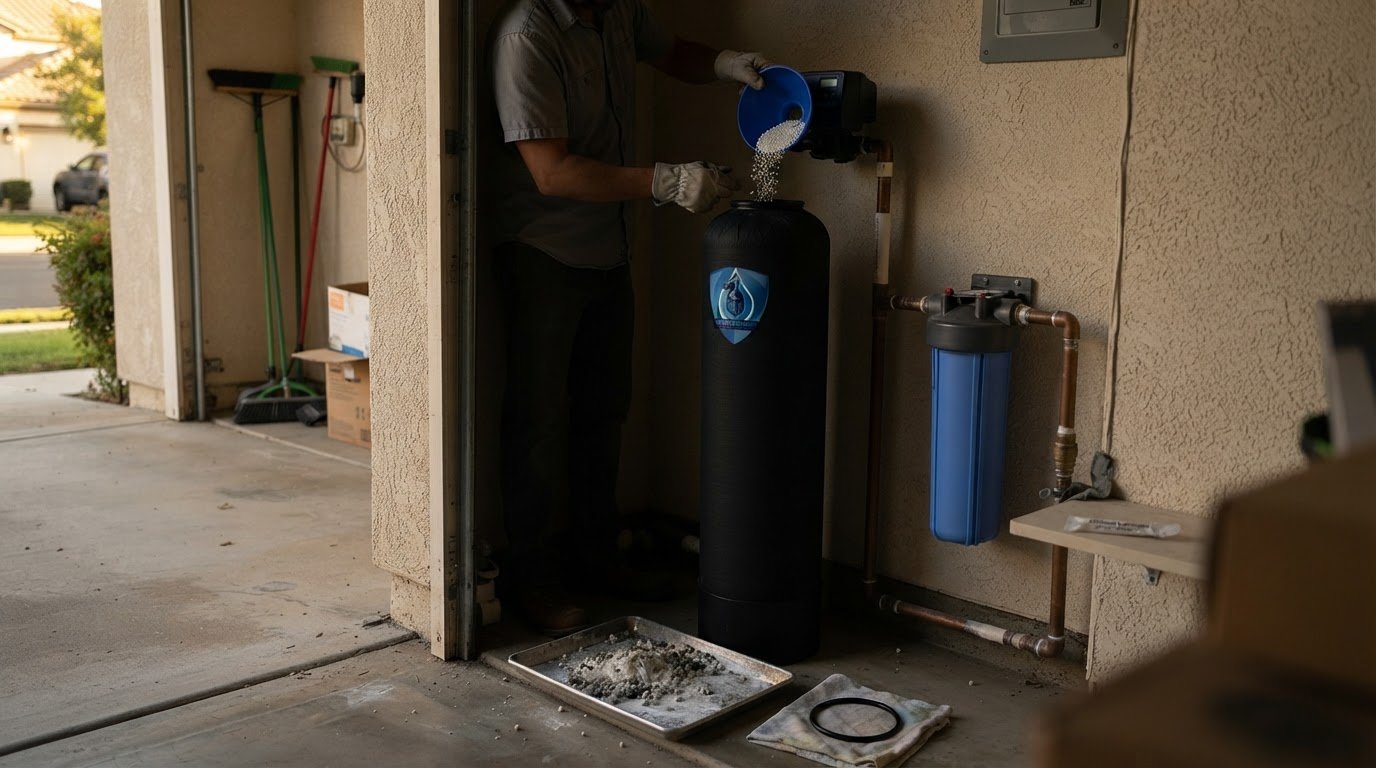
Water softeners can help prevent scale by treating incoming water. Ion-exchange softeners use charged beads to remove hardness minerals, while reverse-osmosis systems separate minerals through a semipermeable membrane. Salt-free conditioners work differently: they condition hardness minerals so they are less likely to stick, but do not remove them from the water. The right approach depends on whether your goal is to reduce mineral content or limit deposits.
There isn’t one fixed amount of salt and water used by a typical softener. Salt use and water for regeneration depend on the system, hardness, household water use, and settings. For a water heater, regular draining can help slow sediment accumulation; keeping its temperature at or below 120 degrees Fahrenheit can also help. These steps reduce conditions that encourage buildup, but minerals may still enter with incoming water.
Wiping away a deposit removes scale already on a surface, not the calcium and magnesium in the water supply. Each new splash can leave fresh minerals behind as it dries. That’s why a clean faucet may spot again, especially when hard water continues to reach the fixture. Cleaning manages visible deposits; preventing them from recurring means addressing the water that carries minerals into your home.
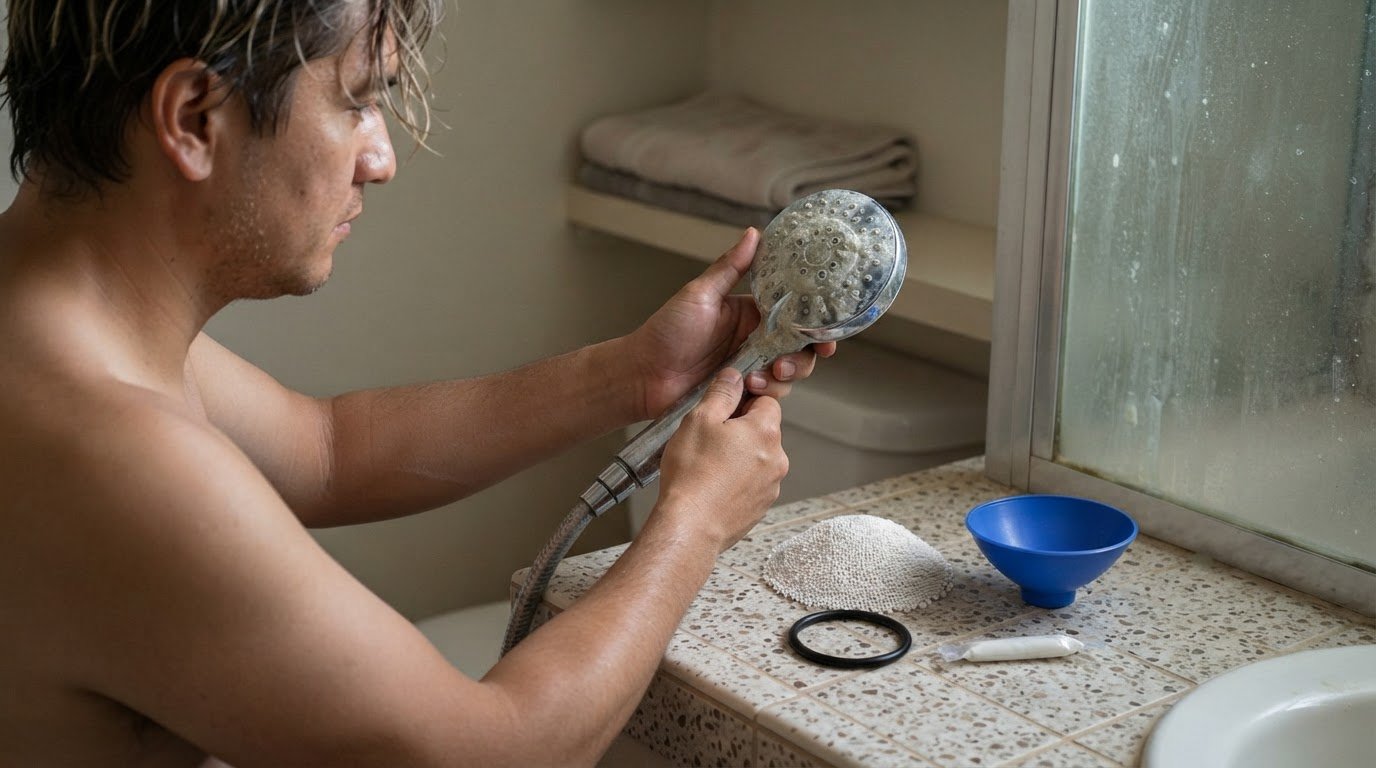
White vinegar offers practical ways to loosen existing buildup. Soak a removable showerhead in undiluted vinegar for one to two hours. For a showerhead that stays in place, submerge it in a vinegar-filled bag for at least an hour. Wrap faucet deposits with vinegar-soaked cloths and leave them for at least one hour. On shower glass, let vinegar sit for at least 30 minutes before wiping. For a toilet bowl, pour in two cups of vinegar, leave it for several hours, then scrub.
Lemon juice contains citric acid, while limescale removers may use citric acid or hydrochloric acid. These products can loosen surface scale, but they do not change water hardness or remove minerals from the incoming supply. Follow the product label and the fixture or appliance instructions, since suitable cleaning methods vary by material. Regularly cleaning bathroom fixtures can keep deposits from becoming harder to remove, but it won’t stop new minerals from arriving.
Salt-based softeners and salt-free conditioners affect hardness minerals differently. Ion-exchange softeners use charged beads to remove minerals; salt-free conditioners condition them to reduce sticking while leaving them in the water. For an existing salt-free conditioner kit, follow its care instructions as part of your prevention routine. Vinegar can help clean a showerhead or faucet, but limescale buildup prevention in Southern California also means considering the water itself.
Calcium carbonate residue can accumulate inside household supply pipes and around fittings. As deposits build, they can narrow the passage for water and contribute to reduced pressure at taps or showerheads. A change in flow can have several causes, but scale is one possibility when hard-water residue appears on nearby fixtures. Deposits can also collect on aerators, the small screens attached to many faucets, and disrupt an even stream. Cleaning an aerator can clear surface residue; scale farther inside the plumbing requires a different approach.
Appliances that repeatedly heat or use water can develop mineral deposits on internal parts. Dishwashers may leave spots on dishes or residue around spray areas; washing machines can accumulate scale where water enters or heats. Coffee makers and kettles may show deposits inside their reservoirs. These signs don’t reveal an appliance’s full condition, but recurring residue can indicate that minerals are still arriving with the water supply. Follow each appliance’s care instructions before choosing a descaling method.
Water heaters are vulnerable because heat can encourage mineral scale to form on internal surfaces. Sediment can settle in a tank, while scale on a heat-transfer surface can make heating less efficient. Higher water temperatures can speed scale formation. Draining a tank annually can help slow mineral buildup, and keeping its temperature at or below 120 degrees Fahrenheit can also help. These maintenance steps address accumulation inside the heater, rather than deposits on visible bathroom surfaces.
Regular descaling helps manage appliance deposits before they become harder to remove. To descale a dishwasher, run it empty with a cup of white vinegar in a dishwasher-safe container on the bottom rack. For a washing machine, run a full hot cycle with one cup of vinegar and no detergent. Use only methods compatible with the appliance’s instructions. Descaling clears existing deposits, but it doesn’t remove minerals entering through the plumbing, so scale may form again.
Dry air can make water evaporate quickly from bathroom surfaces, leaving dissolved minerals behind. A splash on a faucet or shower screen may dry into a chalky deposit rather than remain visibly wet. The deposit is mostly calcium carbonate, which doesn’t dissolve easily in water. As fresh droplets dry, more residue can collect in the same spot. That’s why a recently wiped fixture may show marks again after ordinary use.
Climate affects how quickly deposits become visible, but it doesn’t create calcium or magnesium. Those minerals arrive in the water supply, making local water hardness a key factor. Heat matters too: scale can form more readily on a warm surface, such as a water heater’s heat-transfer area, than on a cool fixture. Dry conditions and heat influence where and when deposits appear, while the incoming mineral content determines what can be left behind.
To limit visible residue, dry shower glass and faucet surfaces after use, especially where droplets regularly collect. For existing buildup, vinegar can loosen scale on compatible fixtures; follow the fixture maker’s care instructions. A removable showerhead can be soaked in undiluted vinegar for one to two hours. These steps address surface deposits, not minerals in the supply. Washing machines and dishwashers also need care suited to their manuals, since routine use doesn’t prevent mineral scale.
There isn’t one answer for every home’s water-softener setup across Southern California. Whether restrictions or brine-discharge permits apply depends on the local municipality and discharge arrangement. Whole-home softener costs also vary with system capacity, household water demand, plumbing configuration, and installation scope, so one figure wouldn’t represent every home. The practical takeaway is to distinguish climate-driven evaporation from water hardness: wiping helps surfaces, while treating incoming water addresses minerals throughout the plumbing. A suitable prevention plan should account for both.
CastleGuard offers water-treatment options for homeowners addressing water quality concerns, including recurring mineral deposits. The right system depends on your water source and treatment goals. CastleGuard’s City System and Well Water Systems serve different household water supplies, while Drinking Systems treat drinking water. Ultraviolet Systems provide another water-treatment option.
If scale keeps returning after cleaning, consider the difference between removing visible deposits and treating water before it reaches your fixtures. CastleGuard’s systems offer options to match different household water needs, rather than assuming one solution suits every home.
Contact CastleGuard to discuss water-treatment options for your home.
Rather than treating every new spot as a separate problem, decide what you want your home’s water-treatment approach to achieve. You might prioritize easier fixture care, appliance protection, or improved drinking water. Clear priorities help you focus on solutions that suit your household instead of chasing every mark with another round of cleaning.
A thoughtful approach to limescale buildup prevention in Southern California considers your water source, daily water use, and the areas of your home that matter most. These details create a practical starting point for comparing options and deciding what your household needs from a system. The goal is a manageable plan that supports the way your family uses water.
For a calm next step, Contact CastleGuard about limescale and discuss the water concerns you’d like to address. A clearer plan can make ongoing home care feel more straightforward.
Limescale is a mineral residue that forms when hard water leaves deposits on surfaces or inside water-using equipment. It consists mostly of calcium carbonate, created from dissolved calcium in water. Magnesium is another common hardness mineral, though the visible chalky scale is mainly calcium carbonate. A ring at a kettle’s waterline is one familiar example of minerals left behind as water evaporates.
Limescale in drinking water is not harmful to health, but deposits can create maintenance concerns for household systems. For example, scale on a faucet aerator may disrupt an even stream, while buildup inside a water heater can interfere with heat transfer. These are equipment and performance issues; visible scale alone is not a reason to assume drinking water is unsafe.
Scale forms when dissolved minerals come out of water and collect on surfaces or inside equipment. Evaporation leaves minerals behind on surfaces such as shower glass, while heat and pressure changes can encourage deposits in plumbing and appliances. Water hardness affects how much calcium and magnesium is available to form scale. A heated appliance, such as a kettle, provides a clear example of where deposits can accumulate.
Scale can narrow plumbing passages, reduce water flow, and collect on components that move or heat water. A faucet that starts spraying unevenly may have residue on its aerator, while deposits on a kettle’s heating surface can make heating less efficient. Dishwashers, washing machines, and coffee makers may also need descaling. Symptoms depend on where minerals have accumulated and how the equipment uses water.
Los Angeles water has a commonly cited average hardness of about 254 ppm, while some districts can be near 125 ppm in a wet year. Hardness varies by neighborhood and supply conditions, so those figures don’t identify one consistently highest area. Los Angeles homeowners can find neighborhood-specific hardness information in the annual LADWP Consumer Confidence Report.
Minerals in the household water supply cause limescale, while local conditions influence where deposits become visible. In Southern California’s dry climate, droplets on bathroom fixtures or glass panels can evaporate and leave chalky residue. Heat inside a water heater can also encourage scale formation. The water source and its mineral content matter too, so city-water and well-water homes may have different water characteristics.