If you’re wondering how to improve tap water taste in Phoenix, start by identifying what you notice: a pool-like chlorine taste, an earthy or musty flavor, or a mineral edge. These clues can help you choose what to investigate before you buy a filter, but taste alone cannot identify the cause.
An unpleasant flavor can make you wonder whether the water is unsafe. Phoenix tap water is considered safe to drink under federal and state standards, and an off-flavor by itself doesn’t necessarily signal a safety problem. Chlorine is used for disinfection, while naturally occurring minerals contribute to hardness and may affect taste.
This guide connects common flavors with possible causes and walks you through practical checks, such as comparing faucets and chilling a sample. If the taste persists, you can compare treatment options by where they treat water: a drinking water system serves a selected tap, while a City System treats water throughout the home.
An unpleasant taste doesn’t automatically mean your water is unsafe. Before choosing a remedy, note the flavor and odor, which faucets are affected, and whether the taste changes after water has been sitting. These observations can help narrow down what to investigate, but they are not a water test.
These are possibilities, not diagnoses. Treatment can influence taste and odor; water treatment processes include steps that affect water before it reaches a home. The same flavor can have more than one explanation, so avoid selecting a filter based on taste alone.
Look for a pattern rather than relying on one glass. Does the taste occur at one faucet or several? Is it noticeable in cold water, or stronger after water sits in a line? Taste can vary with a building’s plumbing, individual fixtures, and timing. Comparing these details helps you describe the issue and decide what to investigate next, but it can’t confirm what’s in the water.
Taste alone cannot establish whether water is safe. The U.S. EPA distinguishes aesthetic concerns, such as taste and odor, from health-based drinking-water standards. An unpleasant taste is an aesthetic concern, not a reliable measure of whether water meets health-based standards. For current local information, consult the latest City of Phoenix Water Quality Report. If you’re researching how to improve tap water taste in Phoenix, treat flavor as a starting clue and use reliable water-quality information to guide your next step.
A taste change can begin before water reaches your home or develop as it passes through your building’s plumbing. Disinfectants used in public water treatment may affect taste or odor; the CDC explains the purpose of these steps in its overview of public water treatment steps. Mineral content can also give water a distinct taste. Hardness describes minerals in water, not whether the water is safe to drink.
An off-flavor is a clue to investigate, not a cause to presume. The pattern matters: a change at several taps may have a different explanation from a taste limited to one faucet.
The latest City of Phoenix Consumer Confidence Report, also called the water-quality report, provides current local information about water sources, treatment, and reported measurements. Find it through the City of Phoenix Water Services Department’s official website. Use the current report rather than older summaries, since local conditions and reporting periods can differ. The report describes the broader system, but it may not explain a taste change specific to your home.
Compare cold water from several faucets. If the taste appears at just one tap, the faucet or nearby plumbing may be worth examining. If it occurs throughout the home, the cause may be broader. This comparison helps you describe the pattern, but it cannot identify a contaminant or establish safety. Sudden, persistent metallic taste or visible discoloration deserves prompt attention: pause using the affected water for drinking and cooking, and seek guidance from a qualified plumbing professional or the water utility.
After comparing taps and reviewing local information, you’ll have a clearer basis for deciding how to improve tap water taste in Phoenix. If your concern calls for a whole-home approach, explore CastleGuard’s City System for city water.
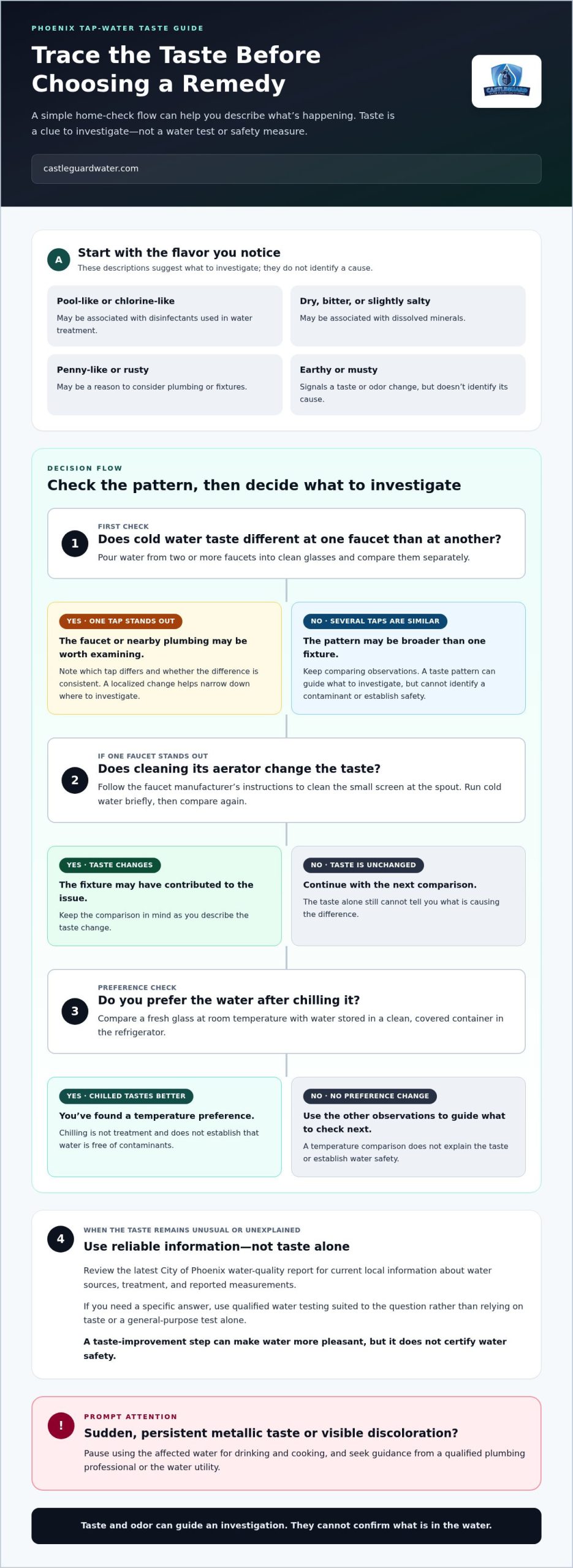
Try simple checks before buying equipment. They can help you tell whether the taste is limited to one faucet, changes with storage, or persists across the home. Use them to troubleshoot a taste preference, not as a substitute for water-quality information.
If the taste remains unusual or you can’t explain the change, review the latest City of Phoenix water-quality report for current local information. If you need a specific answer, use qualified water testing suited to the question rather than relying on taste or a general-purpose test alone. A taste-improvement step can make water more pleasant, but it does not certify water safety.
Once you’ve completed these checks, use the pattern you observed to decide what to explore next. For broader context on whole-home treatment options, read the whole-house city water filter guide. If you’re considering a city-water system, explore CastleGuard’s water treatment options and compare the treatment location with your household’s needs.
The right approach depends on what you want to address and where you want treated water. A taste preference at the kitchen sink may call for a different treatment location than a concern affecting water throughout the home. First define the concern and where it occurs, then compare options without assuming one system suits every household.
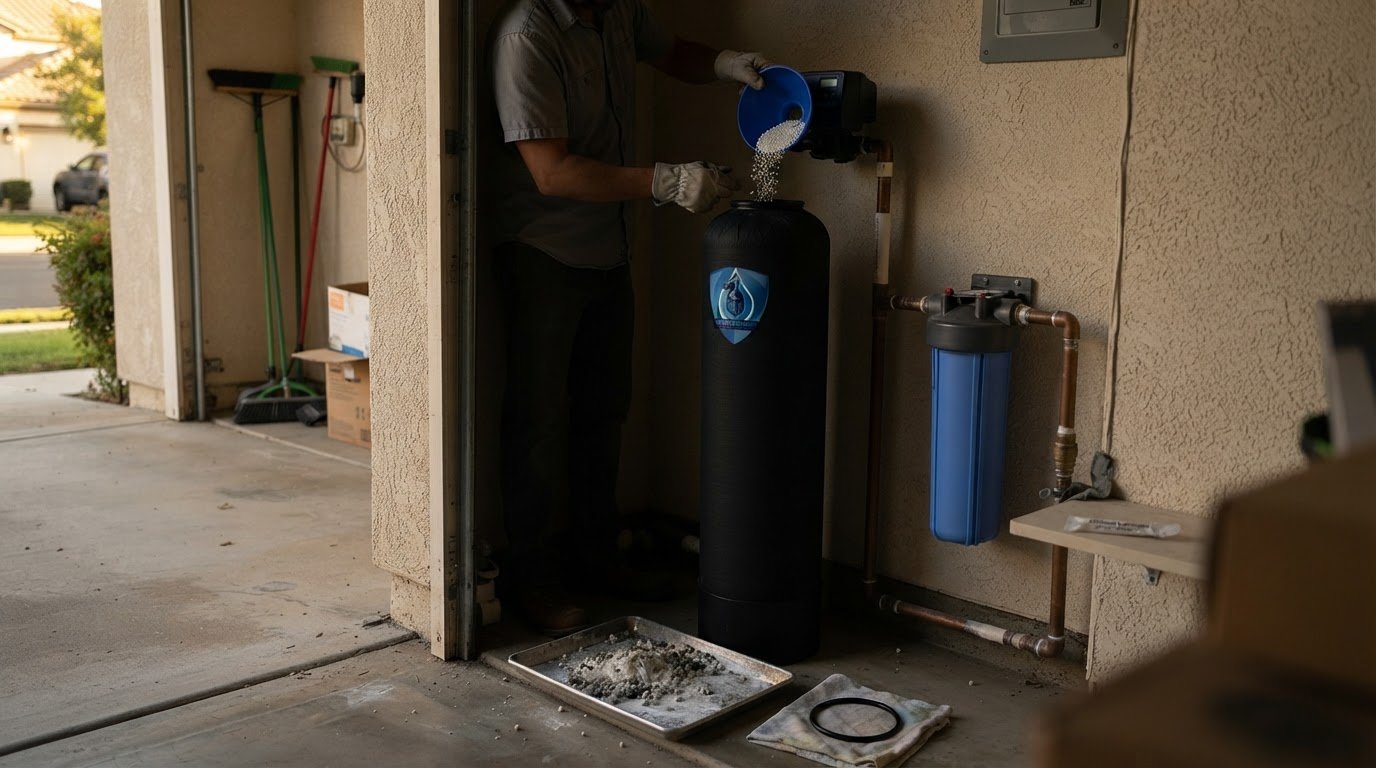
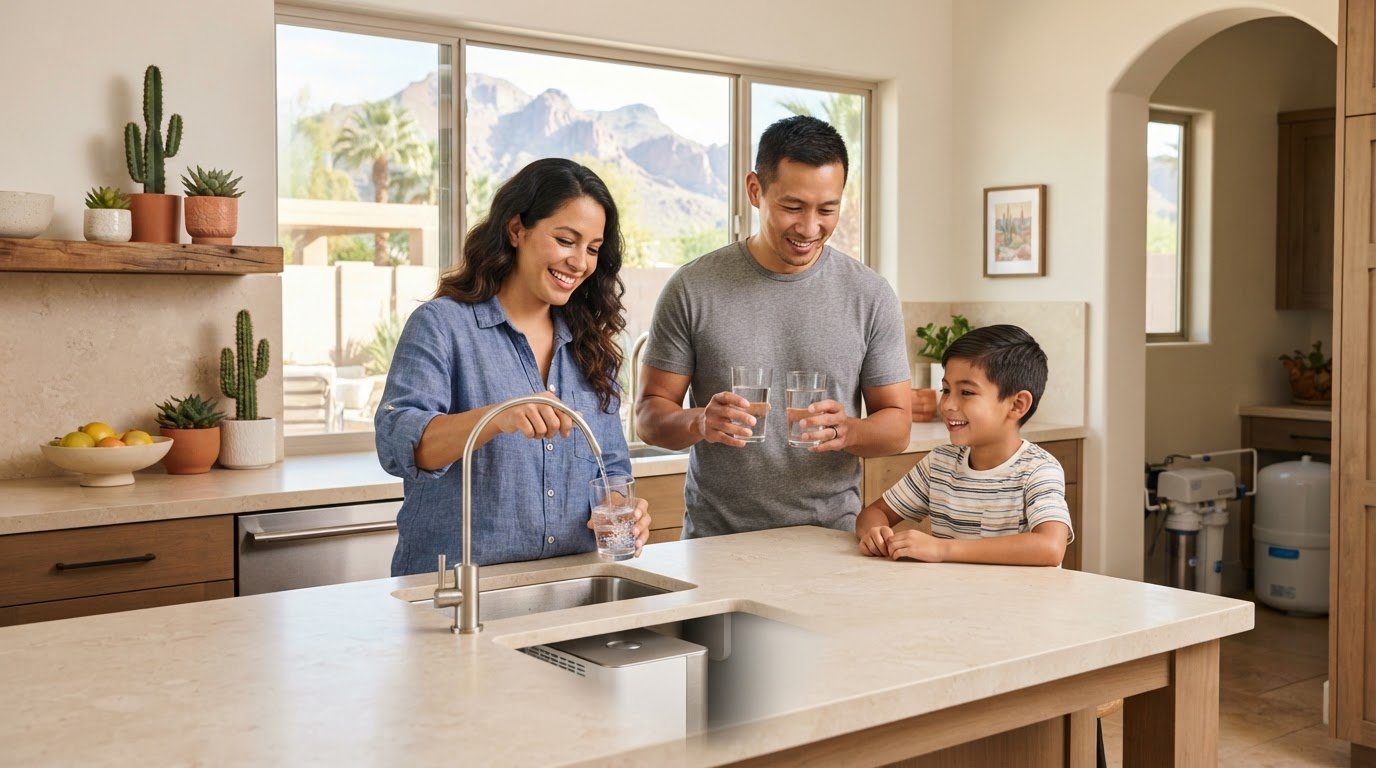
A point-of-use drinking water system treats water at a selected outlet used for drinking. It may suit a household focused on water from one tap. A whole-home system treats water at the home’s incoming supply, serving multiple taps and water-using areas. CastleGuard’s City System is a whole-home option for city-water applications. These categories differ by treatment location, not by a promise that either will resolve every taste concern.
Include ongoing care in your comparison. Treatment media may need attention over time, so consider maintenance when weighing systems. The whole-house water system maintenance guide offers context on maintaining a whole-home system.
Use your observations to define the need: Is the concern verified, and do you want to address water at one drinking outlet or across the home? The appropriate system and media depend on the concern and product details. Avoid choosing solely by a flavor description or assuming a filter removes every unwanted substance. To decide how to improve tap water taste in Phoenix, match the treatment category to the issue and the locations where you want treated water.
For a focused drinking-water option, explore CastleGuard’s drinking water system guide. You can also explore CastleGuard’s city-water options and compare them with your household’s needs.
You don’t have to solve every water concern at once. Decide what matters most in your home: improving water at the drinking tap, addressing a verified concern across the household, or getting more information before choosing treatment. A focused next step can help you avoid buying equipment that doesn’t match your needs.
CastleGuard offers drinking water systems for point-of-use needs, a City System for city-water applications, and replacement media. The right fit depends on the concern and where you want treated water, not just on a flavor description. As you explore how to improve tap water taste in Phoenix, keep your household’s priorities at the center of the decision. CastleGuard serves homeowners in Southern California, Nevada, Arizona, Texas, and Florida.
Explore CastleGuard’s city-water solutions and compare the whole-home option with your household’s needs. You can also explore its drinking water systems for a selected tap.
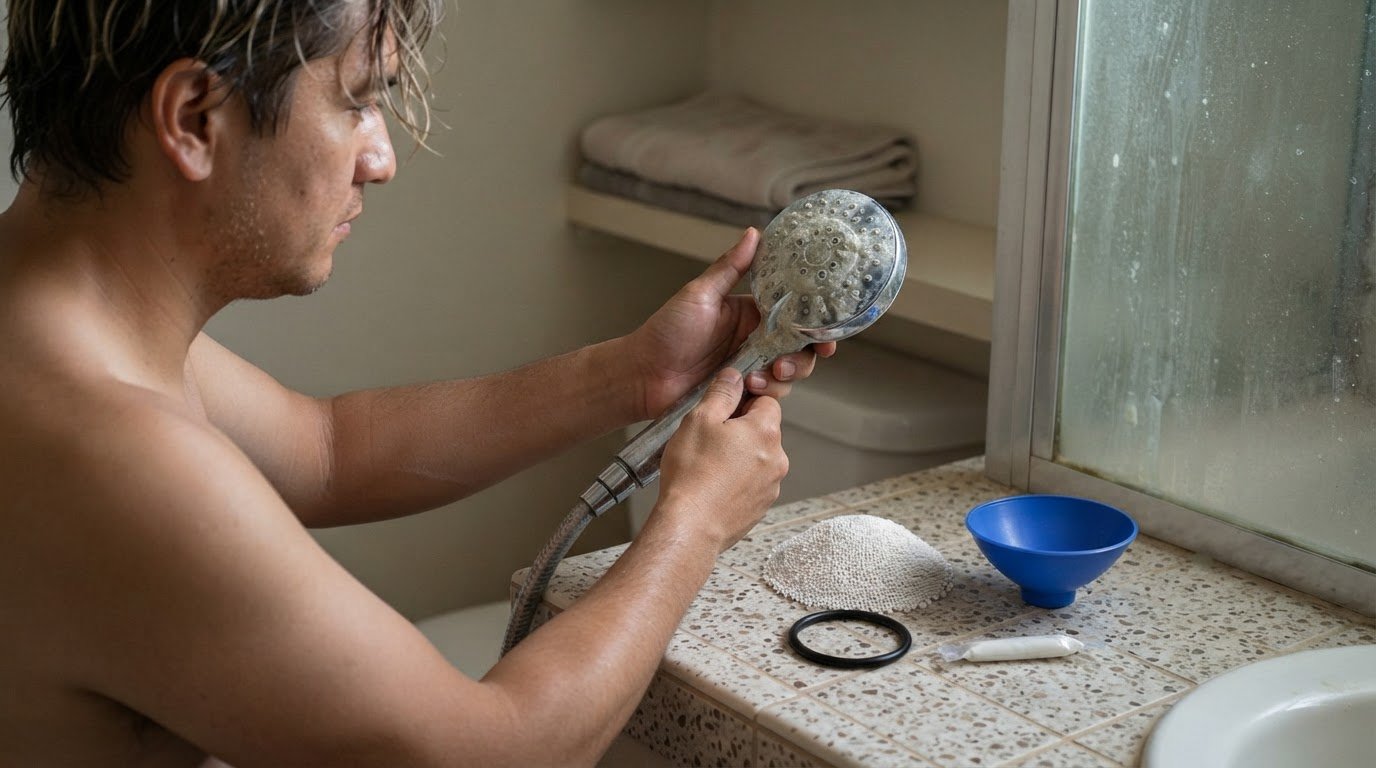
Yes. Start with simple checks: compare cold water from different taps, clean the faucet aerator according to its care instructions, then chill a sample in a clean, covered container to see whether you prefer it cold. These steps can help you assess taste, but they don’t remove contaminants or test safety. If the flavor is persistent, sudden, or unusual, consult current City of Phoenix water-quality information or consider appropriate testing.
A chlorine-like taste alone can’t tell you whether water is safe or unsafe. Check the latest City of Phoenix water-quality report for information about the municipal supply, while remembering that taste may differ between taps or homes. If the flavor changes suddenly, or you notice discoloration or another unusual sign, consult official utility guidance and seek appropriate help rather than relying on taste to judge safety.
Boiling isn’t a general fix for unpleasant taste, and it shouldn’t be treated as a way to remove all contaminants. It may change some volatile compounds, but the result depends on what causes the flavor; boiling can also concentrate certain substances as water evaporates. Identify the concern and follow official safety guidance before using boiling as a remedy, especially if a local water advisory is in effect.
Different aerators, fixture condition, household plumbing, or water that has been sitting in a particular line can affect what you notice. Compare taps after following any flushing guidance from the local utility, and note whether the taste changes after water runs. If only one faucet is affected, or a metallic taste persists, investigate that fixture or its plumbing instead of assuming the city supply is the cause.
Choose based on where you want treated water and the concern you’re addressing. A drinking water system treats water at a selected outlet, while a whole-home system treats incoming water for use throughout the home. If your goal concerns only the kitchen drinking tap, point-of-use treatment may fit that location. Review product-specific information, including intended use and media-care needs, before selecting a system.