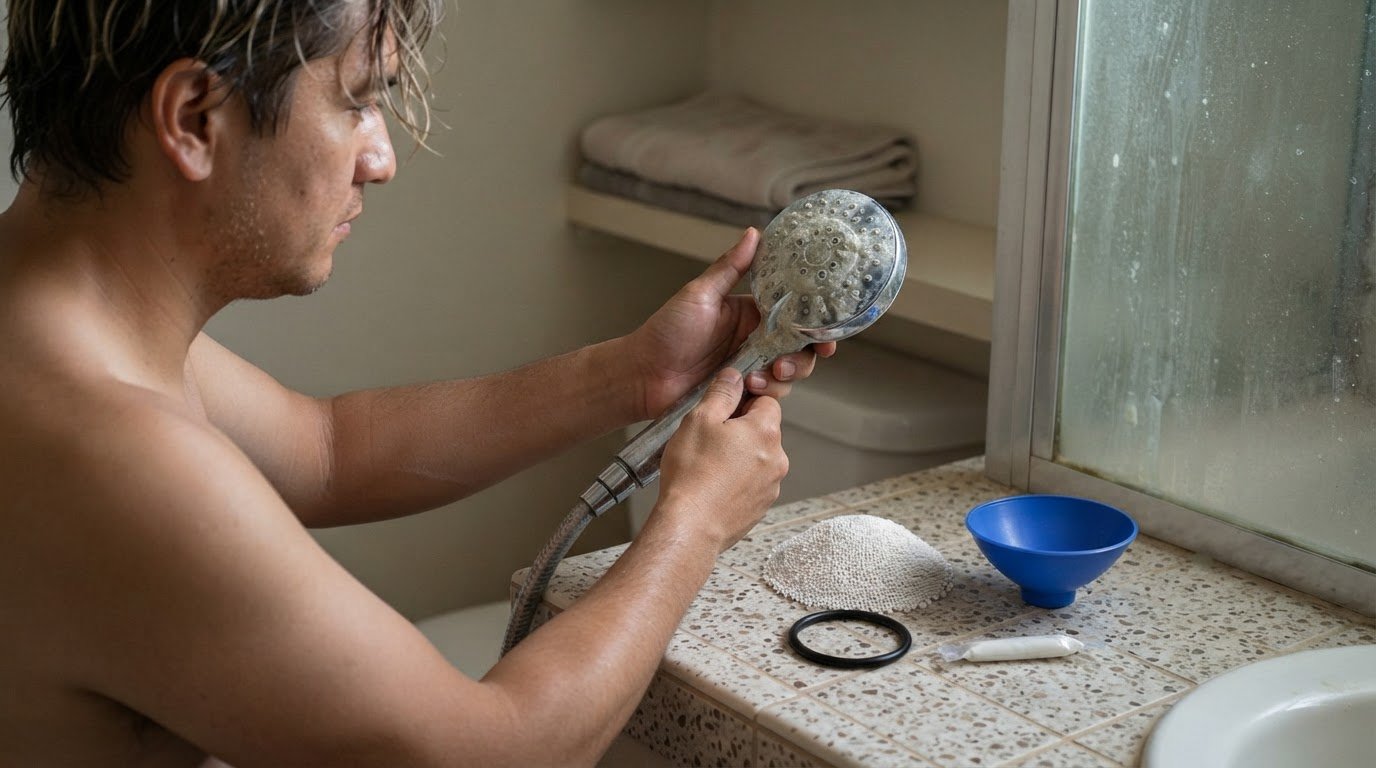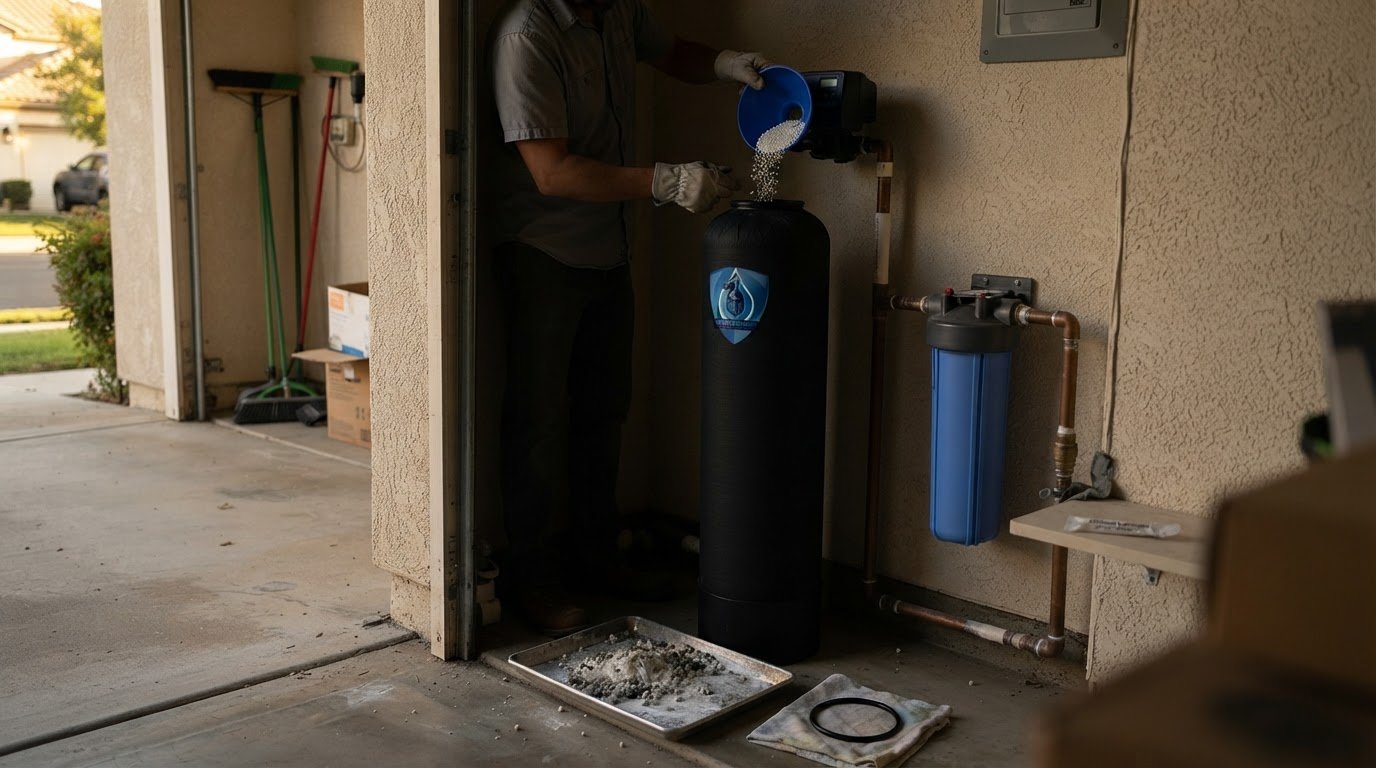


A calendar reminder can help, but it can’t tell you on its own when a whole-house water system needs attention. Filters and treatment media can have different care requirements depending on the equipment, water source, and household use. A change in water flow or taste is worth noting, but it doesn’t automatically mean a filter needs replacing. Effective whole house water system maintenance starts with knowing what your equipment does, what its instructions require, and which changes to watch for.
This guide explains how to inspect your system, keep useful maintenance records, and plan for the right replacement media without relying on a one-size-fits-all schedule. You’ll learn how care can differ between city-water and well-water systems, how to respond to changes in operation, and why your system manual is the best starting point for replacement intervals. These steps can help make routine care easier to manage, whether your home is in Southern California, Nevada, Arizona, Texas, or Florida.
Whole house water system maintenance means inspecting and caring for the equipment that treats water as it enters your home. A consistent routine can help you spot leaks, visible wear, and changes in operation, while your system’s instructions explain which components need attention and when. A sediment filter, conditioner, softener, and ultraviolet unit all have different upkeep needs. Understanding how a water filter works can help explain why maintenance differs among treatment methods.
There’s no single replacement calendar that fits every home. Even systems that look similar may treat different water or use different components. Start with the manual for your exact equipment, rather than applying a schedule you found for another model.
Regular inspections and media care help you notice leaks, visible damage, or changes in operation that might otherwise go unrecorded. Filtration systems may use cartridges or media; conditioning and softening equipment have their own components and instructions; ultraviolet systems require attention to their specific equipment. These systems don’t share one maintenance checklist. Identify each component and its purpose so you can focus on the right checks and avoid replacing parts unnecessarily.
Your water source and treatment setup determine what’s worth monitoring. A city-water system is designed for municipal water, while a well-water setup may be selected for the conditions of an individual water supply. Household use also affects how much water passes through the equipment. Whether your home is in Southern California, Nevada, Arizona, Texas, or Florida, use your system documentation to understand what your setup treats and what its components require. For more context, see Whole House City Water Filter: 2026 Homeowner’s Guide and Well Water Treatment Systems: The Complete Guide to Safe Home Water in 2026.
Equipment-specific instructions matter more than a universal interval because maintenance needs depend on what your system treats and how it is built.
A useful whole house water system maintenance check separates what you can observe from what the manufacturer says to replace. Look for visible changes, record them, and use your system’s instructions to guide component care. An inspection doesn’t automatically mean a part is due for replacement.
Inspection tells you what has changed; scheduled media replacement follows the instructions for your specific equipment. Keep those tasks distinct in your notes. A change in flow or water quality is worth recording, but it doesn’t by itself prove that a filter or treatment component is worn. Use the manual to determine the next step, and don’t open or service equipment in ways its instructions don’t describe.
For city-water homes, CastleGuard’s City System is one whole-home option. CastleGuard also offers replacement carbon and salt-free conditioner media kits for different system needs. Match replacement media to your equipment documentation, since the two kit types aren’t interchangeable.
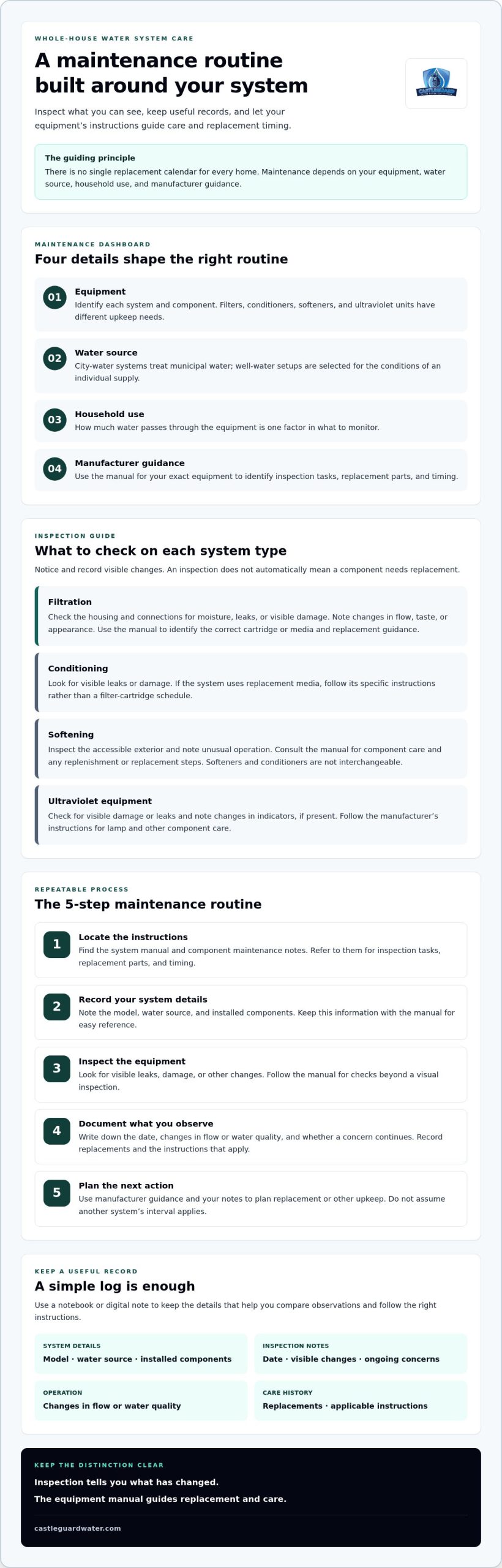
A repeatable routine makes whole house water system maintenance easier to remember and helps you respond methodically when something changes. Use these steps to organize your checks, then follow the instructions for your particular equipment to decide what care is due.
A notebook or simple digital note is enough. Record the system model, water source, inspection date, observations, and actions taken. If you replace media, note what you changed and the equipment-specific guidance for future replacement. A clear record helps you spot recurring changes without relying on memory.
If you notice a leak, reduced flow, or a change in water’s appearance or taste, record when it began, what you observed, and whether it persists. Don’t treat the symptom as a diagnosis or automatically replace media. Use the system instructions to guide your next step, and give a persistent or noticeable change prompt attention. For questions about CastleGuard products, contact customer support, available Monday through Friday.
Replacement media is one part of a maintenance plan, not a substitute for inspecting your equipment. The correct part depends on the system you own, so compare its documentation with the replacement product details before ordering. A similar-looking kit isn’t necessarily suitable for your setup.
Compare the system model and component details in your manual with the carbon filter media replacement product information. Use your maintenance log to record the last replacement, observed condition, and the manufacturer’s instructions for future care. Don’t assume a replacement lifespan from another system applies to yours. If the model or component details don’t match, don’t guess at a replacement. For help matching a kit to your installed equipment, see this guide to choosing an annual water filter maintenance kit.
CastleGuard offers replacement carbon and salt-free conditioner media kits for different system needs. They aren’t interchangeable, so match the kit type to your equipment and its documentation. If your setup uses a salt-free conditioner, Salt-Free Water Conditioner: How It Works and What to Expect can help you understand that type of system and its care.
Once you’ve identified the correct replacement and applicable instructions, plan replenishment around the system’s documented needs. Automatic filter deliveries can help homeowners remember recurring replacement needs and keep planned supplies on hand. A delivery reminder doesn’t replace inspection: continue recording what you observe and follow the equipment guidance before changing media.
A simple plan makes whole house water system maintenance easier to manage: keep system details and inspection notes together, identify the correct media, and plan replacements according to the product instructions. Explore CastleGuard water system and replacement options as you organize ongoing care for your home.
A care routine works best when it fits naturally into the way you already look after your home. Choose a regular moment to review your maintenance log, note anything that has changed, and identify the next action. This small habit can make whole house water system maintenance a manageable part of household care.
If a concern comes up, use your notes and the system instructions to guide the next step instead of guessing at the cause or replacing a component without checking its requirements. When choosing a system or replacement media, focus on what matches your water setup and equipment. CastleGuard offers whole-home water systems, replacement media kits, automatic filter deliveries, and weekday customer support to help homeowners plan ongoing care.
Explore CastleGuard whole-home water protection options and take a practical next step toward organizing water system care for your household.
Yes. Normal taste alone can’t show whether a component is due for care or whether a system is performing as intended. Follow the instructions for your specific equipment and keep a record of checks and changes, even when nothing seems different. Routine maintenance is not the same as testing or diagnosing water quality, so don’t use taste as proof that every concern has been addressed.
You can often handle basic visual checks, note changes, and keep maintenance records yourself. Hands-on tasks depend on the equipment and its instructions; a procedure suitable for one system may not apply to another. Read the product guidance before opening or adjusting components. If you’re unsure about a task, contact CastleGuard customer support for questions about CastleGuard products. Support is available Monday through Friday.
It depends on the system’s design. Some whole-house filtration equipment can operate without an electrical connection, while other systems or components may need power to function. For example, equipment that includes an ultraviolet treatment component may have electrical requirements. Check the documentation for your exact setup and connected components before assuming the system will work during a power interruption.
No single system category should be assumed to address every water concern. Treatment equipment is designed for specific purposes, and the right approach depends on your water source and test results. Homeowners in Southern California, Nevada, Arizona, Texas, and Florida may have different water sources and treatment setups. Compare your results with the relevant city-water or well-water guide to understand which system types address your needs.
Write down the replacement date, media type, and system model, along with any instructions relevant to the installed equipment. You can also note the reason for replacement, such as a scheduled change or an observed issue. This gives you a useful reference for future planning and helps you avoid relying on memory. Use the replacement schedule for your specific system, not a universal next-change date.