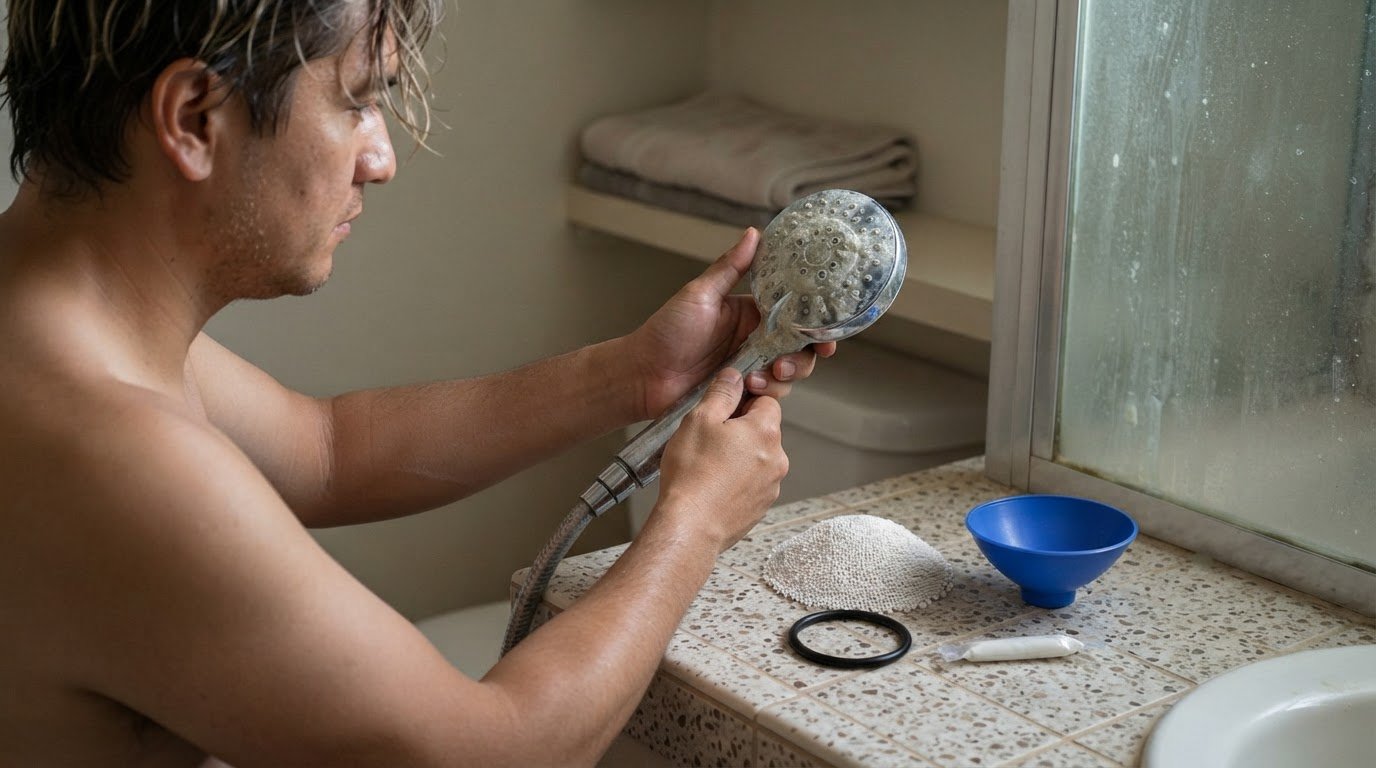
You spend hours scrubbing stubborn orange rust stains off your fixtures, only to have the metallic taste and “rotten egg” odor return within days. It’s frustrating to feel like your home’s most basic resource is working against you, especially when searching for the best water softener for well water often leads to confusing results. We understand that your priority is protecting your family and your home, and we’re here to help you regain that peace of mind.
Finding the right solution requires looking beyond basic calcium to address the iron, manganese, and sulfur unique to private wells. In this 2026 guide, you’ll discover how to choose a system that handles these complex minerals while extending the lifespan of your expensive appliances. We’ll walk you through a multi-stage defense strategy designed to provide clear, odorless water with a low-maintenance solution that fits your daily life.
Many homeowners assume any off-the-shelf unit will protect their home. However, municipal water is treated for clarity long before it reaches your tap. Well water is raw. It contains a complex cocktail of minerals that standard units aren’t built to manage. If you’re searching for the best water softener for well water, you must look beyond simple calcium removal.
Standard systems rely on a basic ion-exchange water softening process. While effective for city-grade hardness, these resin beads are easily “blinded” by dissolved iron and manganese. Once these minerals coat the resin matrix, the exchange process stops. This causes the resin to foul prematurely, leading to expensive hardware failures. You’ll likely see orange stains even when your salt tank is full.
There’s also the “rotten egg” sulfur trap. Hydrogen sulfide gas passes right through a standard softener completely untouched. A dedicated Well Water System is required to neutralize these odors at the source and provide the protection your family deserves.
These minerals act as a wrecking crew for your plumbing. Hardness creates scale, while iron and manganese create sticky deposits that clog internal valves. Current 2026 standards suggest a multi-stage approach. Pre-filtration is vital to remove oxidized particulates before they reach the softening stage, ensuring your system stays vigilant and effective.
If you’re noticing these red flags, your current setup isn’t providing the security your home needs:
Selecting the best water softener for well water isn’t a one-size-fits-all decision. Your choice must align with your home’s specific water chemistry to ensure long-term protection. While many systems look similar on the outside, the technology inside determines whether your appliances stay scale-free or succumb to mineral damage.
Salt-Based Ion Exchange remains the gold standard for heavy calcium and magnesium removal. It’s the most reliable way to achieve that “slippery” soft water feel that many families love. However, as we discussed earlier, standard resins can struggle if your well has high iron. Salt-Free Conditioners offer a different approach. They don’t remove minerals but instead change their crystal structure to prevent scale buildup. They’re excellent for maintenance-free protection, though they typically require pre-treatment if your well contains significant iron or manganese.
Air Injection Oxidizing (AIO) Systems are the true champions for well owners facing “rotten egg” odors or orange staining. By using a pocket of air to oxidize minerals, they remove iron and sulfur without harsh chemicals. At CastleGuard, we believe in matching the hardware to your specific mineral profile to ensure your system remains a vigilant guardian of your home’s plumbing.
In regions like Arizona or Nevada, where hardness levels are extreme, salt-based systems usually win. They provide the thorough mineral removal needed to protect your plumbing and fixtures. Salt-Free Conditioner Kits are ideal if you want an eco-friendly way to manage scale without the recurring task of hauling heavy salt bags.
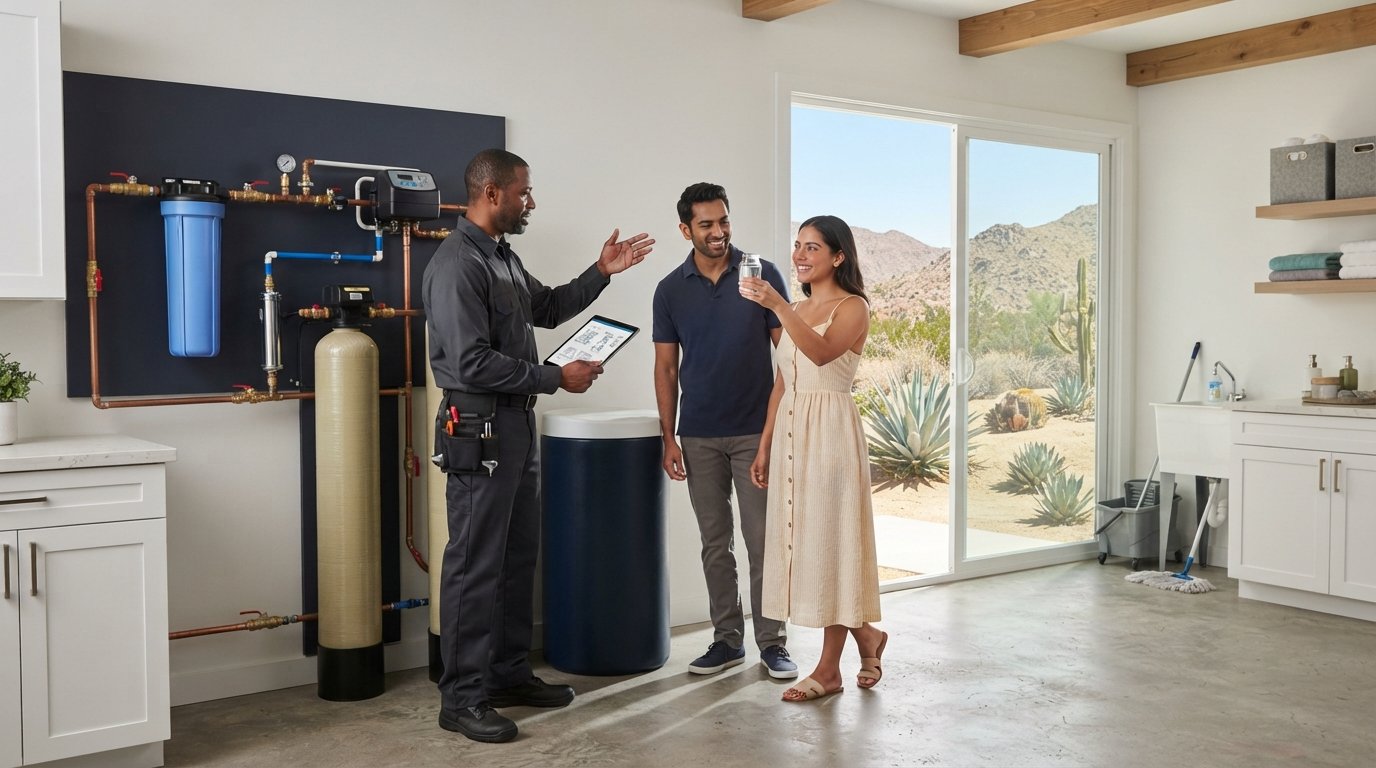
Softening alone doesn’t ensure your water is safe for your family. Since wells aren’t regulated like city water, following EPA private well water testing guidelines is the first step toward security. For total peace of mind, our Well Water Systems often include carbon for chemical removal and UV for biological safety. You can learn more in our UV Water Purification guide. If you’re ready to secure your home’s future, explore our high-performance water treatment options.
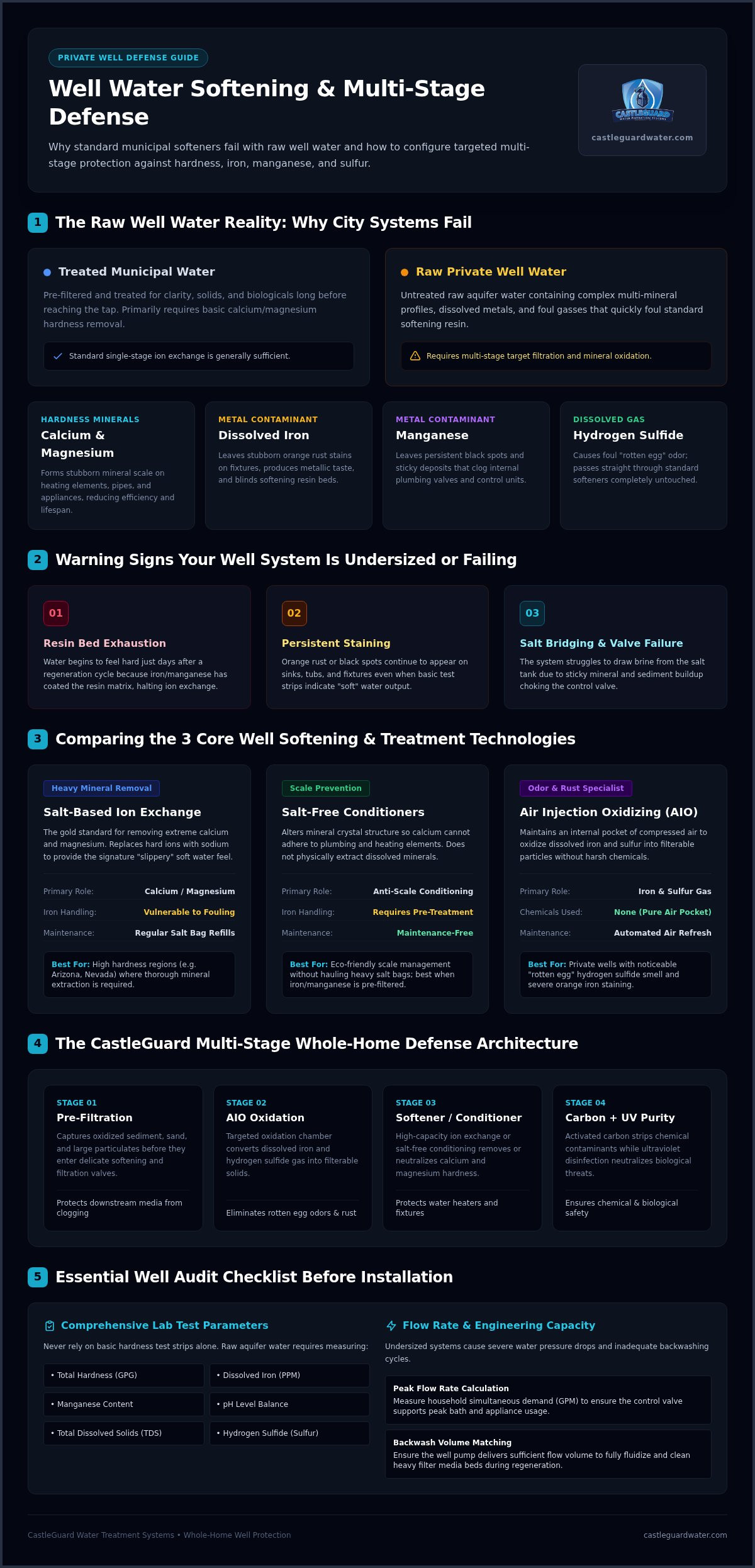
Before investing in the best water softener for well water, you must understand exactly what’s in your aquifer. A successful installation begins with a comprehensive lab test. This isn’t just about hardness; you need to measure iron, pH levels, Total Dissolved Solids (TDS), and sulfur. According to this Penn State Extension guide to water softening, identifying these contaminants early prevents you from buying a system that will fail under the pressure of raw well water.
Next, determine your peak flow rate in Gallons Per Minute (GPM). This ensures your showers don’t turn into a trickle when the dishwasher runs. You should also screen for Coliform or E. coli bacteria, which requires a specialized Ultraviolet System for total security. Finally, identify where your system will discharge backwash. Knowing your drainage options now saves significant headaches during the setup phase.
Low pH levels are a silent threat, as acidic water can eat through your copper pipes and damage your new equipment. Be careful with “Total Iron” readings. If you have a high sulfur content, it can mask how much iron is actually present. If you’re dealing with that specific “rotten egg” scent, read our How to Remove Sulfur Smell from Well Water guide for a targeted solution.
Don’t just size for today. Calculate your GPM based on your bathroom count and high-flow appliances. Undersizing is a common mistake in high-mineral regions like Texas and Florida, where heavy mineral loads exhaust resin beds faster than expected. Providing your family with a consistent supply of pure water is a responsibility we take seriously. If you’re ready to protect your home’s health, browse our specialized well water systems today.
CastleGuard takes a “Vigilant Guardian” approach to your home’s health. We know that finding the best water softener for well water is about more than just a single purchase; it’s about a long-term partnership in caretaking. Our Well Water Systems are specifically engineered to handle the aggressive mineral profiles found in regions like Southern California, Nevada, Arizona, Texas, and Florida. By selling high-end hardware directly to you, we eliminate the burden of expensive “big brand” service contracts. You get professional-grade protection without the hidden fees or high-pressure sales tactics.
Our strategy focuses on the long-term health of your plumbing. While many competitors focus only on the initial sale, we prioritize the ongoing purity of your water. This means providing systems that are robust enough for rural environments yet simple enough for any homeowner to manage. For families who depend entirely on private groundwater, a comprehensive approach to water purification for rural homes is essential to safeguarding both your household and your plumbing investment. We act as your knowledgeable guide, ensuring you have the right tools to protect your family’s well-being.
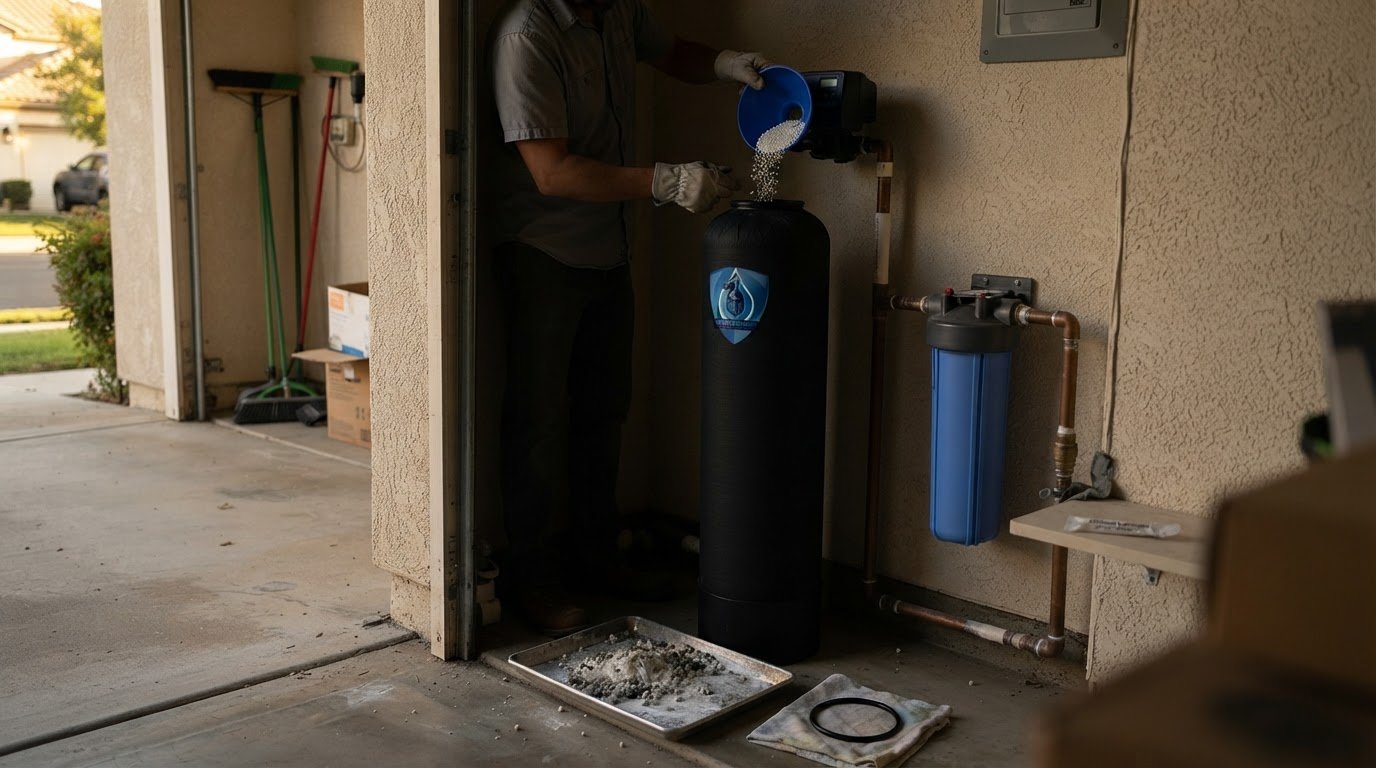
Maintenance shouldn’t be a source of stress. Our automatic media delivery service removes the “I forgot to change the filter” anxiety that many homeowners face. Our specialized Carbon Kits and Salt-Free Conditioner Kits ensure your system remains in peak condition year after year. These recurring media flushes are the secret to system health. They proactively prevent mineral buildup and extend the life of your softener resin, protecting your investment for the long haul.
We believe in empowering you to care for your home environment. While we don’t offer professional installation services, we provide expert guidance through our M-F support line. You can access professional advice without the cost of a house call. This transparent approach to hardware sales is part of our commitment to your peace of mind. We’re ready to help you navigate technical questions, ensuring your system continues to act as a reliable shield for your home.
Choosing the best water softener for well water shouldn’t feel like a gamble. We’ve explored how a standard unit often falls short against the complex mineral profiles of raw well water, and why a multi-stage approach is the only way to ensure your appliances and family stay protected. By auditing your well and selecting hardware engineered for high-mineral environments, you’re taking a vital step toward securing your home’s well-being.
CastleGuard stands ready to be your knowledgeable guide in this process. We provide specialized media kits designed for the unique challenges of Southern US well water, alongside an automatic filter delivery service that removes the guesswork from maintenance. If you’re ready to take control, our team offers expert support for DIY installation to ensure your system runs perfectly. Don’t let iron stains or sulfur odors dictate your home life any longer. Browse CastleGuard Well Water Systems for Your Home today and enjoy the peace of mind that comes with truly pure water.
Yes, most well owners in the Southwest and Florida benefit from a multi-barrier approach. While a softener handles hardness, a dedicated filter is needed for sediment, iron, or chemicals. Combining these into a comprehensive Well Water System ensures your plumbing is shielded from scale while providing the pure, safe water your family deserves. This dual approach prevents premature equipment failure and keeps your household water clear.
Air Injection Oxidizing (AIO) systems are the most effective solution for neutralizing “rotten egg” odors and orange staining without harsh chemicals. This technology uses a pocket of air to oxidize dissolved minerals so they can be trapped and flushed away. If you’re looking for the best water softener for well water, pairing it with an AIO system prevents iron from fouling the resin bed in your main unit.
A high-quality system usually lasts 10 to 15 years, though this lifespan depends heavily on regular maintenance. In mineral-rich regions like Arizona or Texas, iron and manganese can shorten this window if you don’t use specialized media flushes. Our recurring Carbon Kits and conditioner media help extend the life of your hardware by keeping the internal components clean and efficient, acting as a reliable shield for your home.
Salt-free conditioners are excellent for scale prevention, but they are vulnerable to iron fouling. If your well has more than 0.3 ppm of iron, the minerals will “blind” the conditioning media and stop the crystallization process. For homes in Florida or California with high iron, we recommend installing an iron filter upstream to protect your Salt-Free Conditioner Kit and ensure the system continues to provide high-quality protection.
We recommend performing a basic check on your water hardness every six months and a comprehensive lab test once a year. Private wells can shift in mineral composition due to seasonal changes or local construction, especially in rapidly growing areas of Nevada and Texas. Regular testing is the only way to stay vigilant and adjust your maintenance schedule to ensure your family’s water remains pure and safe.