A standard water softener can’t truly protect your desert household. While it softens mineral-heavy water, selecting an effective well water filtration system Arizona families can rely on requires looking beyond simple scale. You already know the daily frustration of sediment clogging your fixtures, chalky buildup, and sulfur odors. Even more concerning are invisible groundwater threats common across desert aquifers, including naturally occurring arsenic, uranium, and agricultural nitrates that standalone softeners leave behind.
You deserve total peace of mind every time your family turns on the tap. In this guide, you will discover how to properly test your well against Arizona Department of Health Services recommendations and match specific contaminants to the right multi-barrier defense. We will walk through the exact filtration stages needed to safeguard your plumbing, protect your domestic appliances, and secure clean, wholesome water across your entire home.
Municipal tap supplies undergo continuous utility treatment, but private domestic wells operate completely outside federal Safe Drinking Water Act standards. The responsibility for purity and protection rests entirely on the homeowner. Deep desert groundwater travels through ancient alluvial sediment and volcanic formations, absorbing heavy mineral loads and unmonitored chemical compounds. Selecting the right well water filtration system Arizona properties demand begins with acknowledging that desert well water faces far harsher geological hurdles than treated city lines.
Geological formations and regional land use introduce specific hazards across the state:
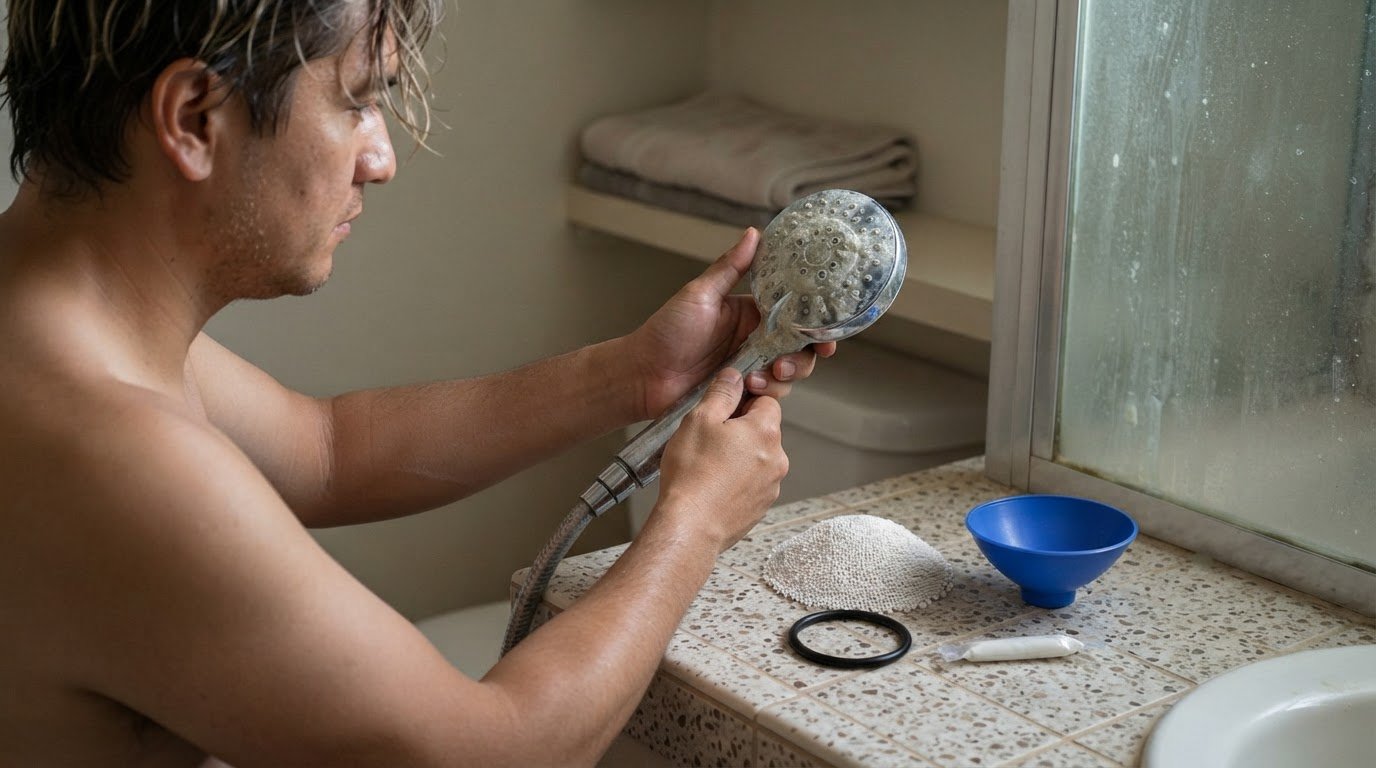
Pumping raw desert groundwater directly into modern fixtures causes rapid, expensive household wear. Abrasive sediment and concentrated mineral scale coat water heater elements, choke interior piping, and degrade valve seals throughout your home. For your family, unmanaged minerals strip natural moisture from skin and hair while leaving unpleasant sulfur or chemical odors in drinking water. Installing a dedicated well water filtration system Arizona households can trust provides vital protection, preserving home infrastructure and caring for the people you love.
Before configuring hardware, you need an exact diagnostic profile of your source water. Basic test strips sold at big-box stores can’t detect invisible heavy metals or microscopic pathogens. A dependable assessment follows a precise four-step evaluation:
Always partner with laboratories licensed by the Arizona Department of Health Services (AZDHS). Request a domestic well package that screens for coliform bacteria, nitrates, mineral hardness, and toxic heavy metals. The AZDHS recommends annual testing for biological bacteria and agricultural nitrates, alongside testing for arsenic and uranium every five years. This verified data ensures you configure a well water filtration system Arizona conditions won’t overwhelm.
Your analysis expresses contaminant concentrations in milligrams per liter (mg/L). Compare these numbers directly against EPA Maximum Contaminant Levels for health hazards, while reviewing secondary standards like iron and total dissolved solids. Check your water’s pH and silica levels too, since they dictate how effectively media performs. Once you have these metrics, you can confidently review targeted treatment setups from CastleGuard well water systems to safeguard your home.
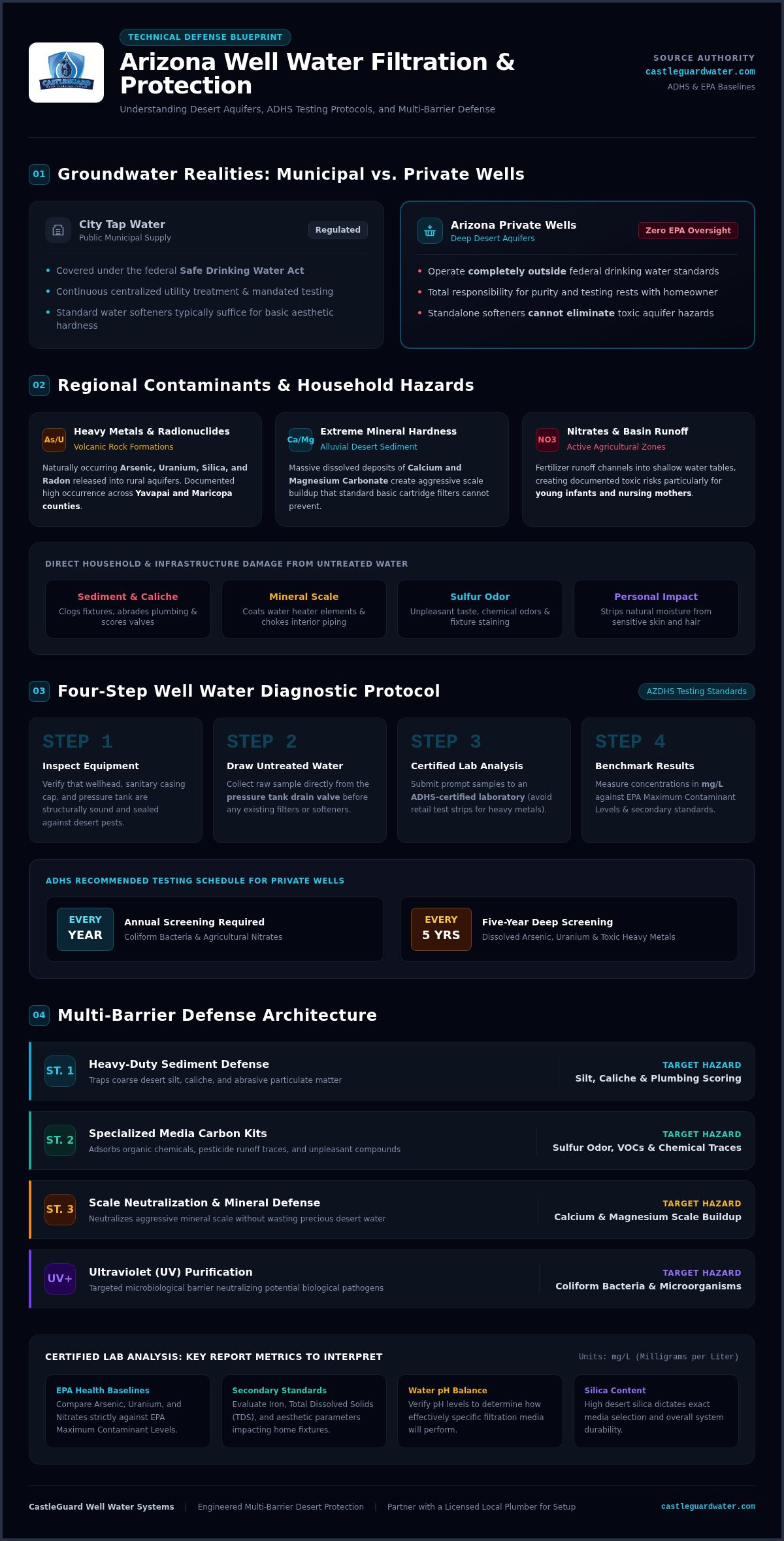
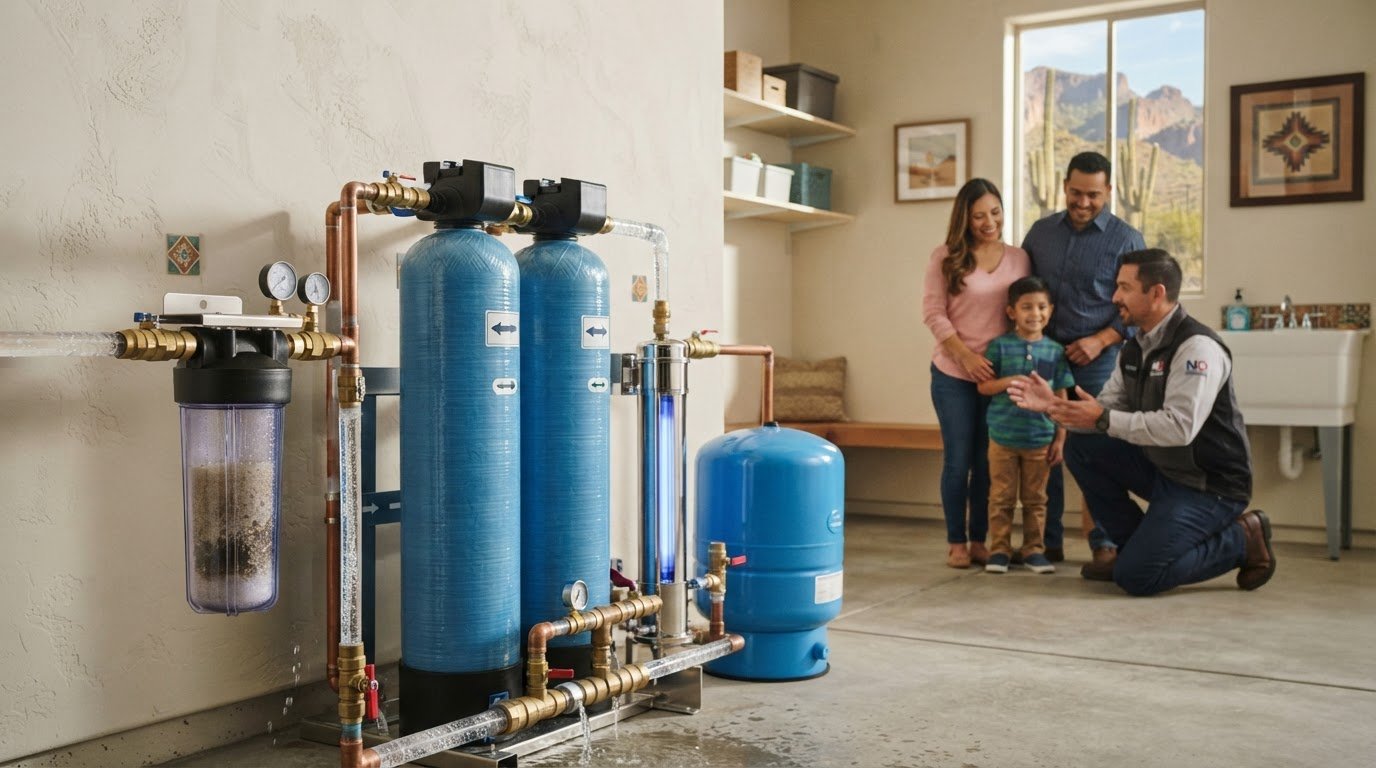
Single-tank systems cannot solve complex groundwater issues alone. Protecting your household requires a coordinated, multi-barrier defense where each component targets a distinct hazard. Stage one relies on high-capacity sediment filtration to trap coarse desert silt and caliche before it scores downstream valves. Stage two channels water through specialized Carbon Kits to eliminate sulfur odors, pesticide traces, and volatile organic compounds. Finally, stage three neutralizes aggressive scale without wasting precious desert water.
Traditional softeners waste hundreds of gallons each month flushing salty brine into local soil. In contrast, Salt-Free Conditioner Kits preserve every drop. They employ template-assisted crystallization to transform dissolved calcium into harmless micro-crystals that flow freely without bonding to copper pipes or appliance elements. Exploring the benefits of a salt free water conditioner reveals effortless protection that safeguards plumbing while eliminating heavy salt bags completely.
Violent summer monsoons create flash floods that rapidly drive surface bacteria into fractured rural aquifers. Chemical treatments alter taste and require continuous management. Integrating dedicated Ultraviolet Systems solves this vulnerability instantly. As water circulates past the quartz sleeve, targeted germicidal light destroys 99.9% of bacteria, viruses, and parasitic cysts by disrupting their DNA without introducing a single drop of chlorine.
Building a multi-stage well water filtration system Arizona families can count on provides permanent peace of mind. Explore reliable, direct-to-home setups and protect your household with CastleGuard today.
Matching your certified laboratory metrics directly to heavy-duty residential Well Water Systems removes the guesswork from household safety. Rather than locking you into restrictive technician service contracts, CastleGuard ships durable equipment directly to your doorstep. You take charge of your water security while getting hardware built specifically for desert demands. Explore proven well water treatment systems to protect your plumbing and loved ones today.
Proper site preparation ensures a seamless setup once equipment arrives. Inspect your garage or dedicated utility room to evaluate existing plumbing conditions:
Because CastleGuard focuses on building equipment rather than field labor, hire a licensed local Arizona plumbing professional to handle loop tie-ins and local code requirements safely.
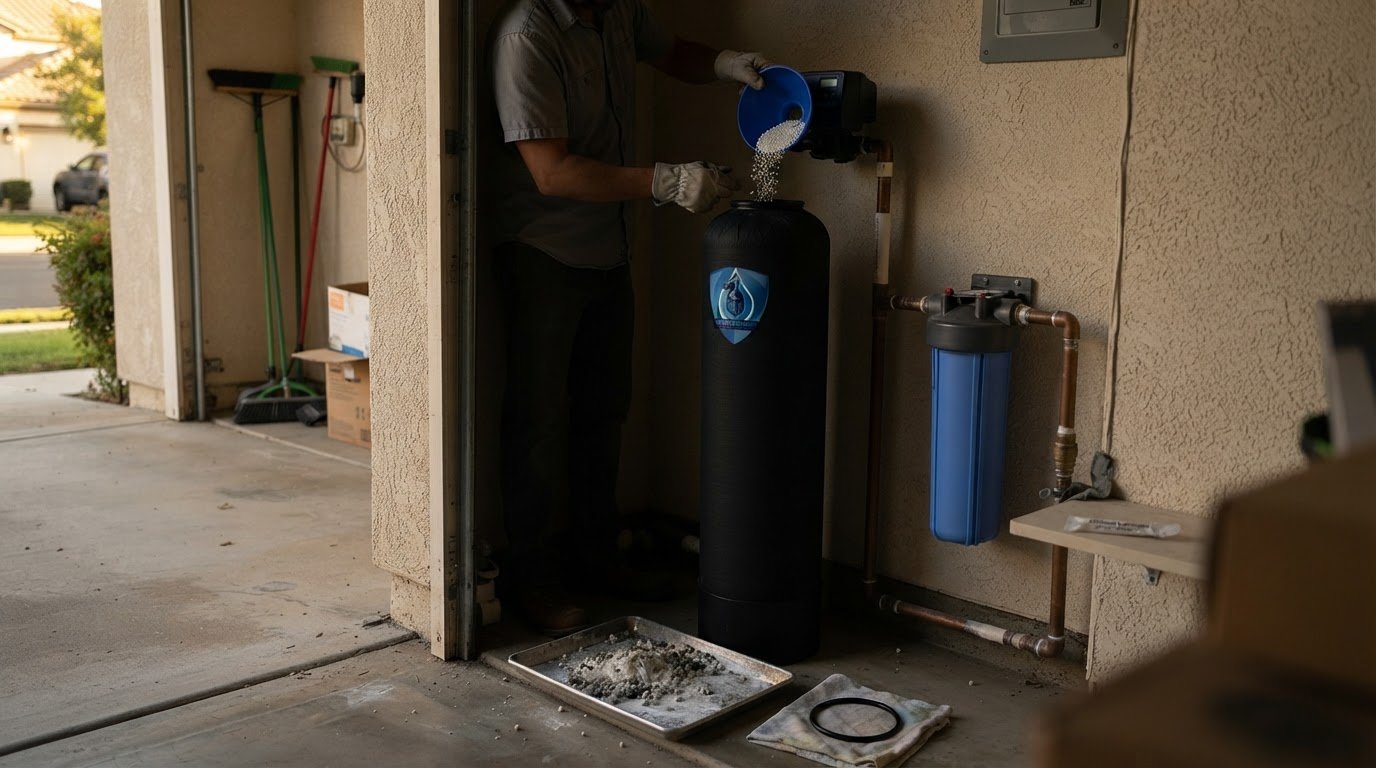
Preserving a dependable well water filtration system Arizona conditions test daily requires consistent, straightforward upkeep. Monitor inline pressure gauges before and after your filtration tanks; a noticeable drop indicates your sediment cartridge has captured substantial desert silt. CastleGuard streamlines long-term protection by offering automated deliveries of replacement sediment filters and pre-measured Carbon Kits directly to your door. Swapping spent media takes only minutes, eliminating technician fees while keeping wholesome water flowing continuously.
Private well ownership in the desert brings distinct challenges, from deep aquifer minerals to seasonal microbes. Diagnosing your water through certified laboratory testing and installing a targeted well water filtration system Arizona families rely on transforms your home’s daily comfort. You can safeguard delicate plumbing using salt-free conditioning technology that prevents scale without wasting precious desert water, all while keeping your family’s drinking supply refreshingly pure.
Taking charge of your household’s water security shouldn’t feel overwhelming. CastleGuard delivers engineered whole-home filtration systems designed for demanding well water chemistry directly to your door. Backed by convenient automated replacement media deliveries, maintaining peak water quality requires minimal effort and zero expensive technician contracts. You deserve total confidence every time you pour a glass or run a bath. Protect your home with CastleGuard Well Water Systems and enjoy the lasting peace of mind your family deserves.
Most Arizona domestic wells produce water ranging from 15 to over 30 grains per gallon (gpg), classifying it as extremely hard. Ancient limestone and gypsum formations dissolve massive quantities of calcium and magnesium into regional aquifers. Without targeted treatment, these elevated mineral levels form dense scale inside hot water lines, damage sensitive fixtures, and drastically shorten appliance lifespans across desert households.
Yes, visual clarity provides zero guarantee of purity. The most dangerous desert well hazards, including dissolved arsenic, nitrates, and microbial bacteria, remain completely invisible, odorless, and tasteless. Selecting a dedicated well water filtration system Arizona homeowners trust ensures your family stays protected against hidden geological and agricultural contaminants that pass undetected through clear glass taps.
Salt-free conditioning units provide exceptional protection against hard scale buildup. By utilizing template-assisted crystallization, Salt-Free Conditioner Kits transform dissolved calcium and magnesium ions into inert, microscopic crystals. These neutralized minerals cannot adhere to copper pipe walls or heating elements, preventing abrasive scale buildup without wasting rinse water or discharging salty brine into local desert septic drain fields.
Whole-home setups reduce many widespread impurities, but heavy concentrations of dissolved arsenic typically require specialized treatment. Integrating targeted media within Well Water Systems paired with point-of-use Drinking Systems at your kitchen sink creates the ideal defense. This multi-barrier arrangement ensures drinking and cooking water meets stringent health standards while protecting plumbing throughout your entire residence.
Replacement schedules depend heavily on local aquifer chemistry and overall sediment volume. Coarse sediment pre-filters usually need replacement every three to six months to prevent pressure loss. Specialized Carbon Kits and conditioning media beds typically perform reliably for several years before needing renewal. Enrolling in automated replacement deliveries removes guesswork, ensuring fresh media arrives precisely when your hardware requires maintenance.