What if the sparkling, crystal-clear glass of water you just poured from your kitchen tap is quietly harboring invisible living pathogens? It’s deeply unsettling when clean-looking water fails a laboratory test. Whether the threat stems from seasonal agricultural runoff or an aging septic system, biological contamination brings an unwelcome worry that no homeowner should have to carry. Investing in a dedicated system using uv light for well water delivers the reliable biological shield your household deserves, neutralizing dangerous bacteria and viruses without introducing harsh chemicals to your plumbing.
You shouldn’t have to second-guess whether your family’s drinking supply is truly pure. In this guide, you’ll learn how ultraviolet purification functions as a whole-home guardian, along with why proper pre-filtration is mandatory to prevent sediment from shielding microbes from the light. We’ll outline a clear roadmap covering essential water testing, proper equipment selection, and practical maintenance habits to ensure effortless, year-round peace of mind at every faucet.
Private wells operate without municipal monitoring or chemical additives, leaving shallow aquifers vulnerable to contamination from heavy rains, agricultural runoff, and aging septic drainage. Installing a dedicated system utilizing uv light for well water provides an impenetrable physical barrier against these unseen threats. The purification process relies on ultraviolet germicidal irradiation, delivering light at an optimal 254-nanometer wavelength that penetrates cellular walls to scramble microbial DNA, halting reproduction instantly. UV disinfection dosage is defined as the intensity of the germicidal light multiplied by the contact exposure time, measured in millijoules per square centimeter (mJ/cm²). Because this mechanism is purely physical, it neutralizes biological hazards without creating disinfection byproducts or chemical tastes in your drinking supply.
Municipal chlorine often struggles against rugged microscopic shells, but germicidal ultraviolet energy readily neutralizes tough biological invaders:
Shock chlorination is frequently treated as a permanent fix, but pouring bleach down a well provides only a temporary sanitizing reset. The moment fresh groundwater seeps into your borehole after heavy rainfall, microscopic pathogens can return undetected between your regular test intervals. Operating a whole-home system with uv light for well water acts as a continuous guardian at your property’s plumbing entry point, automatically neutralizing sudden microbial spikes around the clock. If you’re weighing your options, understanding the differences between a uv sterilizer vs. chemical water treatment can help you determine which approach best fits your water quality concerns and household needs.
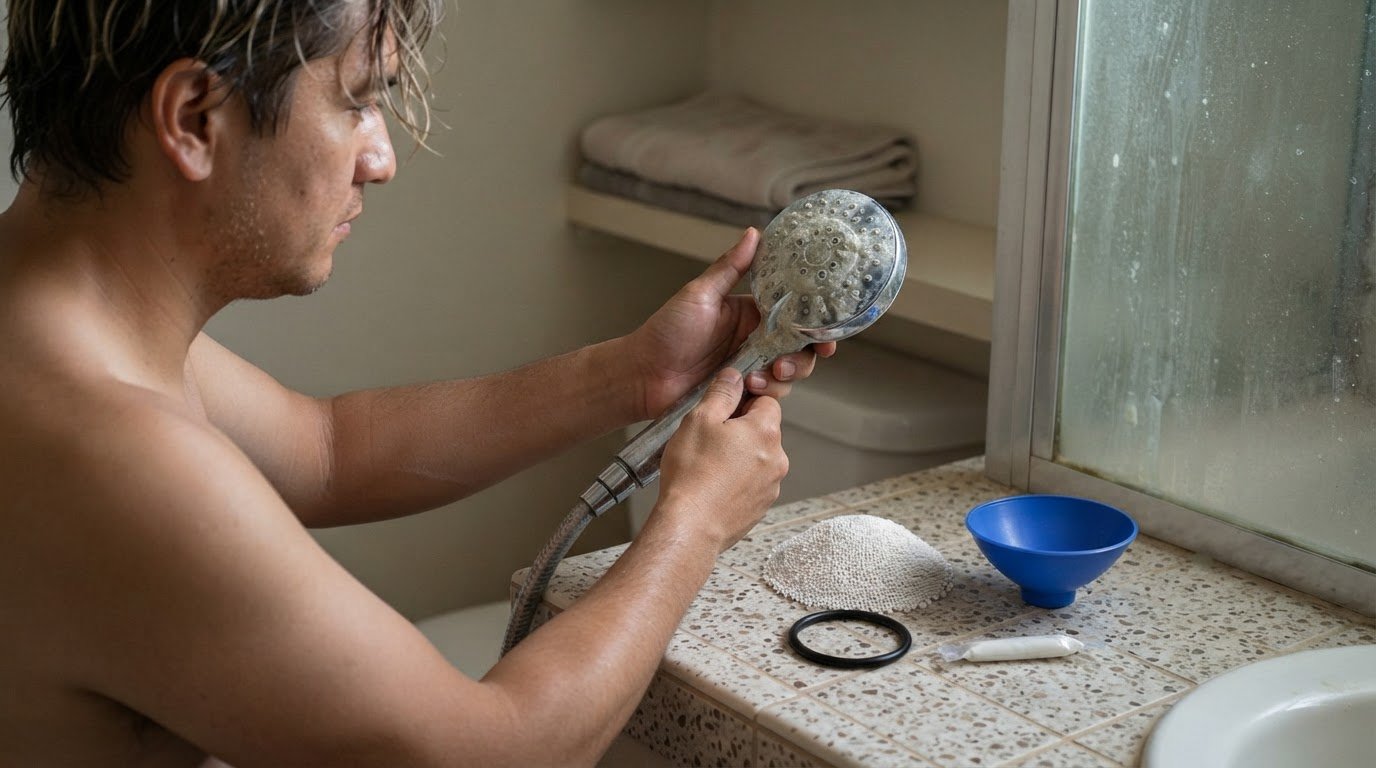
Germicidal rays require an unhindered path to neutralize living contaminants. If incoming water carries suspended dirt, silt, or cloudiness, microscopic organisms can hide behind floating particles and pass through the disinfection chamber untouched. It is essential to filter water before UV light disinfection to eliminate this shadowing effect. Dissolved minerals present an equally serious hurdle. Operating heat bakes calcium and iron directly onto the protective quartz sleeve, forming an opaque crust that stifles germicidal intensity. Reviewing complete well water treatment systems ensures you sequence your filtration stages properly to safeguard equipment longevity.
To ensure uv light for well water achieves complete pathogen deactivation, incoming water chemistry must stay within strict operating limits:
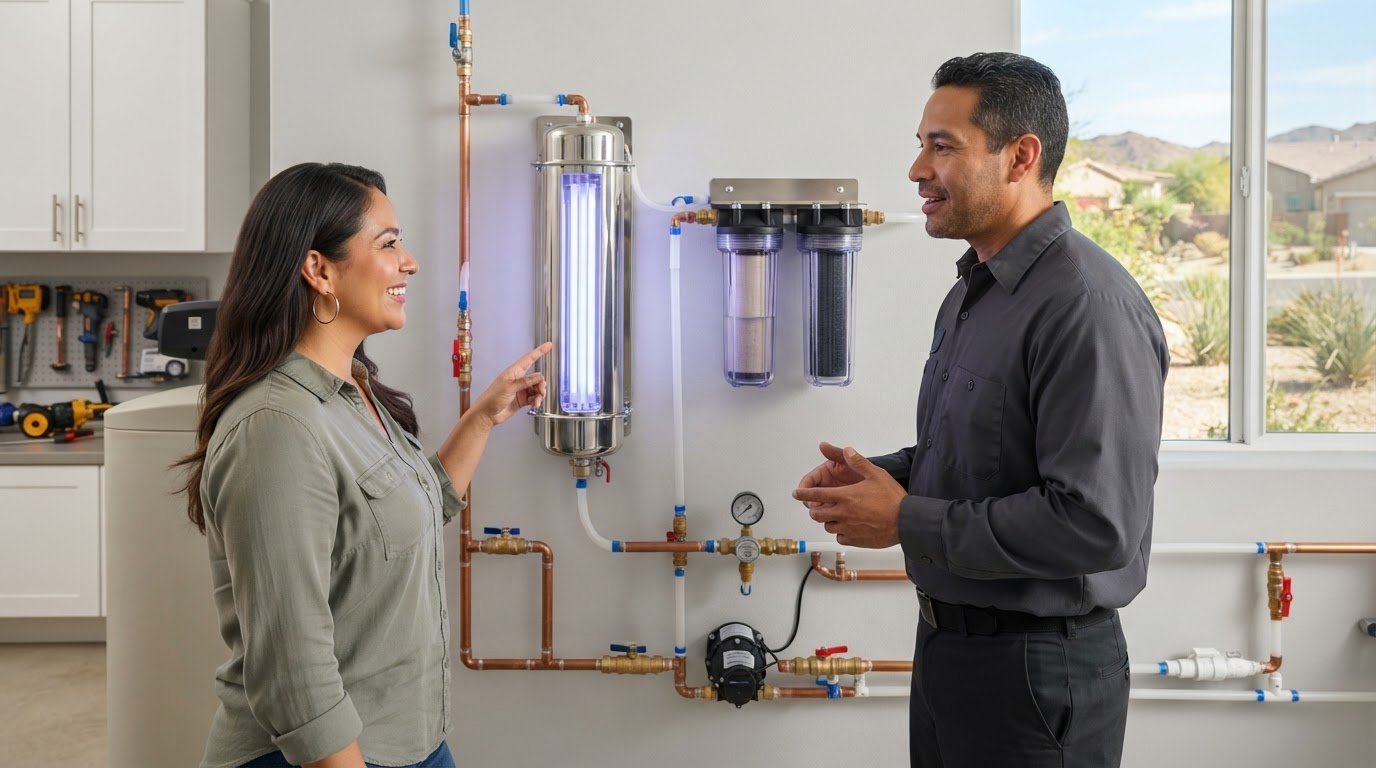
When designing a system with uv light for well water, always treat the germicidal chamber as your final line of protection. Water must be conditioned before it enters the reactor. First, a dedicated 5-micron sediment pre-filter catches fine silt, pipe scale, and loose grit that could shield bacteria. Next, specialized conditioning media neutralizes hard scale and stains before water meets the quartz glass. If you want to protect your plumbing without unnecessary guesswork, explore reliable equipment options from CastleGuard to build an integrated defense for your home.
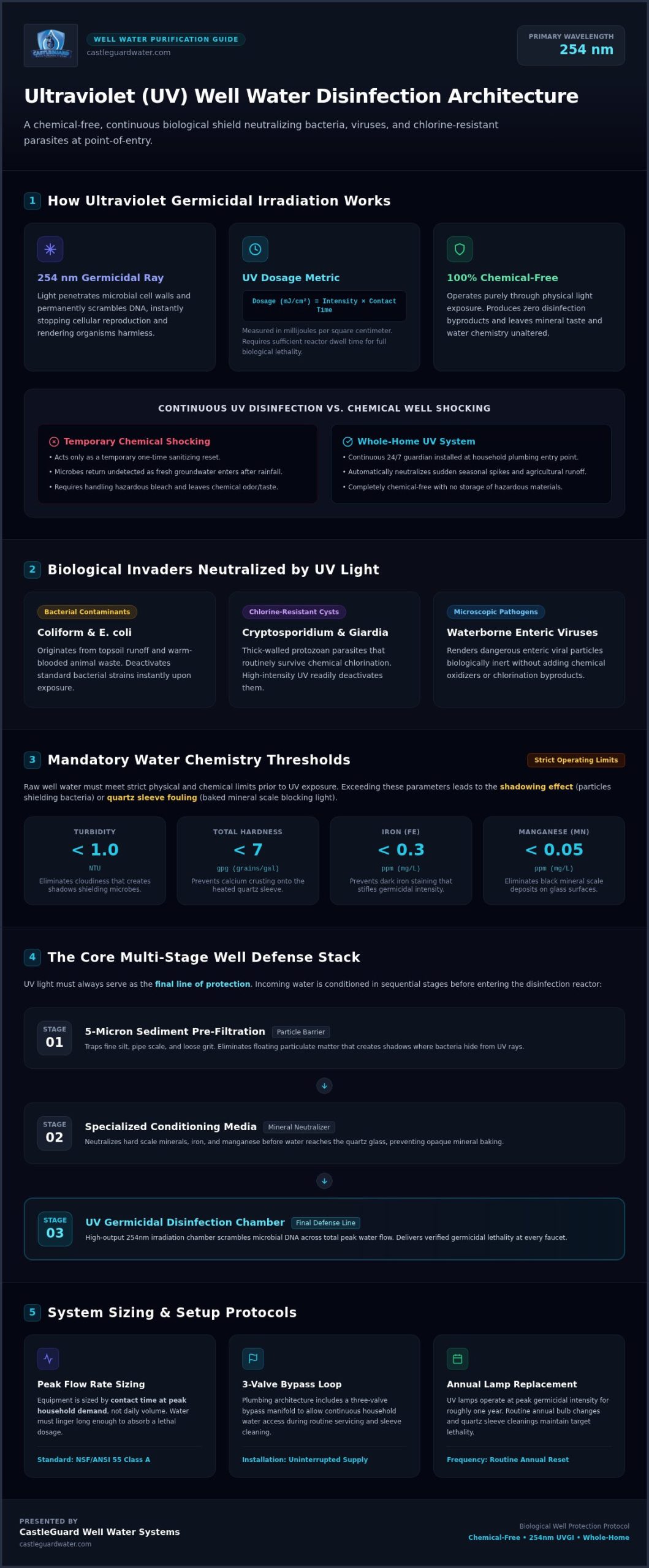
Sizing ultraviolet equipment is entirely about contact time, not total gallons consumed in a day. Water must linger inside the disinfection reactor long enough to absorb a lethal germicidal dose. If demand outpaces the unit’s capacity, rushing water pushes living microbes straight past the lamp before they can be neutralized. To keep your household safe, prioritize NSF/ANSI 55 Class A certified units. These provide a verified minimum dose of 40 mJ/cm² designed specifically for untreated, microbiologically unsafe water sources. As highlighted in various state guidelines on UV disinfection, an undersized chamber risks sending live pathogens directly to downstream faucets. Before purchasing, it helps to understand exactly what an ultraviolet water filter system can and cannot do, including its limits around sediment, chemicals, and dissolved minerals, so you can pair it with the right pre-treatment stages.
Selecting the right hardware starts by calculating your home’s maximum simultaneous water draw in gallons per minute (GPM):
A reliable system using uv light for well water needs built-in safeguards that monitor performance continuously. Look for digital ballasts with visual countdown timers and distinct audible alarms that notify you if a bulb burns out. True peace of mind comes from integrated UV intensity sensors. These calibrated probes actively read the germicidal light penetrating the liquid, immediately warning you if quartz scaling or poor water clarity drops the operating dose below safe thresholds. If you want verified biological security, shop CastleGuard ultraviolet systems engineered to deliver dependable whole-home protection.
Properly installing a system using uv light for well water begins with secure placement. Mount the stainless steel reactor vertically near your main water line entry, leaving ample overhead clearance to withdraw the lamp. Plumb a three-valve bypass loop directly into the copper or PEX line. This configuration lets you isolate the chamber for routine servicing while keeping running water accessible to the house. Immediately after startup, sanitize your interior plumbing lines with a chlorine flush. Because ultraviolet rays leave no chemical residual, this single flush eliminates pre-existing bacteria lingering downstream in household pipes. CastleGuard supplies whole-home ultraviolet systems and well water systems engineered to simplify DIY-friendly maintenance for rural families.
Sustaining effective uv light for well water requires lamp replacement every 12 months, or roughly 9,000 hours of continuous runtime. Even though a lamp still emits a visible blue glow past one year, the internal mercury vapor degrades, reducing germicidal intensity below protective thresholds. Always wear clean cotton or nitrile gloves during installation. Bare skin transfers oils that bake into the quartz glass under operating heat, weakening light output.
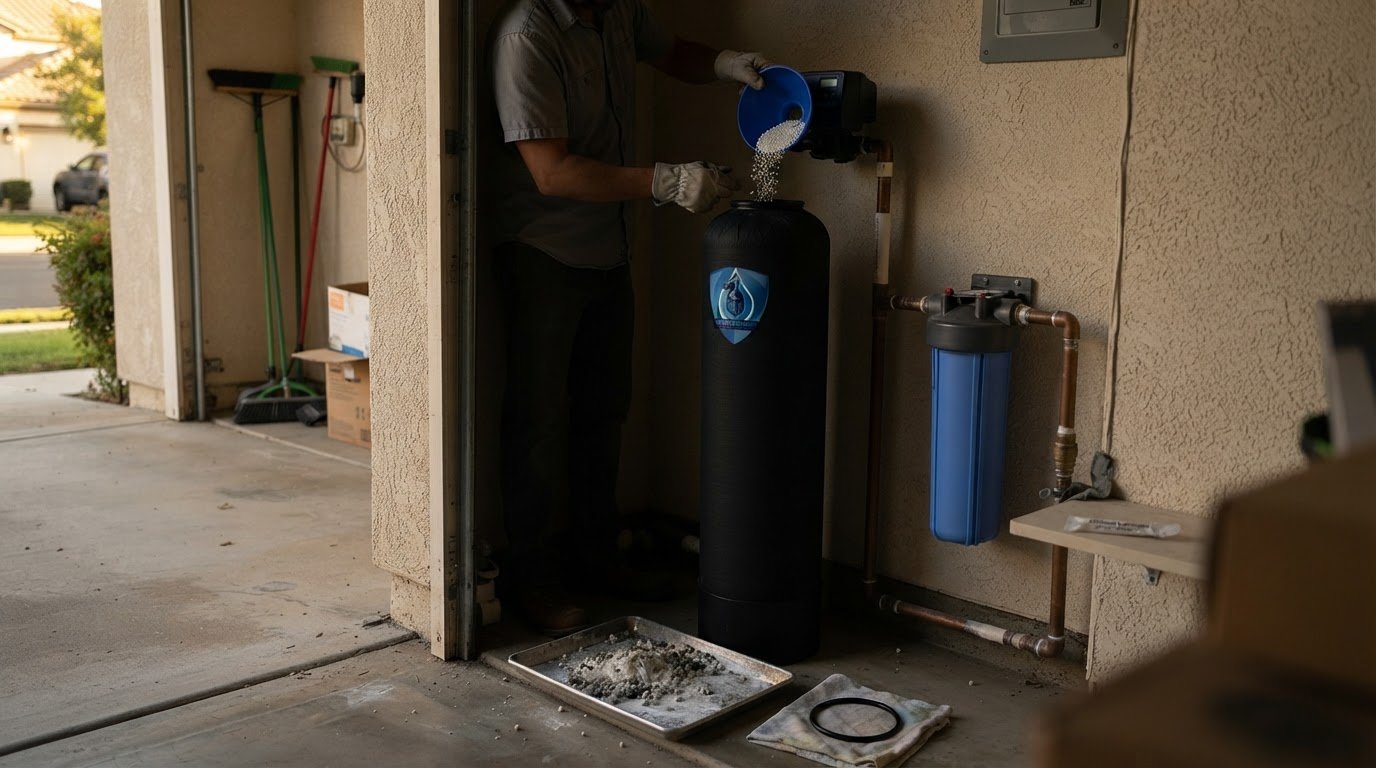
Whenever you replace the lamp, extract the protective quartz sleeve to inspect for mineral haze. Wipe away stubborn calcium and iron deposits using a soft cloth soaked in mild food-grade citric acid or vinegar. Never use abrasive scouring pads. Replace the rubber sealing O-rings annually to maintain a watertight seal, and swap out any scratched or cracked sleeve immediately to prevent chamber flooding.
You deserve total confidence in every glass poured at your kitchen sink. Utilizing uv light for well water provides an impenetrable biological shield, ensuring bacteria, viruses, and cysts are deactivated without adding harsh chemicals to your plumbing. By pairing your reactor with dedicated pre-filtration and adhering to routine annual lamp replacements, you keep your family continuously protected against unexpected groundwater contamination.
Taking charge of your private water supply is straightforward when you have reliable equipment and honest guidance on your side. If you need help calculating household flow rates or selecting pre-treatment media, friendly assistance is available Monday through Friday. Protect your family’s well water with CastleGuard Ultraviolet Systems, engineered for direct sales, simple DIY care, and lasting biological defense. Pure, worry-free water is easily within reach.
Yes, an appropriately sized system using uv light for well water neutralizes up to 99.99% of biological pathogens. It inactivates coliform, E. coli, enteric viruses, and chlorine-resistant cysts like Cryptosporidium by scrambling their DNA so they can’t reproduce or cause illness. However, the water must be optically clear so shadows don’t block the light rays. UV systems only treat water inside the reactor and add no lasting chemical residual.
No, ultraviolet systems do not soften water or eliminate dissolved minerals like iron and manganese. UV technology functions purely as a microbiological purifier. In fact, heavy mineral content common across rural regions like Texas, Arizona, and Southern California will actively hinder disinfection. High concentrations of calcium and iron bake onto the internal quartz sleeve, blocking germicidal rays. Dissolved minerals must always be conditioned upstream before reaching the chamber.
You need a dedicated 5-micron sediment filter upstream to prevent suspended particles from shielding harmful microbes. In private wells, fine silt, sand, and rust flakes constantly drift through plumbing lines. If bacteria pass through the disinfection chamber behind these particles, the physical shadows prevent the light from penetrating their cellular walls. A sediment filter clears the water, guaranteeing every organism receives the unblocked exposure necessary for neutralization.
You must replace your UV lamp every 12 months or after 9,000 hours of continuous operation. While the bulb might still cast a visible blue glow past one year, the internal mercury vapor slowly degrades. This drop reduces the light’s germicidal output below safe disinfection thresholds. Sourcing annual replacement lamps for your uv light for well water from CastleGuard ensures your equipment consistently maintains the dosage needed to keep your drinking supply safe.
No, if your home loses electrical power, your ultraviolet system instantly stops disinfecting water. Because ultraviolet disinfection requires active electricity to power the germicidal lamp, any water drawn from a pressure tank during an outage bypasses treatment unsterilized. If you experience frequent utility interruptions, install an emergency solenoid shut-off valve that halts water flow when power drops, or connect the system’s controller directly to an uninterrupted battery backup supply.