The familiar replacement may not be the best fit. The right Whirlpool water filter system alternatives depend on what you want to reduce and where you need treated water. Look for certification or test documentation that supports the specific contaminant-reduction claim you care about, not just the product category. For chlorine taste and odor throughout the home, consider whole-home filtration, and compare flow rate and plumbing requirements before choosing a system.
It makes sense to look for a replacement that suits your household without adding guesswork. But a filter that improves taste may not address every water concern. First identify the problem you want to solve, then choose a system designed for that purpose.
This guide explains how to assess certifications and contaminant claims, compare chlorine reduction, and check flow rate and plumbing fit. Your water source and the specific issue you want to address can help narrow the options for your home.
If your tap water smells or tastes like a swimming pool, look for a filtration system with a specific chlorine-reduction claim. The treatment media reduces chlorine as water passes through the system. Performance depends on the product and its stated claims, so a general phrase such as “improves water quality” does not show whether it addresses chlorine.
Start by deciding which water you want treated. An under-sink unit serves a drinking-water tap, while a whole-home system treats water as it enters the house. A shower filter treats shower water only, not kitchen taps, laundry, toilets, or appliances. Choose point-of-use filtration for a drinking-water concern, or consider whole-home coverage if chlorine taste or odor occurs at several taps.
NSF testing can help you evaluate a product’s claims, but the certification or test documentation must match the reduction you want. Look for the specific model and an explicit chlorine-reduction claim. Certification for one performance area does not establish that a product reduces every contaminant. Match the claim to your goal, such as reducing chlorine taste and odor at a drinking-water faucet.
Before choosing among Whirlpool water filter system alternatives, use these practical checks:
Flow matters, too. A drinking-water filter serves one outlet, while a whole-house system must accommodate demand across several fixtures. If the odor occurs at only one faucet, broader coverage may be unnecessary. If it occurs at several taps, assess a system designed for the home’s incoming water supply. Compare alternatives by what they treat, not just by appearance.
The best alternatives to Whirlpool whole-house water filtration systems depend on the problem you want to address. For chlorine taste and odor, consider filtration designed to reduce chlorine. For mineral buildup throughout the home, a water softener is more appropriate than a general filter. Suspected bacteria calls for a disinfection system, such as ultraviolet treatment, rather than ordinary filtration.
Start with your water source. If your home uses municipal water, review the local water quality information in EPA consumer confidence reports to identify concerns before selecting treatment. If you use a private well, have the water tested first. Choosing equipment without knowing what is present can leave the main issue untreated.
Next, match the treatment to the symptoms. Scale on fixtures, mineral deposits, or soap that works poorly throughout the home can point to hard water. A chlorine smell limited to drinking water may call for a point-of-use option, while concerns at several taps may require whole-home coverage. If bacteria is suspected, prioritize disinfection rather than assuming a standard carbon filter will address it.
Replacement-filter costs depend on the system, compatible replacement, and maintenance schedule. Compare the replacement type and ongoing maintenance needs, not just the initial filter price. A cartridge that fits may still be unsuitable if its stated treatment claims do not match your water concern.
Use this decision path to narrow the options:
This approach helps you choose Whirlpool water filter system alternatives based on household needs, not a generic “filtered water” promise. If you’re weighing whole-home treatment for municipal water, explore water-treatment options that fit that concern.
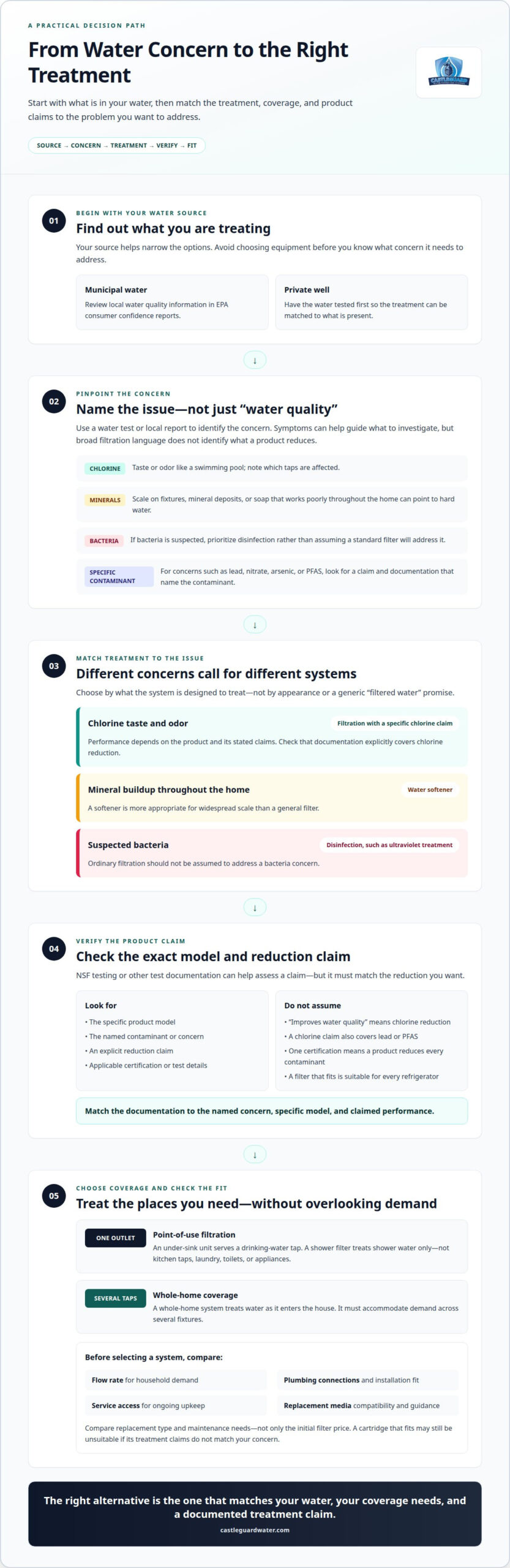
Certification matters when it supports the exact reduction claim you need. A label or broad phrase such as “water filtration” does not show that a product reduces lead, nitrate, arsenic, or PFAS. Match the documentation to the named contaminant, specific model, and stated performance claim.
NSF testing can help distinguish a specific performance claim from general marketing language. Read the product documentation for the applicable standard or test claim and the contaminant it covers. A chlorine-reduction claim, for example, does not establish that the same filter reduces lead or PFAS. Consider each contaminant separately.
Use a simple comparison before selecting a replacement:
For refrigerator filters, a third-party filter is not automatically suitable just because it fits. Check the specific model’s compatibility and performance documentation; certification alone does not prove it suits every Whirlpool refrigerator. Warranty coverage depends on the applicable warranty terms, and a filter’s certification does not establish that it is covered.
Be precise about health-related concerns. If you’re concerned about lead, nitrate, arsenic, or PFAS, don’t infer treatment from a product’s general filtration description. Look for an explicit claim tied to the contaminant and relevant test or standard. If the documentation names chlorine but not lead, for example, the chlorine claim does not answer the lead question.
These checks make comparisons more useful than relying on “compatible” or “certified” alone. Compatibility indicates whether a filter fits the intended appliance; a contaminant claim indicates what it is tested or certified to reduce. Keep the questions separate, then choose a product whose model documentation supports your treatment goal.
For a Whirlpool refrigerator, identify its exact model and existing filter number, then compare both with the replacement’s compatibility information. For a whole-house system, consider the plumbing layout, household demand, and access for servicing before selecting equipment.
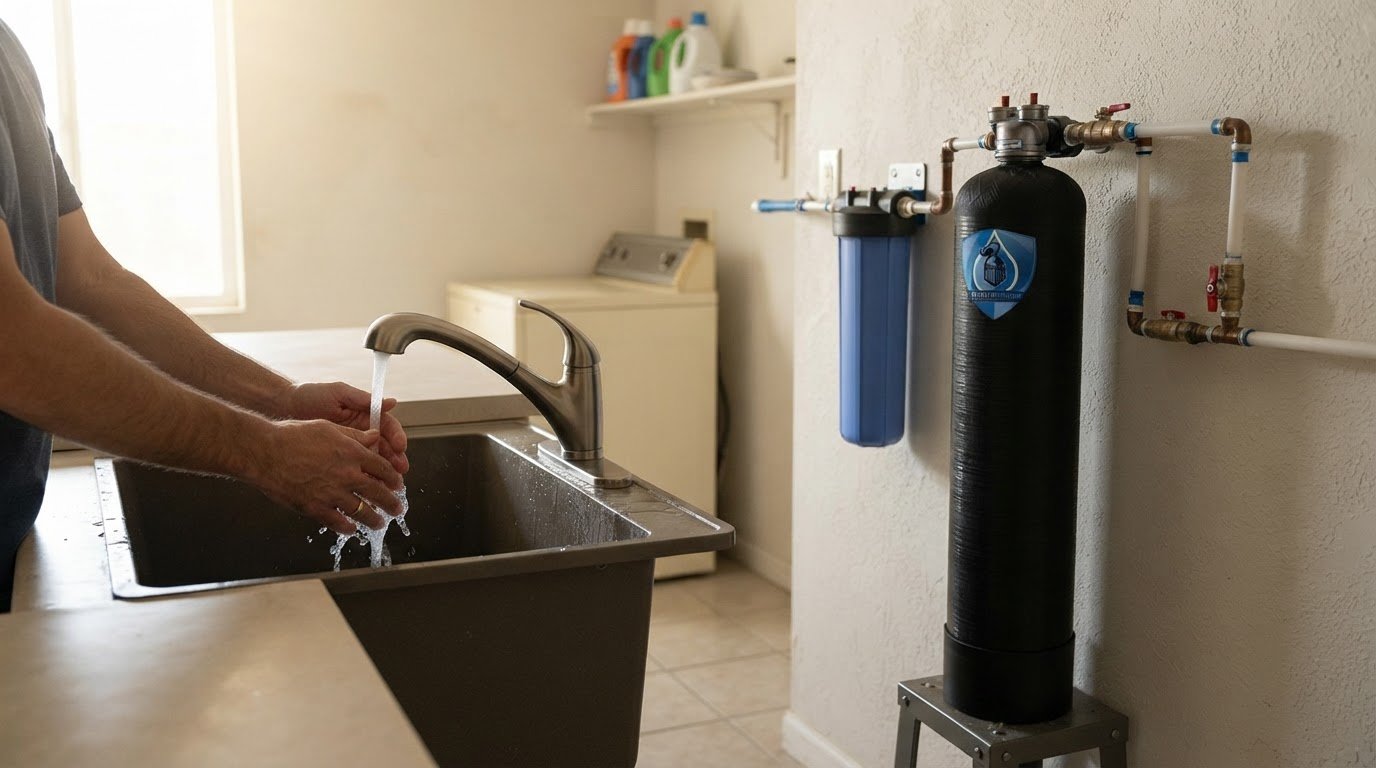
A whole-house unit connects to the home’s incoming water supply, so its location affects access and maintenance. Consider available space, nearby shutoffs, and room to reach the system for servicing. A crowded utility area, for example, can make routine access difficult even when the plumbing connection is suitable.
Plan the connection around the existing pipe layout and the fixtures the system will serve. Account for the route water takes through the home, access for future maintenance, and shutoff arrangements. For a refrigerator filter, use the appliance’s exact model information and compare it with the replacement’s stated compatibility instead of relying on appearance.
Flow rate describes how readily treated water can reach fixtures through the system. A whole-house filter needs sizing that reflects household demand, especially when several taps or appliances may run at once. Consider how your household uses water during busy periods, such as when cooking and laundry overlap.
A system that doesn’t suit household demand can restrict water delivery when several fixtures operate together. Compare its flow information with expected use and the number of outlets it serves. A drinking-water filter at one faucet has a different purpose from equipment treating water throughout the home.
Before choosing equipment, consider the incoming pipe layout, service access, shutoff arrangements, and household demand together. Each affects whether a whole-house system can serve the home and remain accessible for maintenance. For a refrigerator replacement, use the model number and filter identifier to narrow compatibility. Plumbing flow considerations apply to whole-house equipment, not a refrigerator cartridge.
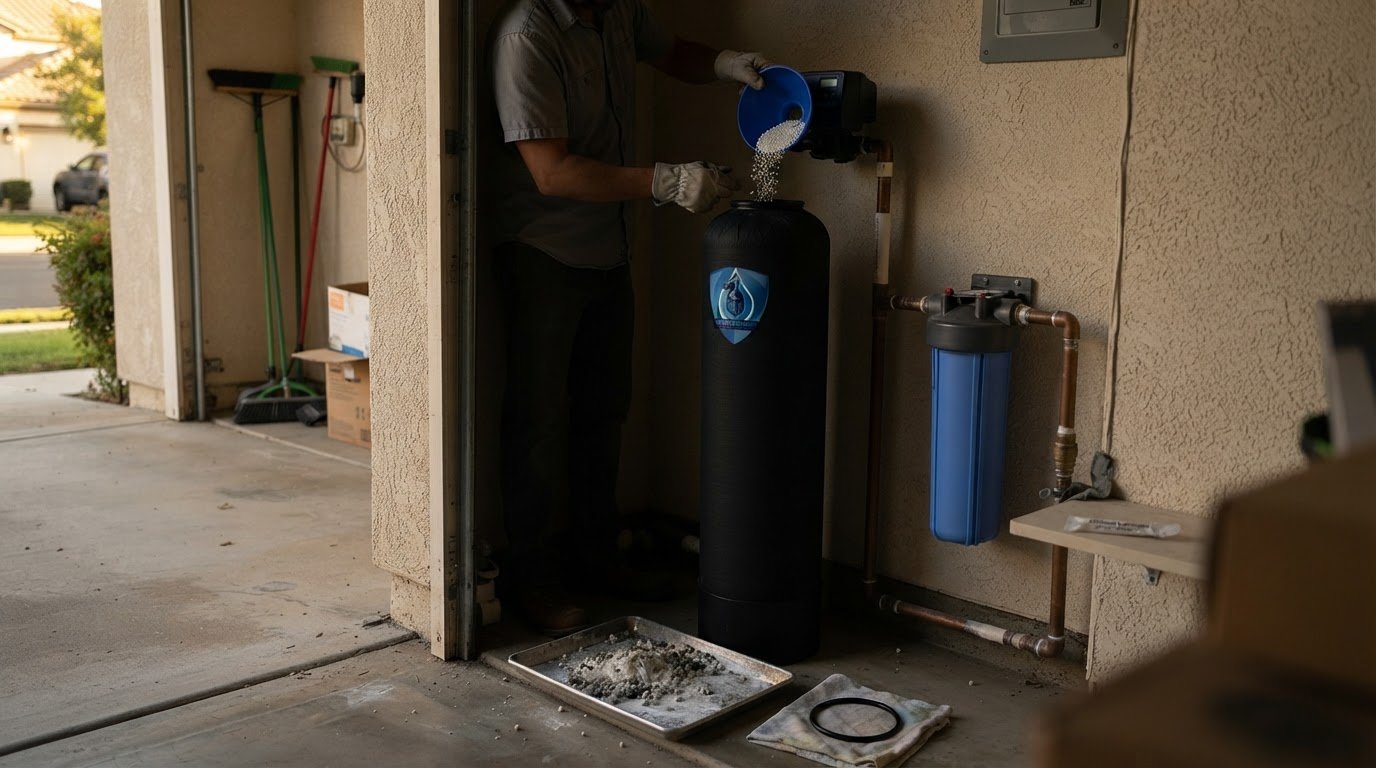
CastleGuard’s City System is a whole-home option for municipal-water households considering filtration and conditioning. Compare it with your water concerns, household demand, and plumbing layout. If your concern is limited to drinking water, a Drinking System may be more relevant; suspected bacterial contamination calls for disinfection, such as ultraviolet treatment.
The right choice depends on the problem you want to address and where you need treated water. CastleGuard also offers Well Water Systems for homes using private wells, so your treatment choice can reflect your water source.
Contact CastleGuard to discuss your household’s water concerns and find a suitable system.
Turn what you’ve learned into a clear priority: decide which water concern matters most and where you want treatment. That makes choosing among Whirlpool water filter system alternatives more practical, whether you’re replacing a refrigerator filter or considering treatment for the home’s water supply.
CastleGuard offers a City System, Well Water Systems, and Ultraviolet Systems for different water-treatment needs. The right direction depends on your water source and the concern you want to address. When you contact CastleGuard, share those details and the equipment or plumbing setup you’re considering so the discussion can focus on your home.
Contact CastleGuard for water filter advice and take a thoughtful next step toward choosing treatment for your household.
Yes. Certification is useful when it applies to the exact contaminant-reduction claim you care about. Treat it as model-specific, not as a blanket endorsement of every filter from the same brand. Documentation for one cartridge may not cover another cartridge’s performance. Compare the listed model and claim, and assess appliance compatibility separately from water-treatment performance.
Yes, especially if your home relies on a private well. Testing can identify the concerns your treatment needs to address before you choose equipment. For municipal water, review your local water quality report. Households in Southern California, Nevada, Arizona, Texas, and Florida can use this information to make decisions based on their own supply rather than assuming nearby homes have identical water.
Look for the NSF/ANSI standard or test claim that matches your concern, rather than searching for one universal certification. Read the product documentation for the exact model, named contaminant, and reduction claim covered. If you’re concerned about lead, for example, a claim addressing chlorine alone does not answer that concern. Match the evidence to your treatment goal.