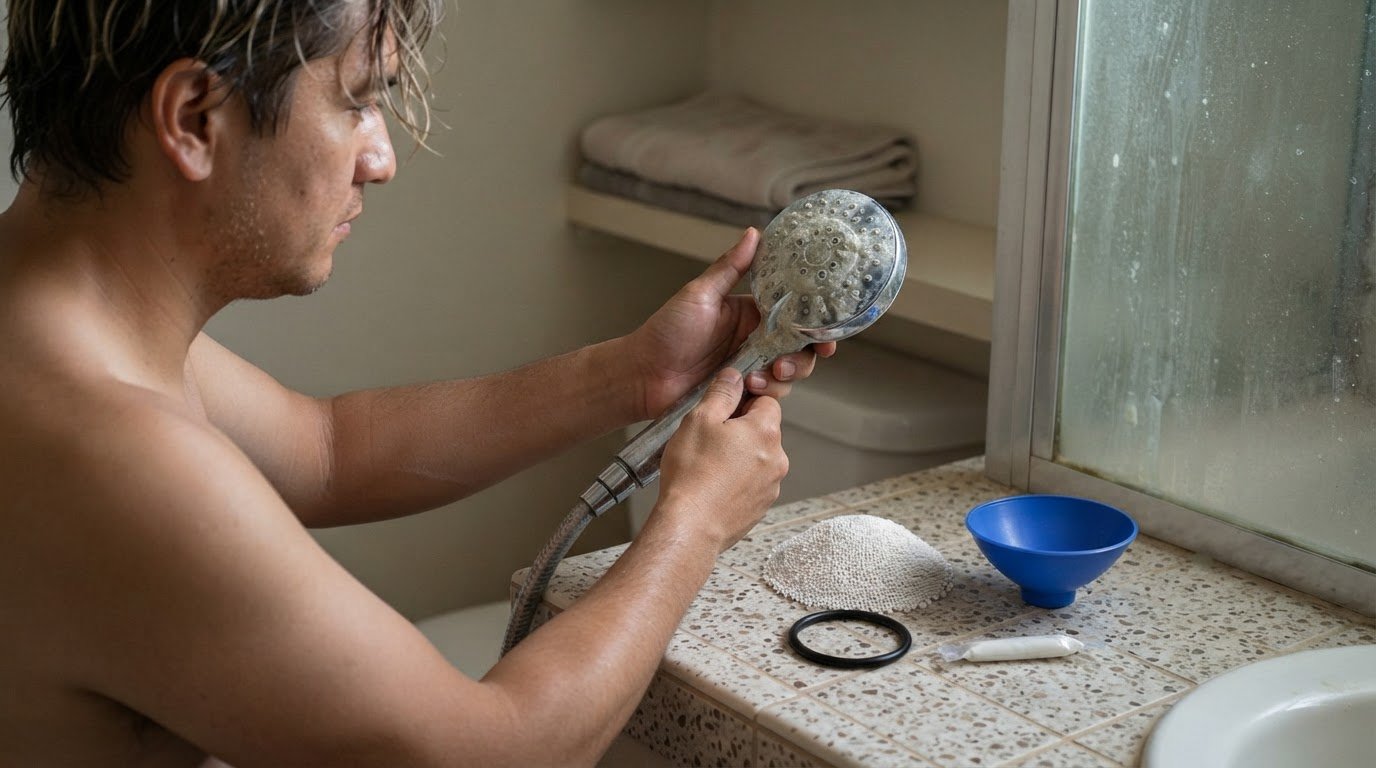

Hard-water stains aren’t always permanent: fresh mineral deposits can often be cleaned, while long-standing marks may remain. If you’re comparing a water softener for sale in Phoenix, choose based on the water issue you want to address throughout your home, not just the spots you can see.
It makes sense to want clear prices before choosing equipment, especially when installation and ongoing upkeep can affect the overall cost. This guide explains how salt-based softeners and salt-free conditioners differ, what can influence installation costs, and how whole-home systems compare.
You’ll also learn what to compare when reviewing payment options, so you can assess the purchase as a whole and choose a solution suited to your household.
Salt-based softeners and salt-free conditioners address hard water differently. Compare how each treats minerals and affects faucet deposits and appliances before choosing a system for your home.
A salt-based softener uses ion exchange to remove hardness minerals, which can reduce the residue they leave on faucets. A salt-free conditioner is intended to help manage scale on surfaces. The distinction matters: a conditioner is not a softener, and reducing scale does not remove hardness minerals.
Choose based on the result you want. If softer-feeling water is the priority, compare softeners; if your main concern is scale on fixtures or appliances, consider a conditioner. For example, a homeowner focused on deposits around a shower faucet may weigh scale control differently from someone seeking softened water throughout the home. Neither option replaces filtration when the concern is a contaminant.
Salt-free systems may suit households that want to avoid handling salt for treatment. They do not make water chemical-free, and scale claims should be judged by the specific system’s stated purpose. A conditioner is a treatment category, not a guarantee that every effect of hard water will disappear.
To compare efficiency, look at how a salt-based softener regenerates and what resources that process uses. The controls and household water use affect operation, so efficiency depends on how the system is configured for the home. For a conditioner, consider its scale-treatment method and the upkeep its design requires.
Include warranty terms in your equipment comparison. Check which components are covered, for how long, and whether maintenance conditions apply. Then compare routine tasks: a salt-based system needs salt replenishment, while a salt-free conditioner has different media and maintenance needs. The schedule can shape the ongoing effort involved in either choice.
Use a simple comparison: note the intended result, treatment method, warranty coverage, and routine care. For example, if carrying salt downstairs would be difficult, that practical constraint may make a conditioner worth considering. If softening is the priority, weigh the salt-based system’s operating requirements alongside its warranty and efficiency.
The system, plumbing changes, and work required at the home all affect the project scope.
In Phoenix and elsewhere in Arizona, installation should follow applicable plumbing-code standards. Operating a unit also depends on proper setup and routine care, including regeneration settings and replenishing treatment materials.
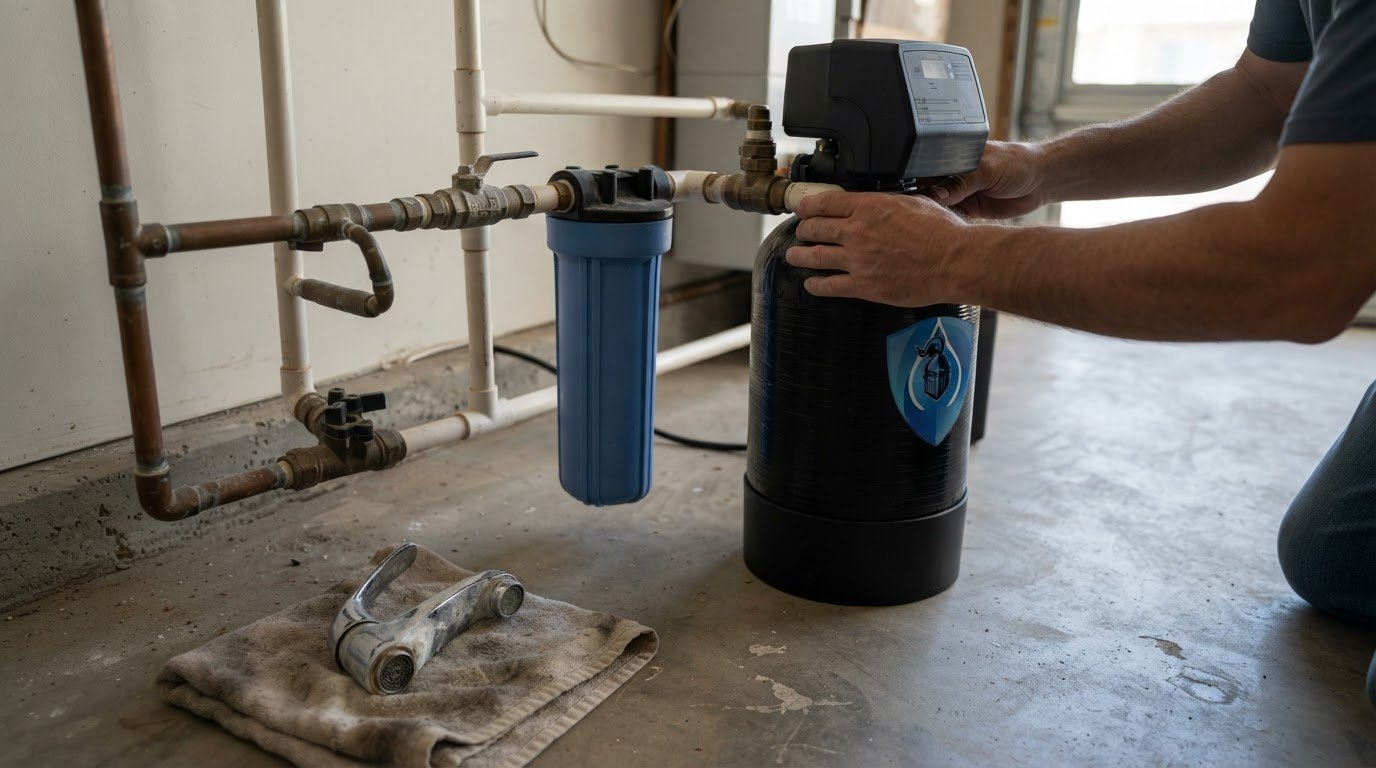
Installation may involve connecting the unit to the home’s water supply, fitting a bypass, and setting its controls. For example, added plumbing work can affect the project total.
Servicing and repair address different needs. Routine service can keep a system operating as intended, while repairs respond to problems such as a control issue or a leak. Phoenix-area service locations and Arizona coverage depend on the provider; a service-area description should identify the places it serves, not imply statewide coverage.
Local plumbing-supply stores and online dealers are common ways to buy equipment in Phoenix. Compare what the purchase includes, such as the unit, delivery, and installation arrangements, rather than treating equipment cost as the full project cost. Commercial properties may also need a system sized for their water use.
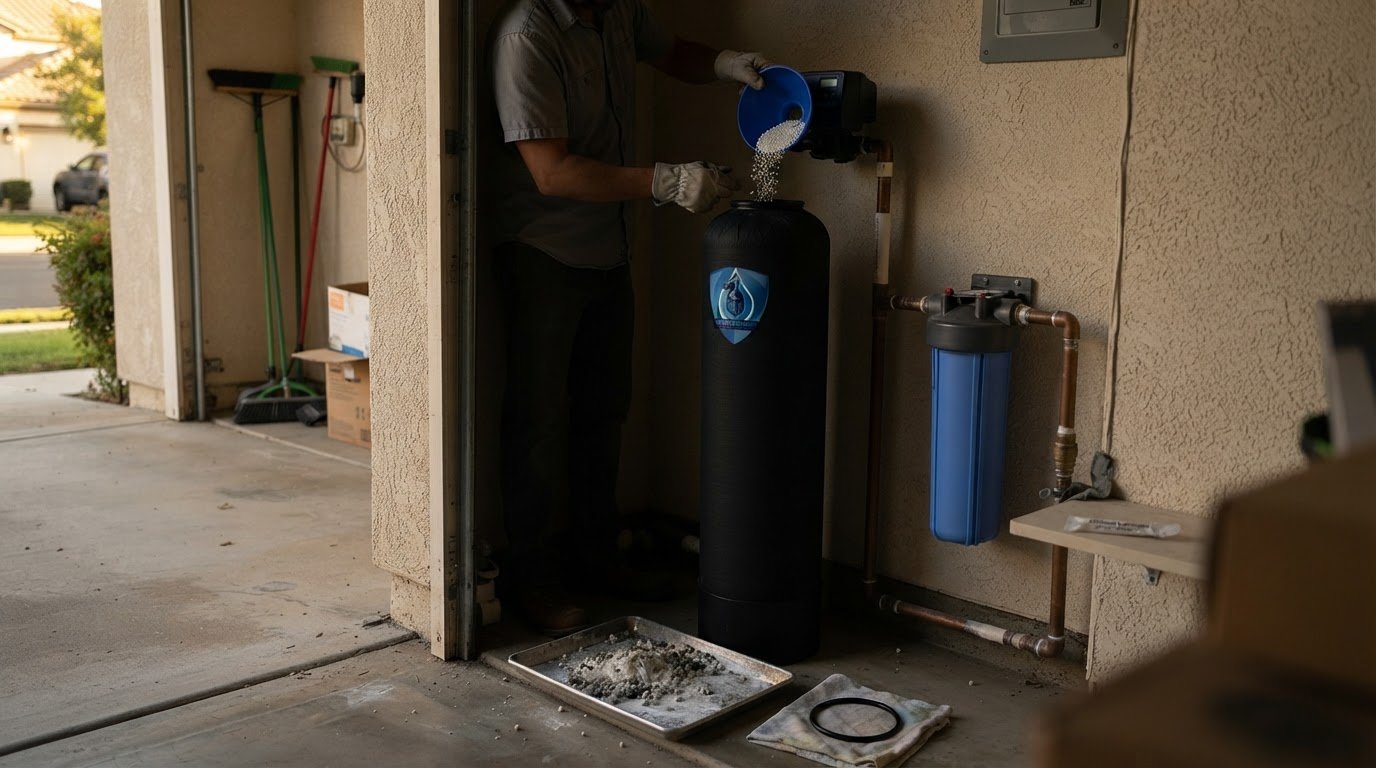
Ownership involves recurring upkeep beyond the initial purchase. A salt-based unit needs salt replenishment, and its regeneration process uses water. A conditioner has different maintenance needs, so the treatment method determines which supplies and routine tasks apply.
Neglect can affect performance: an empty salt tank, overdue media replacement, or a system fault may reduce treatment effectiveness. Limescale can continue to appear if the chosen system does not address the household’s specific concern. Keep the water heater and other appliances in mind when deciding which result matters most.
Before buying, list equipment, installation, expected supplies, and planned servicing separately. This makes ongoing ownership easier to compare with the upfront project cost and helps distinguish an equipment purchase from a complete installation.
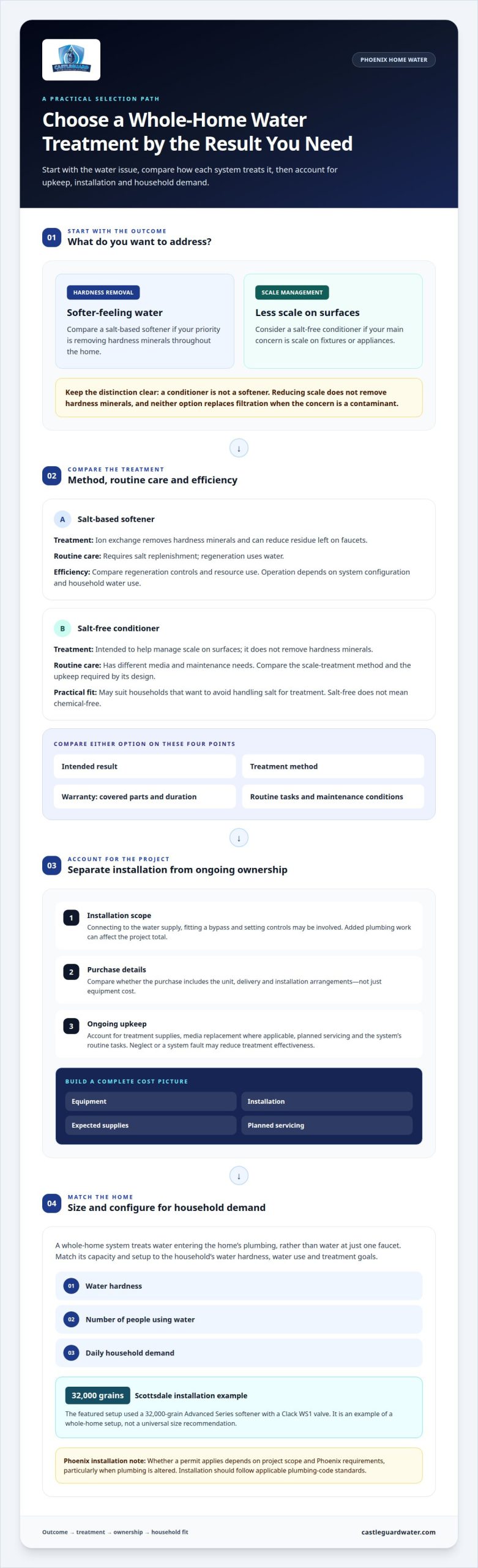
A whole-home system treats water entering the home’s plumbing, rather than one faucet. Its capacity and setup should match household hardness, water use, and treatment goals.
Whether a permit applies to a residential installation depends on the project scope and Phoenix requirements, particularly if the work alters plumbing. Replacing a system and changing plumbing connections may require different consideration.
Grain capacity describes how much hardness a softener can capture before regeneration. Compare capacity with the home’s water hardness and demand, not just the model name. An undersized unit may regenerate more often, while an oversized one may not suit the household’s actual use.
A Scottsdale installation featured a 32,000-grain Advanced Series softener with a Clack WS1 valve. It provides a concrete example of a whole-home setup, not a universal size recommendation. Commercial water treatment also requires attention to usage patterns, since a business’s water demand differs from a residence.
System sizing takes into account water hardness, the number of people using water, and daily household demand. These factors help determine the capacity and regeneration settings needed for the home’s water supply. A larger household, for example, may use water differently from a smaller one, even when hardness is similar.
Custom design also depends on the treatment goal. A softener addresses hardness throughout the plumbing, while drinking-water treatment may focus on a separate tap. Keeping these purposes distinct helps match equipment to each use instead of expecting one system to address every water concern.
Installation connects the softener to the home’s water supply and existing plumbing. The system’s location, connection points, and available space shape the plan. Because a whole-home unit treats water as it enters, its placement should allow access for operation and routine care.
For a Phoenix home, permit requirements depend on the project scope and applicable local rules. Plumbing changes are an important factor. For commercial properties, treatment planning also needs to account for the building’s use and water demand before installation.
Compare the complete project, not just the softener’s purchase price. Equipment, installation work, plumbing changes, and ongoing supplies can all affect ownership costs. A filter or separate treatment stage may also change the configuration, so compare equivalent setups when assessing options.
Start with a written breakdown of the proposed system and included work. Separate equipment, installation, delivery, and plumbing adjustments. Then note recurring items, such as salt for a salt-based softener or replacement media where applicable. This makes the upfront amount easier to distinguish from ongoing maintenance.
Compare payment terms as carefully as the equipment. If payment options are available, review the total payable amount, any fees, the payment schedule, and whether installation is included. Don’t assume an advertised monthly amount represents the full cost. Compare the total obligation and included items, not only the initial payment.
Efficiency can affect ongoing use, but a system’s operating needs depend on its design and settings. Find out how regeneration works and what routine care the equipment requires. Electricity, water, and replacement supplies are separate considerations; a claim about scale buildup does not prove improved water quality or lower household bills.
Match the purchase to the problem. If minerals leave deposits on fixtures, compare scale treatment with softening. If your home uses well water, its treatment needs may differ from those of a municipal supply. That distinction can shape the equipment you consider without assuming every household needs the same package.
For a clear decision, compare quotes using the same checklist: system type, capacity, installation scope, maintenance needs, and payment terms. A lower equipment price may not include the same work or care items. If well water is the source, explore Well Water Systems as a treatment option suited to that water supply.
CastleGuard offers Well Water Systems for households using a private well and seeking water-treatment options suited to that source. Choosing equipment starts with the household’s water needs and the purpose of treatment, such as addressing water throughout the home or improving drinking water at a separate point.
For municipal supplies, CastleGuard’s City System is a whole-home option. Ultraviolet Systems and Drinking Systems provide additional choices for specific treatment needs. These systems are not interchangeable with a water softener, so match the option to your concern instead of assuming one system handles every issue.
If you’re weighing a well-water system against a softener, explore CastleGuard’s systems and choose based on your household’s water source and treatment goals.
Before choosing a water softener for sale in Phoenix, consider how your household uses water. Priorities for bathing, cleaning, and drinking may differ, so decide which needs matter most. This helps you focus on a suitable treatment approach rather than adding equipment that does not serve your goals.
CastleGuard’s City System, Well Water Systems, and Ultraviolet Systems address different treatment needs. The right starting point depends on your water source and desired outcome. If your needs extend beyond softening, consider which system type best matches your household’s water use.
For help considering the next step, contact CastleGuard about water softeners. A clear understanding of your household’s priorities can make the decision feel more manageable, and help you move forward with confidence.
Some hard-water stains can be cleaned, but long-standing mineral deposits may leave marks that resist cleaning. Use a cleaner suited to the affected surface, such as the faucet finish, and follow its care directions. Avoid abrasive tools that could scratch or dull the fixture. If the mark remains, the surface may be etched or damaged rather than simply coated.
Phoenix homeowners can compare salt-based softeners, salt-free conditioners, and dual-tank softeners. Salt-based units use ion exchange to remove hardness minerals; salt-free conditioners treat minerals to limit scale without removing them. Dual-tank systems have two treatment tanks, a configuration designed to maintain soft-water availability during regeneration. Whole-home filtration, ultraviolet treatment, and drinking-water systems address other water concerns, but do not replace a softener.
On the market, water softeners typically range from $1,700 to $2,600, with a median near $2,200. These figures describe different cost scopes, so don’t add them together automatically. Compare whether each estimate includes equipment, installation, plumbing changes, and any ongoing supplies.
Available models vary by seller, but CastleGuard’s salt-based Eco-Smart softener comes in CG-WS-10, CG-WS-15, and CG-WS-20 models. Their listed flow rates are 9, 15, and 20 GPM, respectively. CastleGuard also offers single-tank salt-free conditioners and salt-free combo systems. These model details help distinguish softening equipment from conditioners, which treat scale without removing calcium and magnesium.
Choose softener capacity based on measured water hardness and household use, rather than assuming one size suits every Phoenix home. For example, two homes with the same number of residents may have different demand because of their daily routines. A water test and household usage pattern help determine capacity and regeneration settings. A unit’s grain rating alone does not show whether it suits your home.
Salt-based systems use ion exchange to remove hardness minerals and require salt or potassium chloride. Salt-free conditioners leave calcium and magnesium in the water while conditioning them to reduce scale. Dual-tank describes a softener configuration with two tanks, not a different treatment method; this design can support soft-water availability during regeneration. Compare the treatment result and upkeep that fit your priorities.