The right arsenic removal filter for well water in Arizona starts with a detailed water analysis, not a guess. The U.S. Environmental Protection Agency adopted a drinking-water arsenic standard of 10 parts per billion in 2001, and a laboratory test can show how your well water compares. The results help determine which treatment approach and media suit your water.
If your household relies on a private well, it’s natural to want a clear, dependable answer about arsenic. This guide explains why testing matters, how treatment options such as reverse osmosis and adsorptive media differ, and what affects their performance. Because a filter’s effectiveness depends on your water’s characteristics, testing is the first step toward choosing a suitable system for your home.
Choose treatment based on a detailed water analysis and your household’s needs. An arsenic removal filter for well water in Arizona should be selected to suit the well’s chemistry and the uses it will serve.
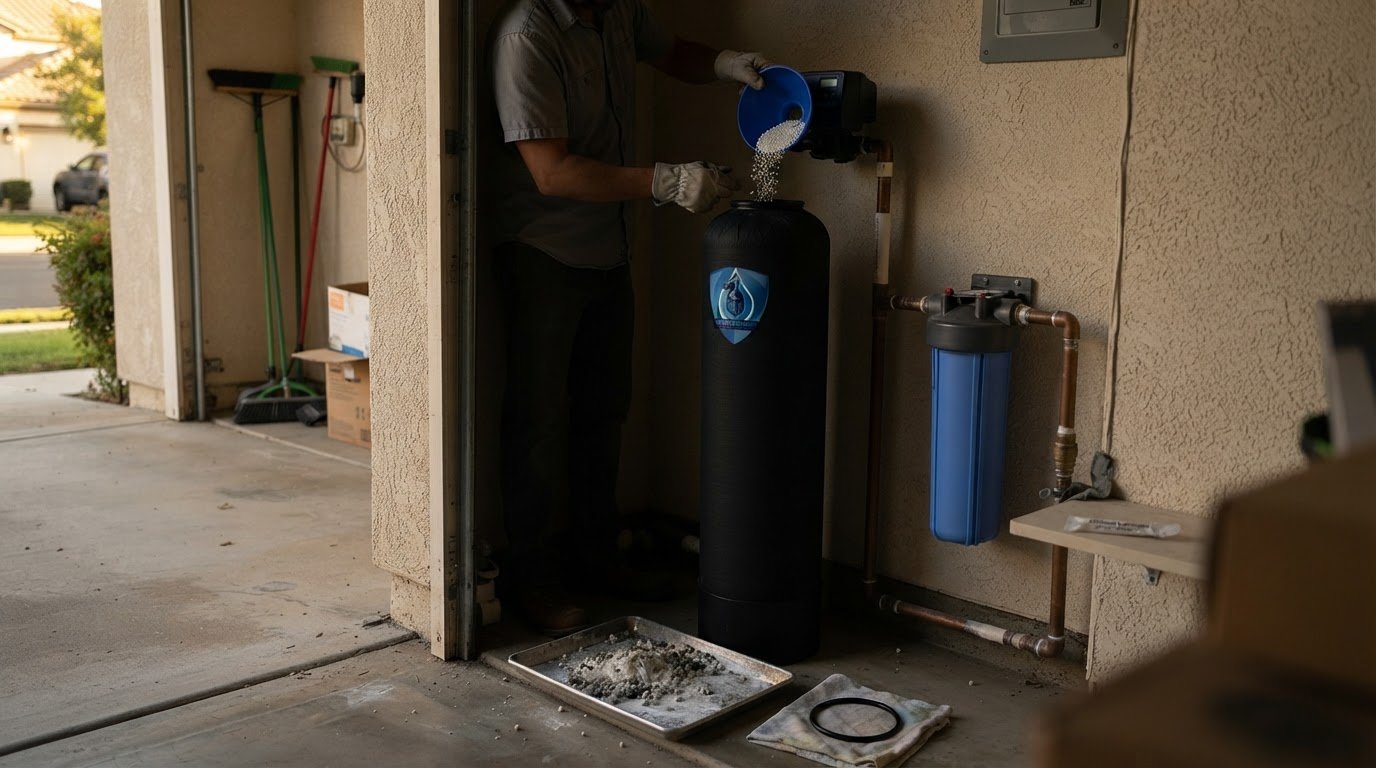
Bayoxide E33 is adsorptive media used for whole-house arsenic reduction. As water flows through the treatment bed, the media captures arsenic. A detailed water analysis helps determine whether this media suits your well’s chemistry and household flow needs. The analysis should inform system sizing before selecting a whole-house filtration system.
Consider media maintenance as part of your decision. Replacement needs depend on the media and the water passing through it. Whole-house filtration treats water as it enters the home, so system capacity should reflect uses such as showering, laundry, and cooking. Choosing an arsenic removal filter for well water in Arizona means matching the treatment approach to both test results and the coverage you need.
Point-of-use treatment serves a single outlet, such as a kitchen drinking-water tap. Whole-house treatment filters water at the point where it enters the home, supplying treated water to multiple taps. The distinction matters: decide whether you need treatment for drinking and cooking or throughout the household.
Include bathing, cleaning, and laundry when deciding how much of your home to treat. A system installed at the kitchen tap, for example, does not treat shower water. If you want treated water for these uses throughout the home, consider whole-house filtration with capacity suited to your household’s peak demand.
Arsenic treatment costs depend on the method, system capacity, water chemistry, and the media or components that need upkeep. Ongoing maintenance also varies by system. Compare replacement needs and servicing requirements as well as the initial equipment cost.
For Bayoxide E33, consider how the well’s water characteristics affect media life and replacement planning. Reverse osmosis and adsorptive media have different maintenance needs. A detailed analysis helps define the treatment approach and the upkeep involved, giving your household a clearer basis for comparing options.
Arsenic has no reliable visible sign in drinking water. Clear water, normal taste, and no unusual odor cannot tell you whether arsenic levels are elevated. Testing is the practical way to identify this contaminant in a private well.
The U.S. Environmental Protection Agency adopted a drinking-water arsenic standard of 10 parts per billion in 2001, replacing the previous 50-parts-per-billion standard. This limit applies to public water systems; private well owners need to monitor their own water quality. Long-term exposure to arsenic is associated with cancer, making accurate testing important for household decisions.
Arizona private well owners should test their water for arsenic every 5 years. Testing identifies the concentration and gives a basis for selecting treatment. Areas with documented concentrations above 10 µg/L include parts of Maricopa, Pinal, La Paz, and Yuma counties.
What certifications should an arsenic removal filter have, such as NSF/ANSI standards? NSF/ANSI-61 is a certification listed for filter media, but it should not be confused with evidence of arsenic-removal performance. Choose treatment based on water-test results and performance information relevant to arsenic.
How can you test a private well for arsenic in Arizona, and what does testing cost? A home test kit can offer a screening result, but reliable decisions depend on accurate measurement.
Which Arizona regions or aquifers are most likely to have high arsenic in well water? Elevated concentrations above 10 µg/L have been documented in parts of Maricopa, Pinal, La Paz, and Yuma counties. County location alone cannot determine a specific well’s result, so test the water directly.
Reverse osmosis can treat drinking water at a dedicated tap. Its performance depends on the source water and system, so use test results to guide the choice. Explore well-water treatment options as you consider the next step.
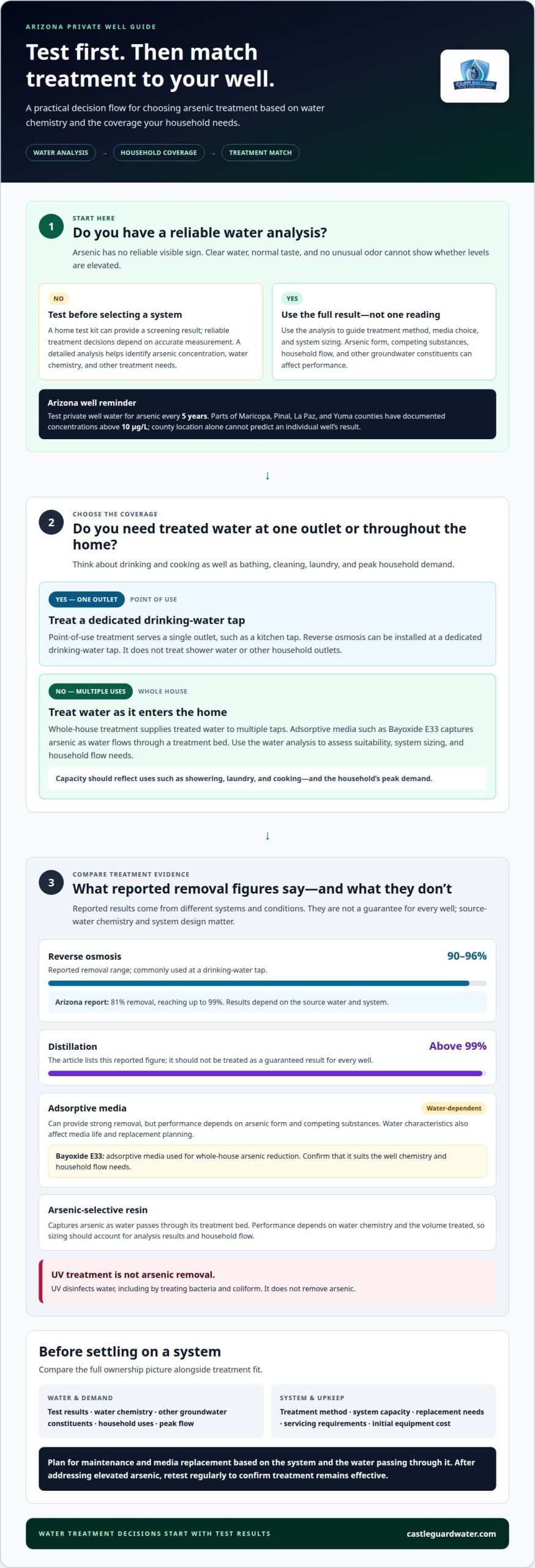
Treatment results depend on the method and the groundwater chemistry. A water analysis helps determine system size and identify other treatment needs.
Reverse osmosis removes arsenic through a membrane, usually at a drinking-water tap. Reported removal ranges from 90-96%, while distillation is listed above 99%. Adsorptive media can also provide strong removal, but its performance depends on arsenic form and competing substances. These figures describe different systems and conditions, not a guarantee for every well.
An Arizona report found reverse osmosis removed 81% of arsenic, with removal reaching up to 99%. Compare expected treated-water levels, household demand, and replacement requirements, not just the highest percentage. Emerging nanotechnology-based treatment methods are being explored, but system selection should rest on demonstrated performance for the specific water chemistry.
Arsenic-selective resin captures arsenic as water passes through its treatment bed. Its performance depends on water chemistry and the volume treated, so system sizing should account for analysis results and household flow needs. UV treatment has a different purpose: it disinfects water, including by treating bacteria and coliform. It does not remove arsenic.
System sizing should account for arsenic levels, other groundwater constituents, and peak household use. These factors guide media capacity and the equipment needed. Install the system according to its design, and follow the specified maintenance and media-replacement schedule. After addressing elevated arsenic, retest the water regularly to confirm the treatment remains effective.
Reverse osmosis, arsenic-selective media, and distillation treat water in different ways. Reverse osmosis and selective media capture arsenic through different processes, while distillation separates it by heating and condensing water. Performance varies, so compare treated-water test results and system capacity.
To choose a filter, match your water analysis and chemistry to the treatment method, capacity, and flow you need. Arizona grants or rebates depend on the program and location, so consider funding separately from system sizing.
For a home relying on a private well, well-water treatment options can help frame the next system decision.
Adsorptive filtration captures arsenic on selected media as water flows through it. Arsenic in groundwater can come from natural deposits or industrial processes. Testing identifies arsenic levels and other contaminants that may affect treatment choices.
Activated alumina is listed as removing 90-99% of arsenic. Iron oxide and KDF media are used in some arsenic filtration systems, though performance can vary. These figures describe reported performance, not a promise for every private well. Water chemistry, arsenic form, and competing contaminants influence how well media works.
Modified zeolites are another adsorptive-media approach. Some adsorptive media have a reported capacity of up to 10.031 mg of arsenic per gram. That figure is a media capacity, not a guaranteed household removal rate. System performance also depends on how much water passes through the media and its condition.
Arsenic occurs in different chemical forms. Arsenite may need conversion to arsenate before certain media can capture it effectively. Product guidance recommends pre-chlorination when arsenite exceeds 20% of total arsenic. A detailed water analysis can reveal whether arsenic form or other water characteristics affect the selected treatment.
What types of filters remove arsenic from private well water effectively? Reverse osmosis, distillation, activated alumina, and iron-based adsorptive media are among the listed options. Standard carbon filters remove less than 10% of arsenic, so ordinary carbon filtration alone is not a dependable arsenic treatment choice.
Choose treatment by matching testing results to the media’s intended conditions. For example, iron-based media performance guidance recommends silica below 30 mg/L and phosphate below 0.5 mg/L. Other media have their own operating limits. Include arsenic form, competing contaminants, household water demand, and replacement needs in the decision.
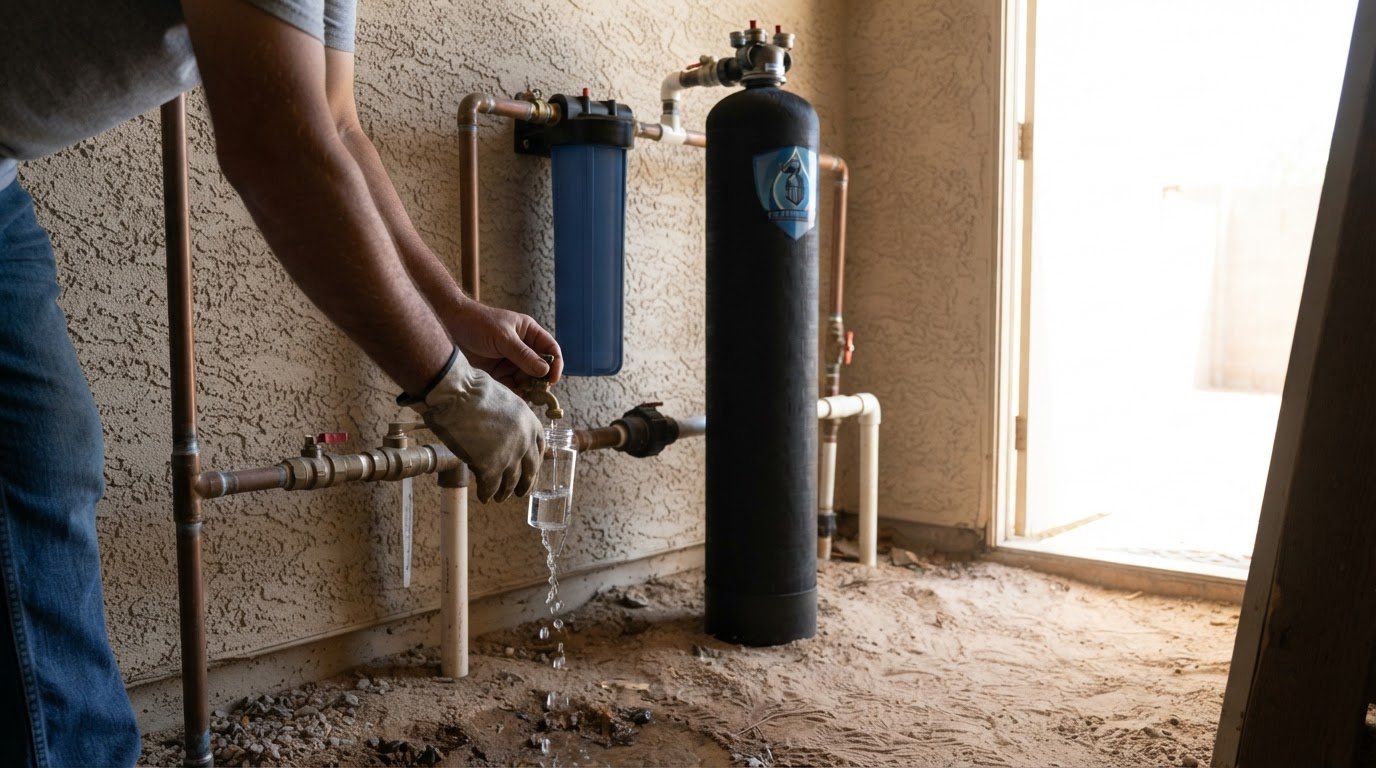
After installation, test treated water to assess arsenic removal. Continued testing helps show whether treatment remains effective as media collects contaminants. Follow the system’s replacement instructions, because exhausted media can reduce performance. Basing the treatment plan on actual well-water results helps keep it focused on your household’s needs.
CastleGuard is a natural next step when your private-well water test points to treatment needs. CastleGuard offers Well Water Systems for households relying on well water, and test results can help guide system decisions. Arsenic levels, other water-quality findings, and household use all matter when considering treatment at a drinking-water tap or throughout the home.
CastleGuard offers Drinking Systems and Ultraviolet Systems for different water-treatment needs. Ultraviolet treatment addresses microbial concerns such as bacteria and coliform, while arsenic requires an appropriate removal method. Match the system to the water-quality concern to keep your treatment plan focused on your household’s needs.
Contact CastleGuard to discuss your well-water treatment needs.
Choosing an arsenic removal filter for well water in Arizona is one part of protecting your household’s water supply. Turn your test results into a practical plan that accounts for how your family will use treated water and how you’ll maintain the system. Keep your test report and treatment records together to make future decisions easier.
CastleGuard offers City System, Well Water Systems, and Ultraviolet Systems for distinct household water needs. Each addresses different treatment concerns, so match the system to your water goals. A clear plan can help you care for the water your family uses every day.
Take the next step with CastleGuard’s system guidance. With the right information in hand, you can move forward with greater confidence and care.
Choose a system only after matching your household’s water analysis to its treatment needs. Decide whether you need treated water at one drinking tap or throughout the home, then consider well chemistry and household water use. Arsenic treatment and ultraviolet disinfection, for example, address different concerns. A system designed for one contaminant may not address another, so match its purpose to your test results.
Long-term exposure to arsenic in drinking water can increase health risks, including cancer. The World Health Organization identifies inorganic arsenic as a Group 1 human carcinogen. Risk relates to exposure over time, not to a visible change in water. If your household relies on a private well, use measured results to guide drinking-water decisions rather than judging safety by taste, smell, or appearance.
Arsenic in groundwater can come from natural deposits or industrial processes. Its presence in a well depends on local geology and groundwater conditions, so results from nearby households cannot establish the concentration in your well. A water test provides well-specific information. If the analysis also identifies other contaminants, those results help show why treatment selection should account for more than one water-quality factor.
Private well owners should test their water regularly for arsenic. Arizona private well owners should test every 5 years. If results show elevated arsenic, consider using another water source for drinking or cooking. Boiling is not a solution, because it does not remove arsenic and may concentrate it.
The U.S. Environmental Protection Agency adopted a drinking-water standard of 10 parts per billion in 2001, replacing the previous 50-parts-per-billion standard. That federal standard applies to public water systems, while private wells are not federally regulated in the same way. Arizona well owners should treat the 10 ppb level as an important drinking-water benchmark and use their test results to make household decisions.
Long-term arsenic exposure through drinking water is associated with cancer. While waiting for test results, use an alternative source for drinking and cooking if you’re concerned about your well water. Don’t boil it to make it safer, since boiling does not remove arsenic and may increase its concentration. If results exceed 200 ppb, don’t use the water for drinking or cooking.