
What if a salt free water conditioner could help manage scale without removing the minerals that cause hard water? That distinction matters when you want to address deposits on fixtures and appliances but also want to know whether your water will feel or behave differently. A conditioner is not the same as a softener, and neither is automatically a filtration system.
If hard-water spots, buildup, or confusing product labels have left you unsure what to choose, start by identifying the problem you want to solve. Salt-free conditioners are generally intended to manage scale, but hardness minerals remain in the water, so the result is not the same as softened water. The technology and performance can vary by system.
This guide explains how salt-free conditioning differs from softening, what information to gather before choosing a system, and what to check about performance and maintenance. It also covers how to compare options for your home, whether you’re in Southern California, Nevada, Arizona, Texas, or Florida.
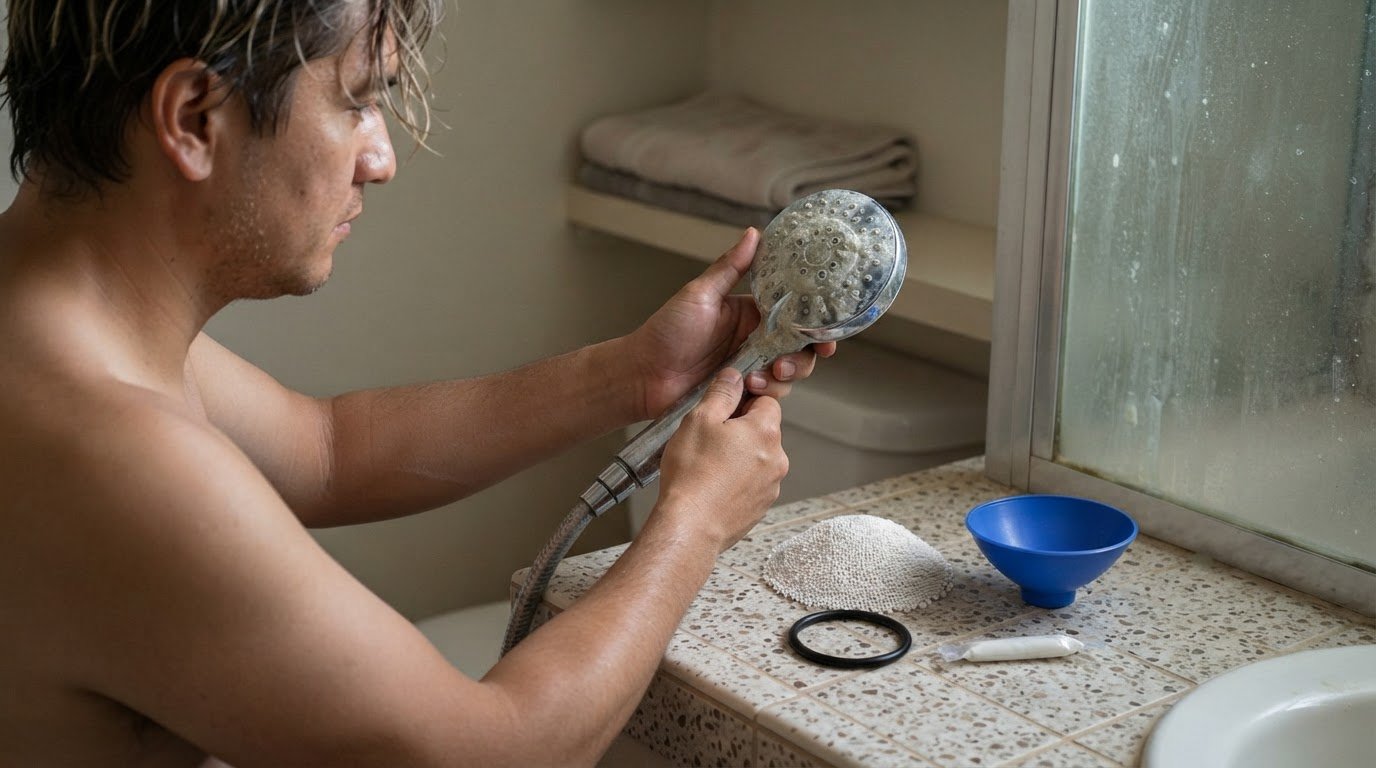
White deposits on taps, cloudy glassware, and soap that doesn’t lather as expected can make cleaning frustrating. A salt free water conditioner is intended to manage scale formation, but it doesn’t necessarily remove the minerals responsible for hardness. Its mechanism depends on the system. Some conditioners use Template Assisted Crystallization (TAC), while others may use different media or processes. Check the product specifications rather than assuming all conditioners work the same way.
Water is considered hard when it contains dissolved minerals, mainly calcium and magnesium. As water evaporates, these minerals can leave deposits on fixtures, in kettles, or around faucets. Hardness can also affect how soap lathers and how residue behaves during cleaning. These are common household nuisances, not a reason to treat hardness itself as a health warning.
Conditioning aims to reduce scale formation; softening removes hardness minerals; filtration targets specified substances in water. A salt-free conditioner generally leaves calcium and magnesium in the water, while a traditional ion-exchange softener replaces hardness minerals with other ions. For a foundational overview of water softening and its terminology, see this reference.
Filtration serves a separate purpose. A filter is selected to address particular substances or aesthetic concerns, and shouldn’t be assumed to soften water or prevent scale. Compare conditioners and softeners by starting with your goal: if you want to manage scale, conditioning may be relevant; if you want hardness minerals removed, look at softening. Neither label alone tells you whether a system addresses other water concerns. For drinking-water filtration, this guide to choosing a drinking water system for home explains how to compare system capabilities with your water-quality priorities.
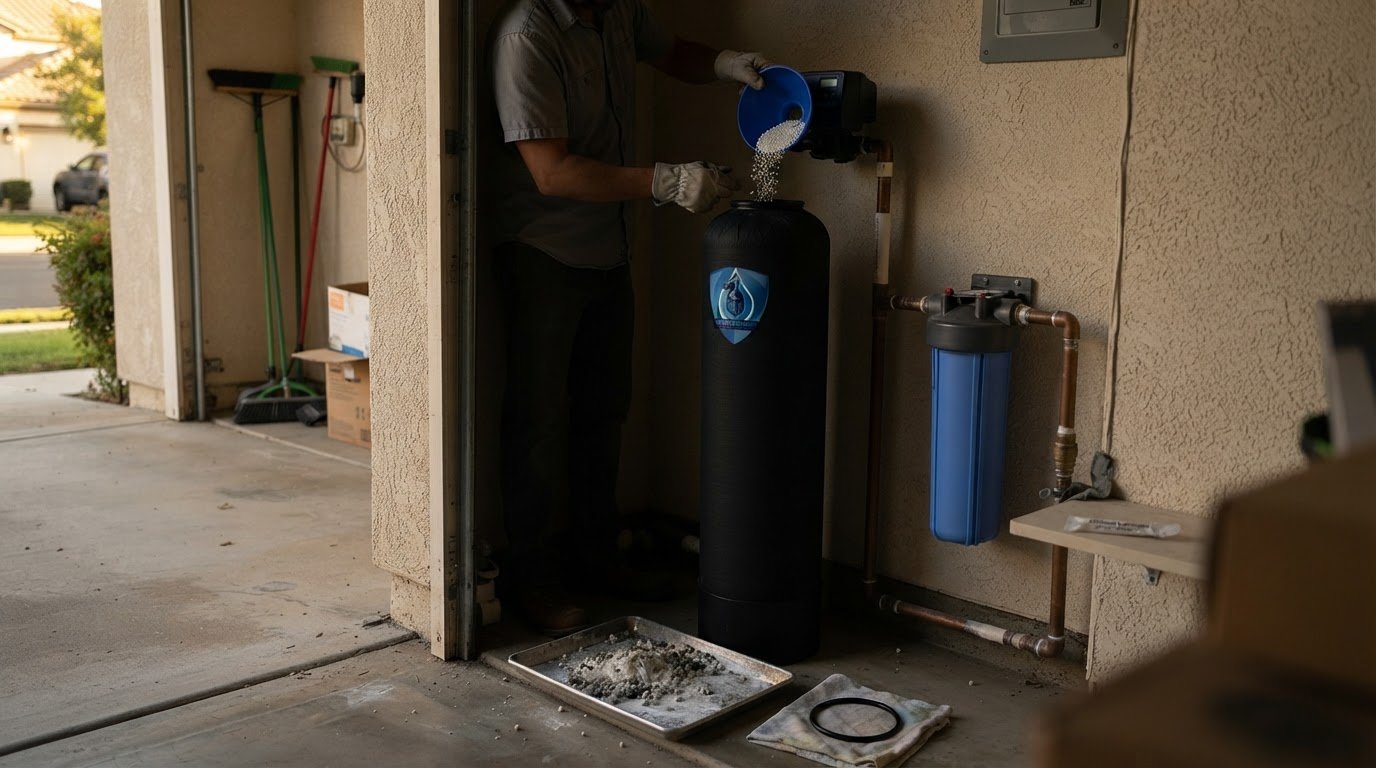
“Salt-free” describes what a system doesn’t use, not a single treatment method. Some conditioners use Template Assisted Crystallization (TAC), in which media helps dissolved hardness minerals form microscopic crystals that are less likely to cling to surfaces. Other systems may use different media or processes. Check the specific product documentation instead of assuming every conditioner works alike.
A salt-free conditioner may help manage scale, but it doesn’t automatically make hard water soft. With TAC, calcium and magnesium remain in the water; the intended effect is to change how they behave, not remove them. A conditioner shouldn’t be expected to filter unrelated substances unless its specifications say it does.
Results depend on the system’s design, your incoming water, household water use, and whether you follow its maintenance requirements. Scale may be reduced, but don’t assume every surface will stay spot-free or that all deposits will disappear. No general claim can guarantee longer appliance life. Review the product’s performance claims and the conditions behind them before choosing a system.
No. A salt free water conditioner isn’t the same as ion-exchange softening, which removes calcium and magnesium from water. If your goal is mineral removal, compare the system with a salt-based softener. If your priority is scale management, assess the conditioner’s stated mechanism and evidence. For more on appliance protection, consult a focused discussion of salt free scale prevention.
CastleGuard offers Salt-Free Conditioner Kits, but available product information doesn’t document their technology, mechanism, compatibility, or performance. That means no specific scale-reduction result can be confirmed from that information. Before deciding, ask CastleGuard about kit specifications, and use water testing or local water-quality information to assess your household’s needs.
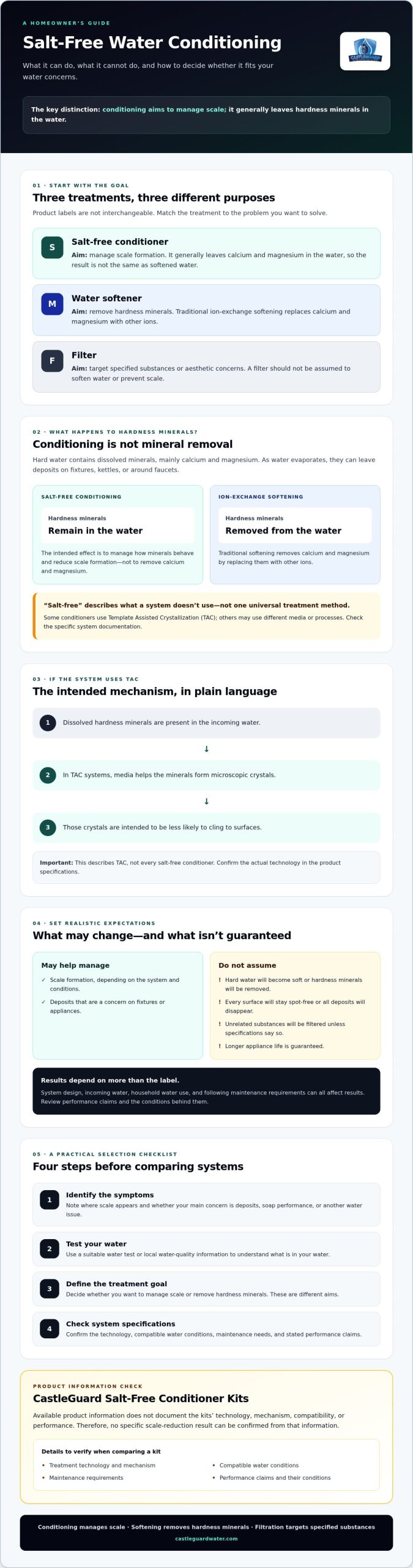
A salt free water conditioner is worth considering only if its purpose matches the problem you’re trying to solve. Use this checklist to narrow your options before comparing systems:
Write down whether your water comes from a municipal supply or a private well, your household’s water use, where you see scale, and any test results. For municipal water, review the provider’s water-quality report. For a private well, arrange testing appropriate to your water and concerns. Conditions can vary within and across Southern California, Nevada, Arizona, Texas, and Florida, so base your decision on your own source and household rather than assuming nearby homes have the same results.
Ask what technology the unit uses, what it’s designed to address, and what it won’t address. Before choosing, confirm the maintenance schedule, media replacement details, flow requirements, and installation responsibilities. These answers help you compare the system with your test results and expectations. For ongoing care after installation, this guide to whole house water system maintenance explains how to follow equipment instructions and plan for media replacement.
For product specifications, contact CastleGuard about Salt-Free Conditioner Kits. Use a water test to guide treatment decisions, and confirm installation requirements separately.
CastleGuard lists Salt-Free Conditioner Kits among its offerings. Available product information doesn’t specify the technology, kit contents, compatible water conditions, or performance. Check those details before deciding whether a kit matches your needs. Use your water test results to guide product questions, rather than treating a product conversation as a substitute for testing or installation advice.
Ask for product documentation that explains the system’s media and scale-management mechanism. Confirm the water conditions it’s intended for, its maintenance schedule, any media replacement requirements, and the evidence behind stated performance claims. Don’t assume a salt free water conditioner will remove hardness minerals or address concerns beyond its documented purpose.
| Reader priority | Question to ask | Detail to verify |
|---|---|---|
| Scale management | How is scale addressed? | Technology and documented claims |
| Water compatibility | Is this system intended for my water? | Compatible conditions and any limitations |
| Ongoing upkeep | What maintenance is required? | Schedule and media replacement details |
| Household setup | What does the system require? | Flow requirements and installation responsibilities |
CastleGuard lists a customer support line available Monday through Friday. Check its current contact details and support hours before reaching out.
If your goal is to remove calcium and magnesium, compare conditioning with a salt-based softener, which uses ion exchange. If your concern is drinking-water filtration, explore a treatment category designed for that purpose, such as drinking systems, and verify what it addresses. A drinking water system for home can be compared by its documented treatment scope and maintenance needs.
Have questions about the kits? Explore CastleGuard’s water treatment options and ask for the product details you need to make an informed choice.
A salt free water conditioner is designed to manage scale, not remove hardness minerals like an ion-exchange softener. Whether it fits your home depends on your water and priorities. Start with a suitable water test or local water-quality information, then compare the system’s documented technology, compatible conditions, maintenance needs, and stated limitations.
CastleGuard lists Salt-Free Conditioner Kits among its offerings, but available information doesn’t confirm the kits’ technology or performance. Ask product questions and verify details before deciding. CastleGuard lists customer support Monday through Friday; check current contact details and hours before reaching out.
Ready to compare options for your home? Explore CastleGuard water treatment options and ask about the product details that matter to your water and maintenance needs.
No. A salt free water conditioner is intended to manage scale, not create conventionally softened water. It generally leaves calcium and magnesium in the water, so you may still notice the same water feel or soap behavior. A traditional ion-exchange softener removes hardness minerals. If you want that change, compare systems by what they do to the minerals, not just by the words “conditioner” or “softener.”
No, salt-free conditioning generally doesn’t remove calcium and magnesium. Some technologies aim to change how hardness minerals behave so they’re less likely to form adhering scale, while leaving them dissolved in the water. The exact process depends on the system, so check its documentation. If mineral removal is your goal, look into ion-exchange softening and confirm the system’s specifications match your water and household needs.
It may help reduce scale, but don’t expect a guarantee that deposits will disappear from every fixture or appliance. Results depend on the conditioner’s technology, incoming water, household use, and maintenance. Check the documented scale-management mechanism and any evidence supporting performance claims. A water test can help you determine whether hardness is the concern and provide a useful baseline for assessing whether the system suits your home.
Start with a water test and your main goal. If you want to manage scale while leaving hardness minerals in the water, a conditioner may fit. If you want calcium and magnesium removed, compare ion-exchange softeners. Municipal customers can review their provider’s water-quality report; private-well owners should arrange appropriate testing. Water conditions vary across Southern California, Nevada, Arizona, Texas, and Florida, so don’t assume nearby homes have the same results.
Maintenance may be required, but the schedule and tasks depend on the system. Ask what routine checks are needed, whether the media needs replacement, and how to tell when maintenance is due. Don’t assume every conditioner is maintenance-free simply because it doesn’t use salt. Follow the product documentation, and verify requirements before choosing so ongoing care is manageable for your household.