
Hard water is a practical reason to consider whole-home filtration in Las Vegas. Water in the area averaged 280 parts per million as calcium carbonate, based on 2025 test data. A city water filter system in Las Vegas may help address mineral deposits, but whole-home filtration doesn’t necessarily remove chemical contaminants, so the right system depends on the concern you want to address.
If you’ve noticed mineral buildup around fixtures or want to understand what’s coming through your taps, a city water filter system in Las Vegas may be worth considering. The key is matching treatment to the concern, rather than assuming one filter handles everything.
This guide explains which local water concerns whole-home filters can address, when to consider one, and what homeowners and renters should weigh before choosing a system. You’ll also learn how whole-home filtration differs from drinking-water options, so you can make a clear decision for your household.
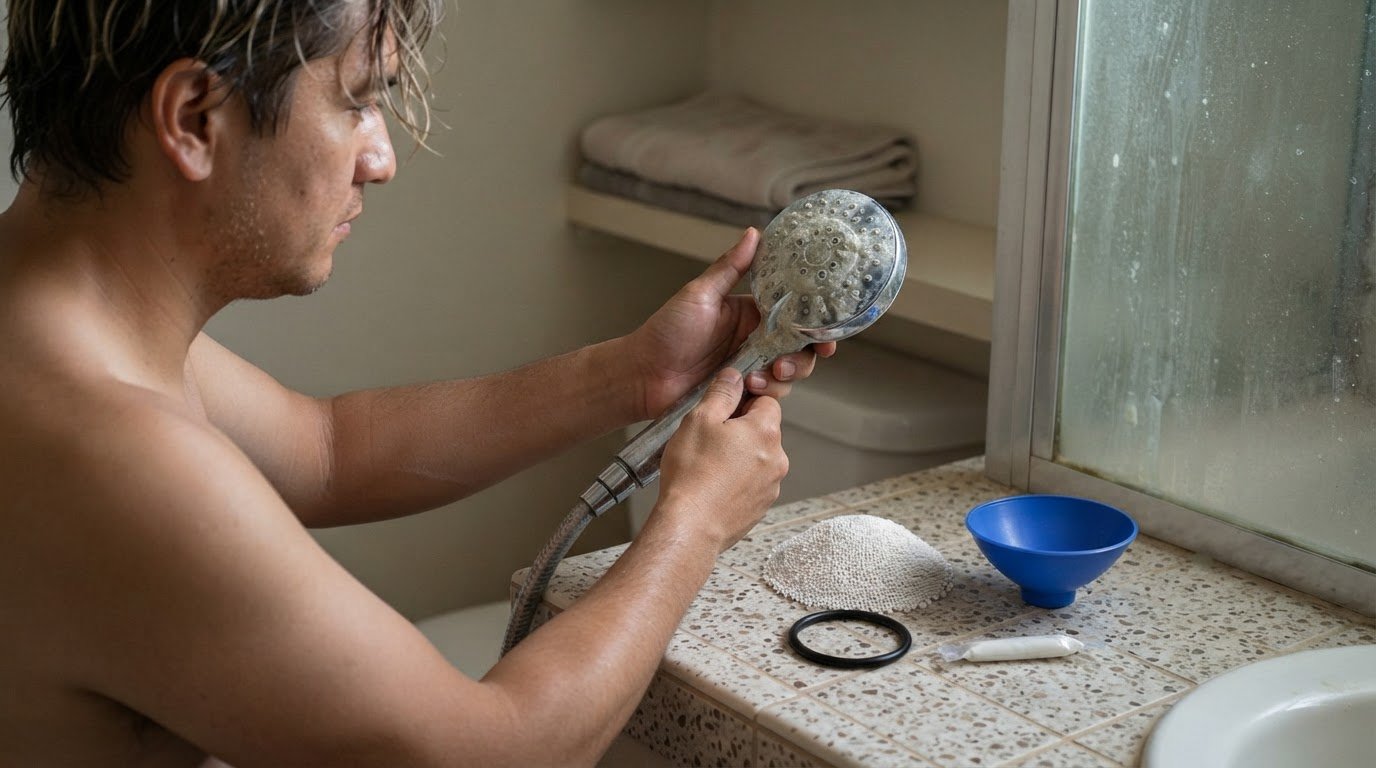
In Las Vegas, hard water is one reason households consider filtration. Water averaged 280 parts per million as calcium carbonate, based on 2025 test data. That mineral content can contribute to scale on faucets, showerheads, and appliances. For a city water filter system in Las Vegas, first identify whether you want to address mineral deposits, drinking-water taste, or another specific concern.
Hardness is only one measure of water quality. Las Vegas water measured 16 grains per gallon, and water above 180 mg/L is classified as very hard. The 2026 summary lists average lead in treated water below 0.0003 ppm. In 2025, six tested PFAS analytes were non-detect, while average total dissolved solids were roughly 591 ppm. Different measures call for different treatment goals.
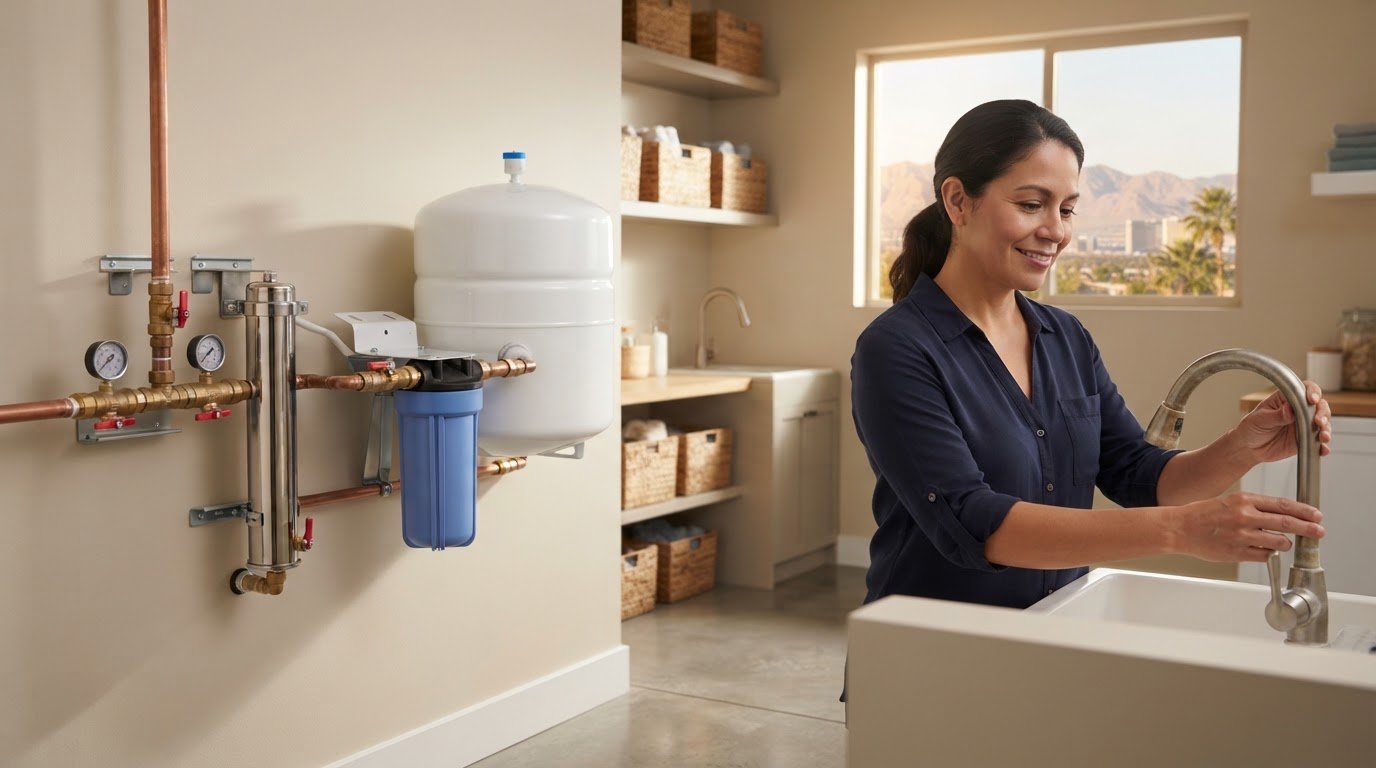
Whole-home filtration and reverse osmosis serve different purposes. A whole-home filter treats water as it enters the house, while reverse osmosis is commonly used for drinking water at a dedicated faucet. Reverse osmosis can reduce dissolved substances, but it doesn’t replace whole-home treatment for concerns such as scale across multiple plumbing branches. Choose based on where treatment is needed.
Under-sink carbon filtration is a focused option for a kitchen faucet. It treats water at that location, not every tap, and carbon media can reduce chlorine taste and odor, depending on the filter. A pitcher or faucet filter may suit households primarily seeking filtered drinking water better than whole-home treatment.
Filters designed to reduce fluoride lower the amount remaining in filtered water. Removing chlorine or other disinfectants can allow more germs to grow in household plumbing, according to the Centers for Disease Control and Prevention. When choosing a city water filter system in Las Vegas, consider whether you need treatment throughout the plumbing or only at a drinking-water tap, and understand which substances the selected filtration method targets.
For Las Vegas municipal water, choose treatment by the problem you want to address. A whole-home filter suits concerns that affect water throughout the house; a drinking-water filter targets a kitchen tap. A softener addresses hardness, while carbon filtration can target chlorine taste and odor. Match the equipment to the treatment goal, not simply to the word “filter.”
Consider a system when scale repeatedly appears on faucets, showerheads, or water-using appliances. First, decide whether you want treatment at every outlet or only for drinking and cooking. Then review your water supply and the system’s intended purpose. This helps avoid choosing whole-home equipment when a point-of-use option better fits your needs.
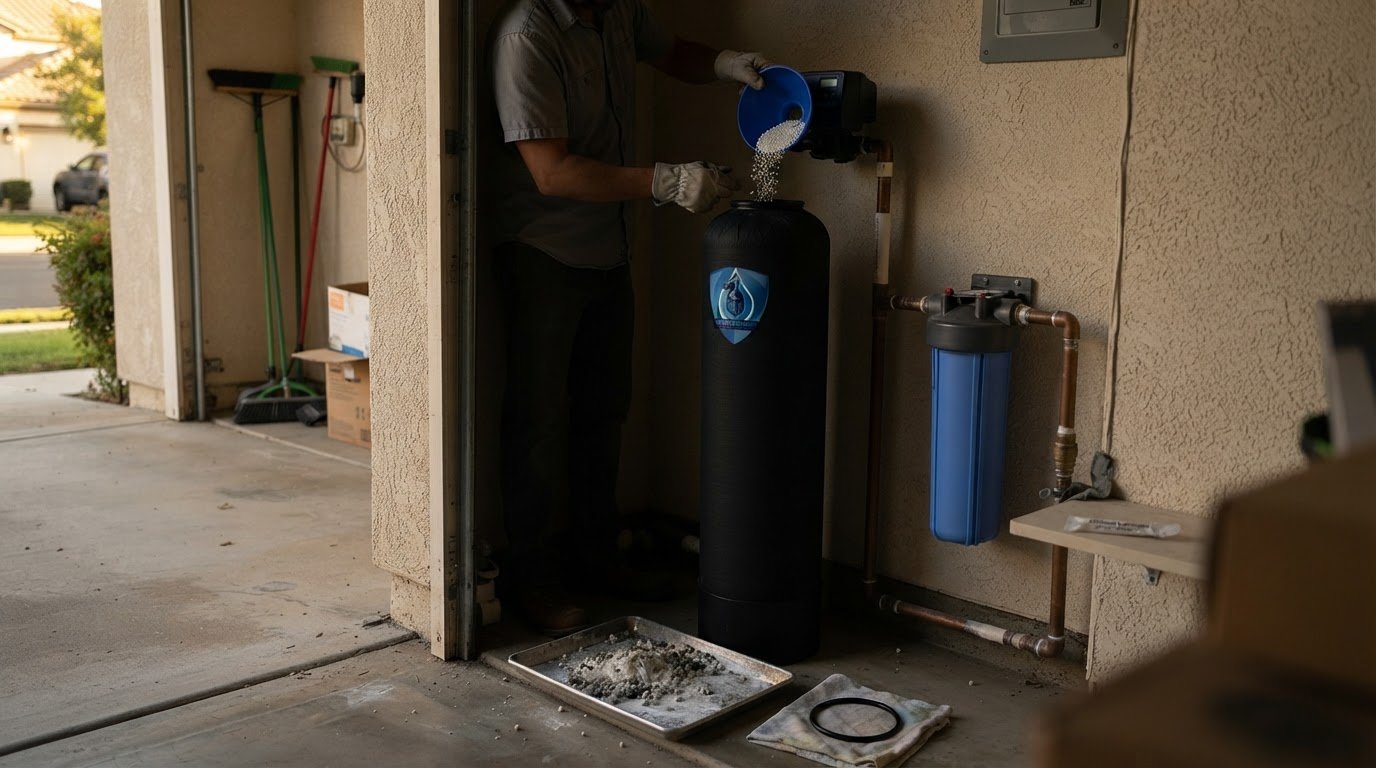
Whole-home installation typically places the filter near the main shut-off valve, before plumbing branches carry water to separate rooms. A local Las Vegas plumbing professional can assess whether the home’s pipes suit the proposed system before purchase. The assessment can also account for the available installation space and access to the water supply, helping determine a practical location.
Are permits or plumbing code requirements needed to install a water filtration system in Las Vegas? Requirements depend on the work and plumbing involved. Connecting a filter may differ from altering existing pipes, so the installation scope matters.
Equipment, installation, and ongoing maintenance are separate cost considerations. Compare systems by treatment purpose and household needs, then account for plumbing layout, available space, and replacement media. For a whole-home system, consider the installation plan and future filter maintenance, not just the equipment.
What is the latest Las Vegas Valley Water District water quality report? The latest report is the district’s 2026 Water Quality Summary, which presents results based on 2025 test data. Use it as local context, then focus on the concern you want to address at home. For a treatment option designed for municipal supply, explore whole-home city water filtration.
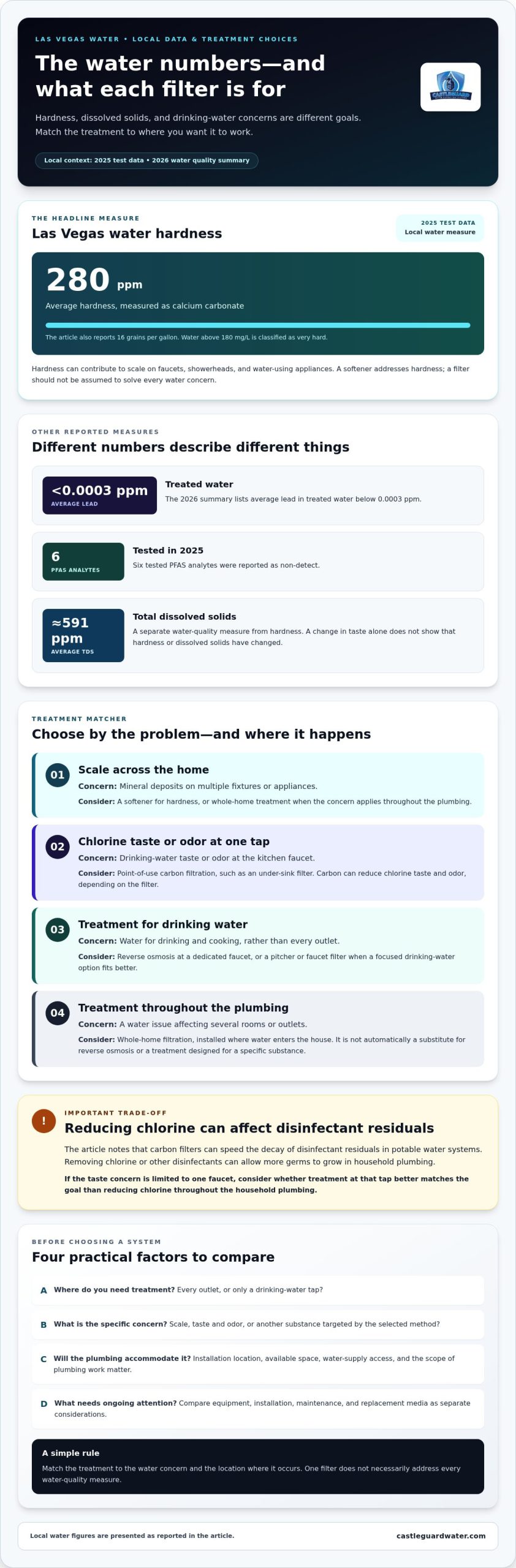
A swimming-pool-like smell or noticeable chlorine taste can make drinking water less appealing. Carbon filtration is commonly used to reduce chlorine and improve taste and odor. The treatment target matters: carbon focuses on certain substances, while dissolved solids describe a broader group of materials in water. A change in taste alone doesn’t show that hardness or dissolved solids have changed.
Start by noting where the taste or odor occurs. If it’s most noticeable at the kitchen faucet, a point-of-use carbon filter can treat water for drinking and cooking. If the same concern affects several faucets, a whole-home filter treats water entering the plumbing. Choose based on whether you want treatment at one tap or throughout the household supply.
Chlorine also has a role beyond taste. The Centers for Disease Control and Prevention notes that carbon filters can speed the decay of disinfectant residuals in potable water systems. This matters when deciding whether to reduce chlorine throughout household plumbing or only at a drinking-water faucet. Avoid treating every water outlet by default; focus on the specific taste concern and where you experience it.
Chlorine-related taste is separate from mineral scale on appliances. A carbon filter selected for taste and odor shouldn’t be assumed to address hard water, just as a softener isn’t a substitute for a drinking-water filter. Clarify your goal: improve water taste at a particular faucet, treat the supply throughout the home, or address deposits on fixtures. That distinction makes comparisons more useful.
Before choosing filtration, note which faucets have an odor, whether it occurs in cold or warm water, and whether it affects drinking water or household use. Then compare the filter’s stated purpose with your observations. This helps distinguish chlorine taste from other concerns, such as hard water or dissolved solids, and keeps your decision focused on the result you want.
Start with your access to the plumbing. A Las Vegas homeowner considering a city water filter system can treat water where it enters the house, while a renter without access to the supply may need a pitcher, countertop unit, or faucet filter. For example, a renter focused on drinking water can use a point-of-use option without changing the home’s plumbing. Choose according to your treatment goal and what the property allows.
Homeowners should decide whether they want filtration at every tap or only selected faucets. A whole-home system connects to the incoming supply, while an under-sink filter serves one location. Water for showers and appliances calls for different coverage from water used mainly for drinking and cooking. Set that priority before comparing equipment, so the system matches how your household uses water.
For renters, portability matters. A pitcher can move with you, while countertop and faucet systems keep treatment near the kitchen sink. If a filter attaches to a faucet, check that it fits the fixture and can be removed without altering the plumbing. A whole-home installation isn’t practical when you can’t access the home’s water supply.
Replacement is part of the decision for both homeowners and renters. Identify the filter media or cartridge, then understand how it’s changed and maintained. A renter may prefer a removable filter that can move to another home; a homeowner may choose a system serving several plumbing branches. Match the product’s stated purpose to the concern you want to address.
Use municipal water-quality information or testing as context, then note whether your concern involves taste, mineral deposits, or something else. Record where it occurs, such as at the kitchen faucet or on bathroom fixtures. When choosing a city water filter system in Las Vegas, these details help distinguish a whole-home setup from a portable option and keep the decision focused on your property.
If whole-home coverage suits your home and goals, explore city-water filtration options for your household.
CastleGuard’s City System is designed for households connected to municipal water considering whole-home treatment. It’s an option when you want to treat the household supply, rather than filter water only at a drinking-water faucet. Start with your main concern, such as treatment throughout the home or filtration at the kitchen sink.
CastleGuard also offers Well Water Systems, Ultraviolet Systems, and Drinking Systems for different treatment needs. These options serve distinct purposes, so consider your water source and whether you want treatment for the household supply or drinking water. That makes the next step practical and relevant to your home.
For information about the City System, visit castleguardwater.com or contact CastleGuard.
Before choosing a city water filter system in Las Vegas, decide what you want to change in your daily routine. Is your priority water at every tap, a specific drinking-water faucet, or treatment suited to your home’s water source? A clear goal makes it easier to compare options by purpose and avoid expecting one system to address every concern.
Write down where you notice the issue and what you want the system to do. Bring those priorities to CastleGuard when exploring water filtration options, so the discussion stays focused on your home and household needs. A clear goal helps you make an informed decision without rushing.
CastleGuard offers water-treatment options for different household needs. Contact CastleGuard about water filtration to explore a suitable next step for your home. A thoughtful choice can make caring for your household’s water feel simpler and more manageable.
Yes. Las Vegas households may seek treatment for mineral deposits, chlorine taste, or odor, but those concerns call for different approaches. Note where the problem appears, such as spots on bathroom fixtures or an unpleasant taste at the kitchen tap. Then match system coverage to that location and treatment purpose, rather than expecting one filter to address every water concern.
Hard water can contribute to mineral scale on household fixtures and equipment, but scale alone doesn’t show that your health is being harmed. A hard-water measurement describes mineral content; it isn’t a health diagnosis. For a practical home decision, separate concerns about buildup and appliance maintenance from questions about drinking-water quality, which involve different water characteristics.
Compare a system’s stated purpose and coverage instead of choosing by brand name alone. CastleGuard offers a City System for households considering city-water treatment, as well as Drinking Systems for drinking-water needs. These are distinct options, so first decide whether you’re addressing water throughout the home or at a drinking-water location. Then compare each option with that goal and its maintenance requirements.
Local water-quality reports track substances such as lead and PFAS, but their results reflect the scope of sampling and testing. Water at a particular tap can also be affected by plumbing inside the home. If you’re concerned about a specific contaminant, review what the report measured and consider whether a household tap sample would answer your question more directly.
These systems are designed for different treatment goals. Carbon filtration can target chlorine taste and odor, reverse osmosis is generally used at a drinking-water tap, and a softener addresses hardness. For example, a homeowner concerned about both drinking-water taste and scale may need to compare separate treatment functions. Check each system’s stated purpose and plan for replacement media before deciding.
There isn’t one useful cost for every Las Vegas home because system type and installation scope vary. A whole-home setup and a single-tap drinking-water filter are different purchases. Plumbing access, treatment goals, and replacement media also affect the overall commitment. Compare options by what they treat, where they connect, and the maintenance they require, not just the equipment.